Understanding the Low Visibility Deer Fence and Deer Psychology
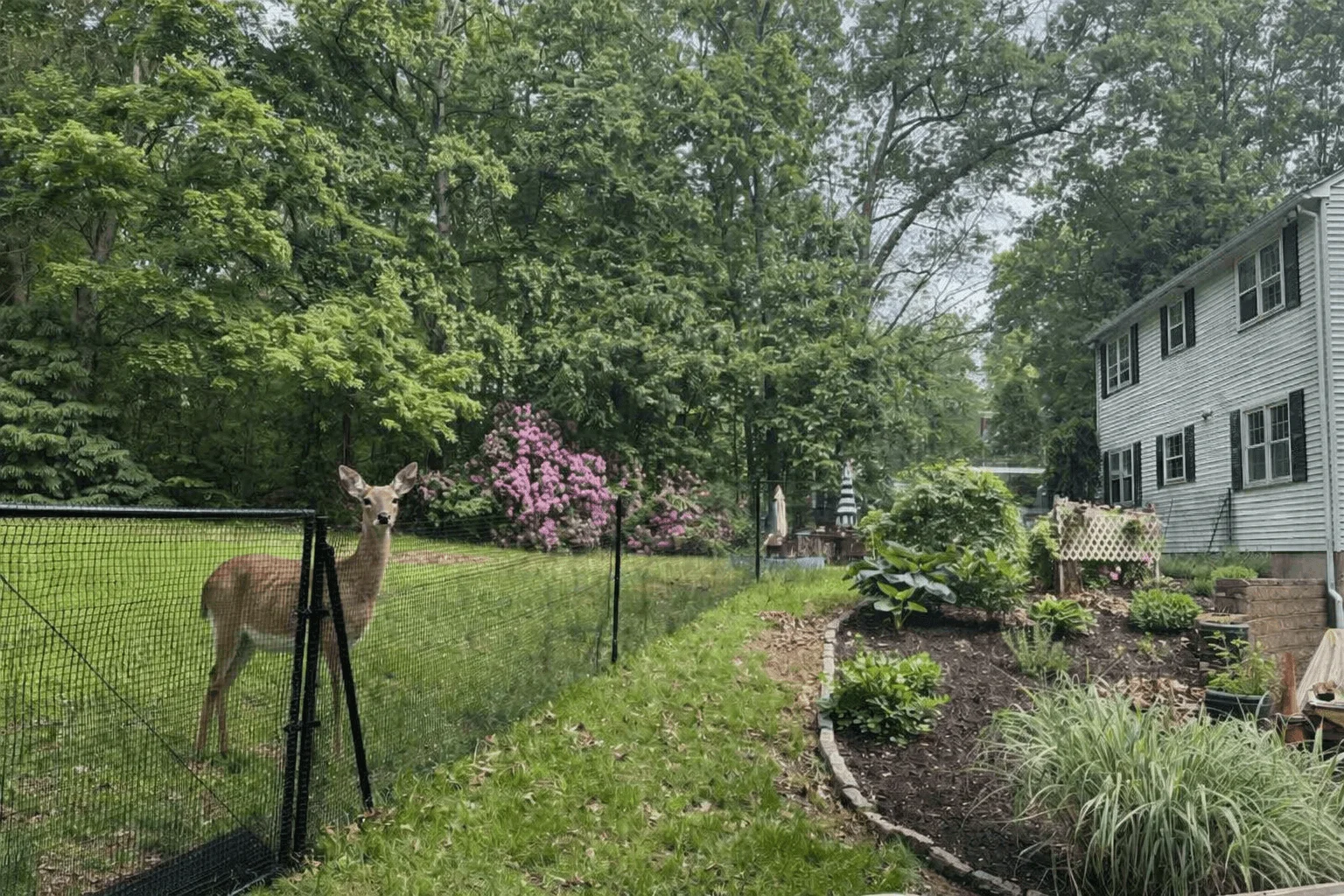
A low visibility deer fence protects gardens by utilizing 7.5 to 8-foot dark mesh and high-tensile tensioned cables that blend seamlessly into the background landscape, directly exploiting a deer's natural depth-perception limits. Because deer cannot clearly resolve the top edge of the fence or gauge a safe landing zone on the other side, their self-preservation instincts cause them to hesitate and move along rather than attempt a dangerous leap.
To build a barrier that reliably keeps deer away, we have to look at the world through their eyes—literally. White-tailed and mule deer do not evaluate physical barriers the way humans do. While a person sees an open landscape and notices the fine weave of a dark fence line, a deer processes the entire scene as a series of survival calculations based on specialized eyesight and acute self-preservation instincts.
Deer have eyes positioned on the sides of their heads, granting them an expansive 310-degree field of view to spot predators. However, this panoramic vision comes at a cost: limited binocular overlap. As a result, deer suffer from notoriously poor depth perception. Their eyesight is dichromatic (predominantly sensitive to short and medium wavelengths like blue and yellow light) and functions largely in grayscale across varied landscape backgrounds.
When a deer approaches an enclosure, its primary concern is not just whether it can jump high enough, but whether it can safely stick the landing on the other side. A deer's long, slender leg bones are fragile. In the wild, a broken leg is an immediate death sentence. If a deer cannot distinctly gauge the height of a top wire, the depth of the barrier, or the stability of its landing zone, its nervous system triggers immediate hesitation. Engineered low-visibility barriers exploit this exact psychological vulnerability.
Visual Barriers vs Psychological Deterrence
Traditional livestock enclosures rely on overwhelming physical containment—massive wooden posts, solid walls, or heavy galvanized panels. These barriers present high visual contrast. While effective, they turn a scenic property into what looks like a private security compound.
Psychological deterrence takes the opposite approach. Instead of presenting a solid wall, a low-profile barrier creates an uncertain visual hurdle. By using materials such as black UV-treated mesh, braided metal wire, or high-tensile tensioned cables, the fence blends seamlessly into surrounding tree lines and foliage.
When deer approach, they detect an obstacle, but their dichromatic vision cannot easily resolve its precise edges or the space directly behind it. The lack of a clear, solid landing target causes the animal to prioritize self-preservation over foraging. They choose to move along the perimeter rather than risk jumping into an ambiguous space.
Research into alternative layouts has shown that even multi-layered spatial illusions—such as those explored in studies on utilizing a 3D fence to deter deer for agroforestry tree plantings—rely heavily on this principle: when an animal’s depth perception is confused by stratified lines, jumping instincts shut down.
Why Fence Height and Placement Confuse Deer
An adult deer can clear a 7-foot vertical hurdle from a dead stop if it feels confident about its footing. So why do discreet fences keep them out so reliably? The answer lies in how fence height interacts with horizontal space and tension.
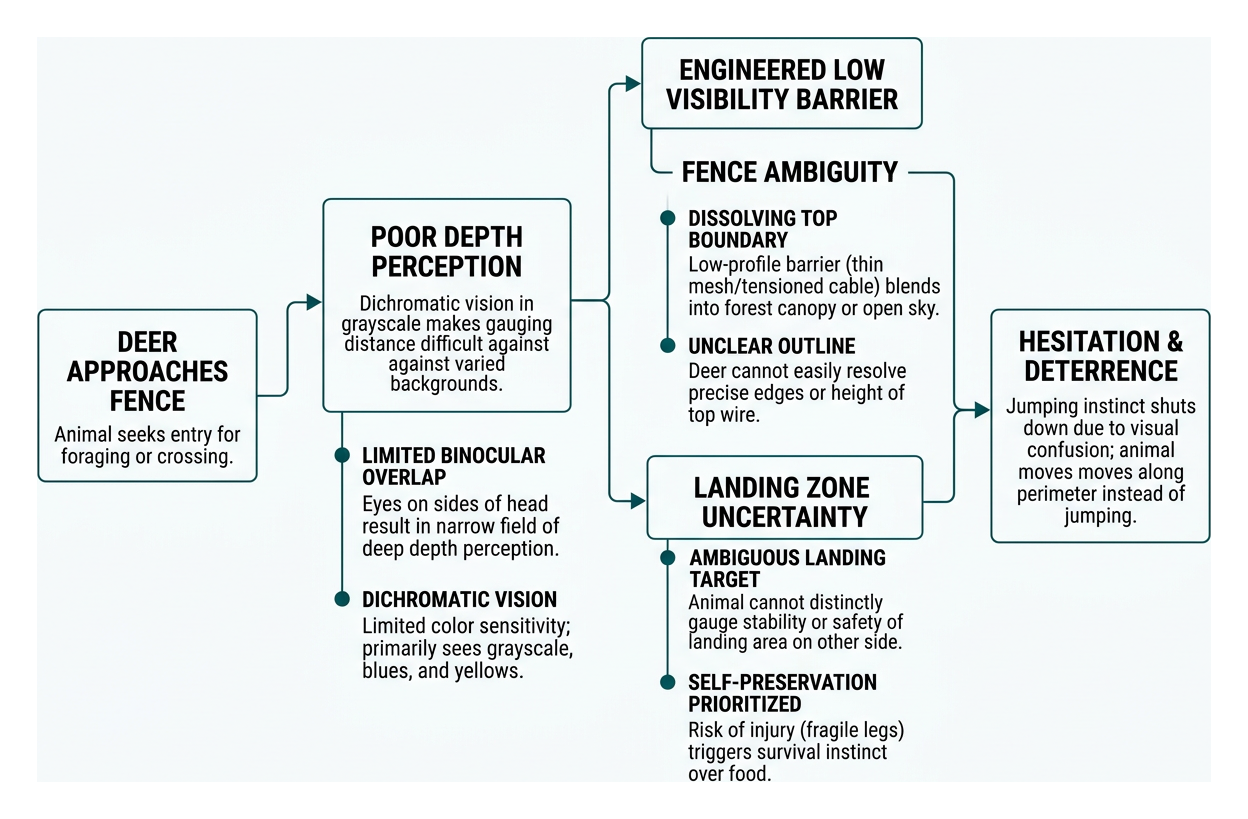
When an engineered fence stands at 7.5 to 8 feet, the top boundary dissolves against the forest canopy or open sky. If a deer walks right up to the perimeter, it cannot easily identify where the physical barrier ends.
Furthermore, pairing proper vertical height with smart placement confuses the deer's take-off trajectory:
- Top-Wire Ambiguity: Thin, tensioned top cables create a subtle visual outline that deer sense is present but cannot pinpoint in space, preventing them from timing a clean jump.
- Landing Zone Uncertainty: If garden plantings, shrubs, or interior guide lines sit 3 to 4 feet inside the boundary, the deer perceives a multi-dimensional obstacle rather than a single flat plane.
- Physical Tension: Unlike flimsy plastic netting that sags and offers an easy visual target, properly tensioned cable maintains a crisp, uniform line that avoids drawing an animal's focus to weak points.
By combining vertical reach with spatial depth, we create a setup where jumping feels inherently unsafe to the animal.
Top Types of Low-Profile and Nearly Invisible Deer Fencing
Choosing the right perimeter system requires balancing durability, cost, aesthetics, and ease of installation. Below is a breakdown of how the most common low-profile fence styles compare in real-world residential and agricultural applications.
| Fence Type | Primary Materials | Expected Lifespan | Typical Total Cost (Material + Install) | Visual Impact | Best Use Case |
|---|---|---|---|---|---|
| Engineered Steel-Cable & Mesh | High-tensile steel cable, UV-stabilized heavy mesh, ground skirt | 20+ Years | Mid ($8 – $15 / ft) | Nearly Invisible (<2% landscape obstruction) | Permanent residential, gardens, pet containment |
| Heavy-Duty Polypropylene Mesh | Extruded UV-treated poly mesh, steel line posts | 10–15 Years | Low-Mid ($5 – $9 / ft) | Low (Disappears from 15–20 feet away) | Moderate herd pressure, medium-sized perimeters |
| Multi-Strand Tensioned Cable | Braided aircraft cables, turnbuckles, rigid T-posts | 15–20 Years | Low ($3 – $7 / ft) | Minimal (Appears as fine horizontal lines) | Long rural boundaries, corridor redirection |
| Traditional Solid Wood / Board | Cedar, pressure-treated pine posts and boards | 10–15 Years | High ($25 – $45+ / ft) | Very High (100% solid visual barrier) | Privacy-focused urban yards |
Engineered Steel-Cable and Mesh Systems
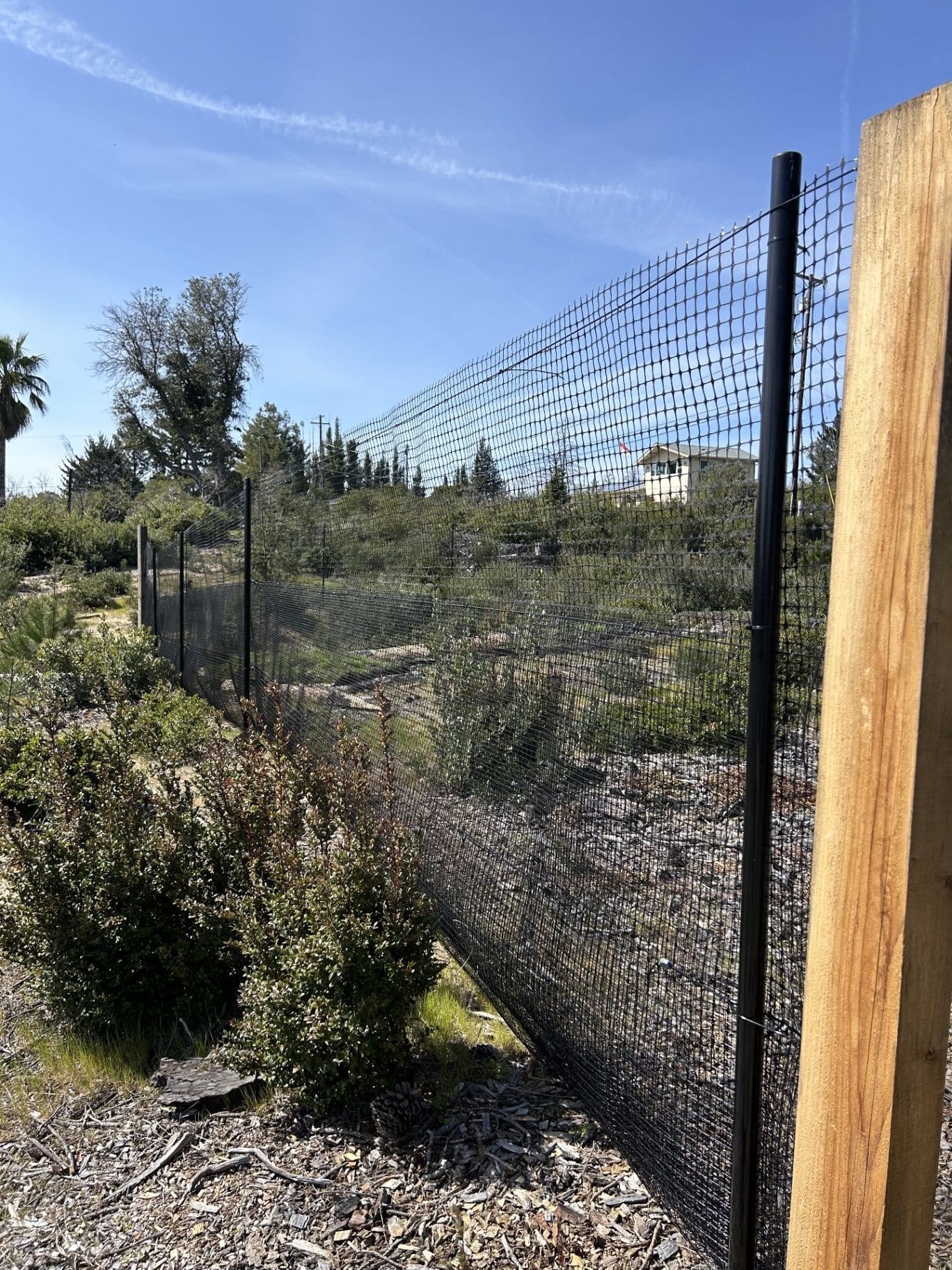
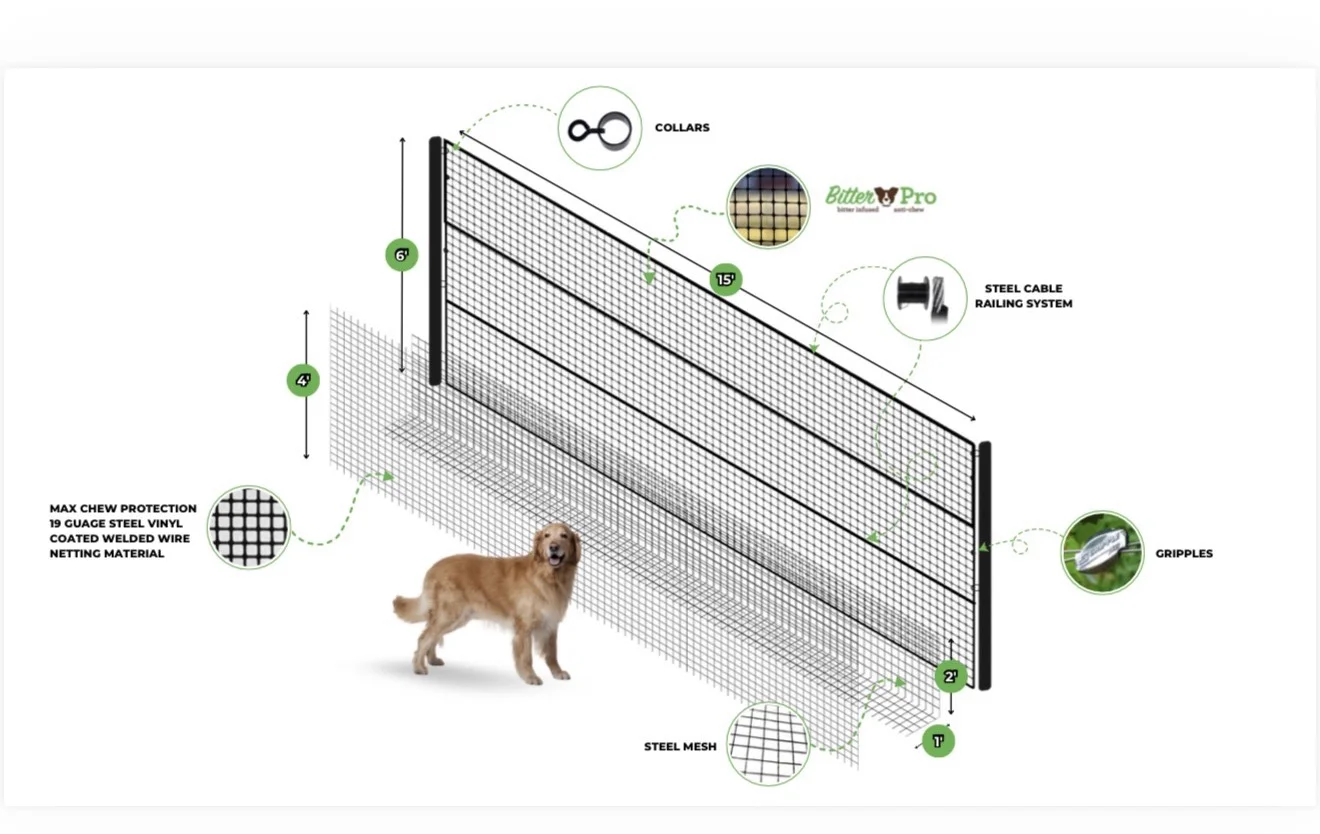
For homeowners seeking a permanent, maintenance-free perimeter, an engineered steel-cable and mesh system offers the gold standard. We design these fences using heavy-gauge, high-tensile steel top and bottom tensioning cables anchored to slim, rigid steel posts. The infill consists of high-grade, UV-stabilized carbon-reinforced polymer or steel-reinforced hex mesh.
Key benefits include:
- No-Dig Installation: Specialized driven post systems eliminate the need for heavy augers, concrete footings, or torn-up turf.
- Built-in Rodent Skirts: The bottom 12 to 24 inches feature a tight galvanized steel mesh or heavy-duty wire flared outward along the ground and pinned with ground stakes. This stops chewing pests like rabbits, groundhogs, and voles from compromising the base.
- Complete Invisibility: The black matte finish absorbs light rather than reflecting it. From just 15 to 20 feet away, the entire fence dissolves entirely into the background trees, lawn, or shrubbery.
- Structural Integrity: Tensioned cable absorbs heavy impacts from falling tree branches or accidental contact without collapsing or losing its shape.
Polypropylene and Heavy-Duty Mesh Systems
Polypropylene mesh fencing provides an adaptable, lightweight option for property owners who want reliable seasonal or semi-permanent protection. These systems utilize an extruded plastic grid featuring square mesh openings ranging from 1.75 to 2 inches.
When suspended on a top tension wire, high-grade poly mesh offers impressive tensile strength (often rated over 600–800 lbs per square foot). It will not rust or rot, making it a favorite for wet woodland margins.
However, pure polypropylene has one notable vulnerability: rodents. Chewing critters can easily gnaw holes through the bottom of poly mesh to reach vegetable gardens. For this reason, we always recommend pairing poly systems with a metal base barrier. Applying proper mesh density and tension combinations ensures the barrier minimizes visual intrusion while retaining functional strength.
Tensioned Cable and Low-Profile Grid Systems
In broad agricultural tracts, orchards, and extensive woodland perimeters, multi-strand tensioned cable systems provide an efficient way to redirect wildlife corridors without enclosing an entire property in dense mesh.
These systems use three to six parallel lines of high-tensile braided steel cable running horizontally across rigid steel posts spaced 15 to 20 feet apart. The strands are tensioned with heavy-duty turnbuckles. By varying strand spacing—keeping lower cables closer together to prevent deer from crawling under and upper cables spaced to present height confusion—you create a tough, low-maintenance physical and psychological line.
While cable systems do not physically exclude smaller burrowing pests, they are practically impervious to heavy wind loads, heavy snow accumulations, and falling forest debris.
Cost and Performance: Low-Profile Barriers vs. Traditional Fences
A common misconception among homeowners is that a discreet, high-performance deer fence must cost significantly more than a standard wooden privacy or split-rail fence. In practice, the opposite is true.
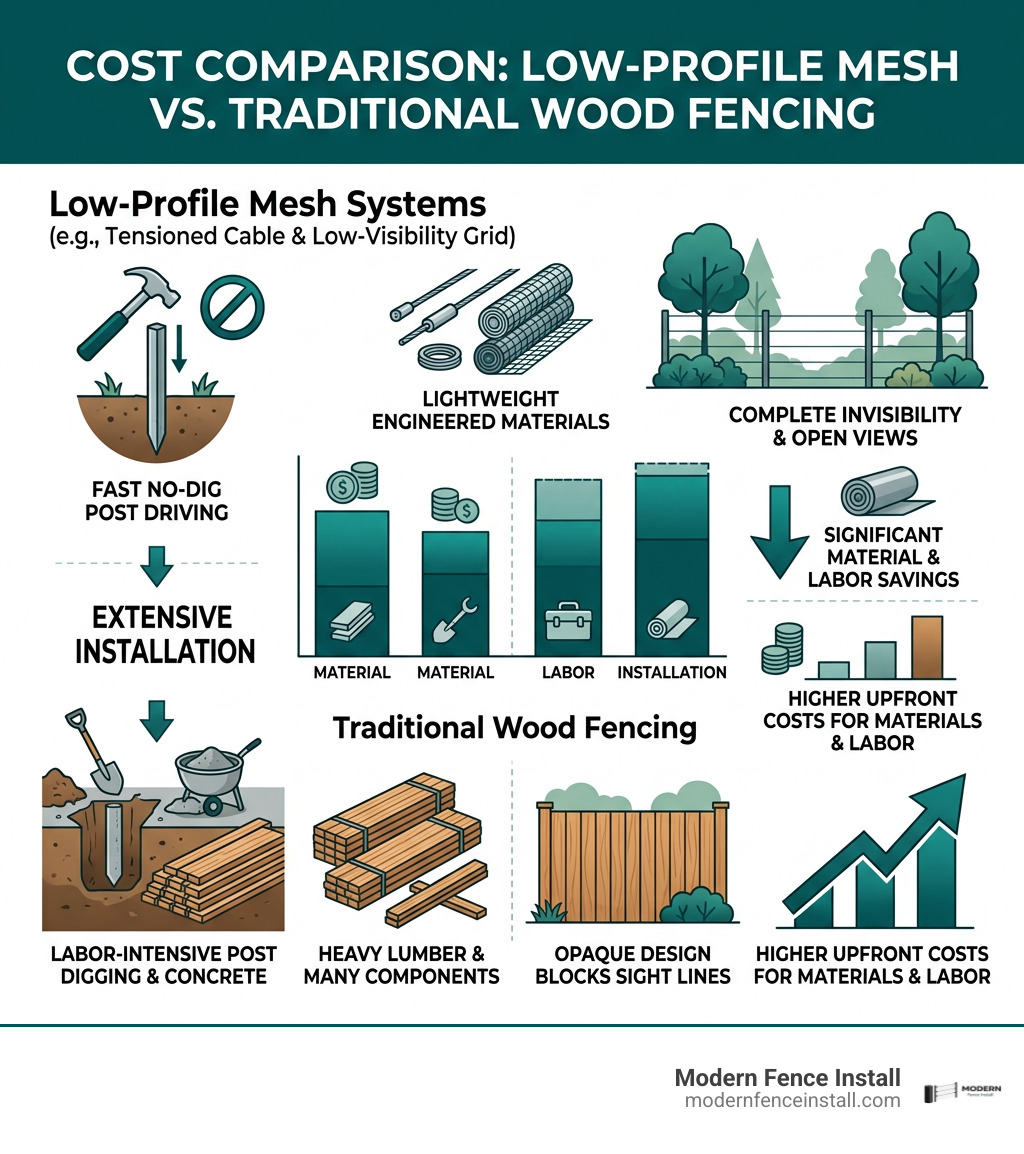
Because low-profile engineered systems use lightweight, ultra-strong materials that don't require deep concrete trenching or massive lumber shipments, they deliver significant cost efficiencies:
- Upfront Material Savings: Engineered low-profile systems typically save 30%+ compared to traditional solid wood, vinyl, or ornamental iron fences. Traditional tall privacy fencing requires dozens of heavy boards, cross-rails, and yards of concrete per run.
- Reduced Labor Overhead: Traditional solid fences demand substantial excavation, dirt disposal, and extensive installation timelines. Our no-dig, high-tensile steel cable systems are driven directly into the ground, cutting down labor hours and completing installations within 30 days of site assessment.
- HOA and Municipal Compliance: Many suburban communities and homeowners associations strictly forbid solid 8-foot privacy walls or traditional farm-style chain link along front and side boundaries. Because low-visibility fencing preserves open site lines, it easily complies with local municipal codes and neighborhood aesthetic covenants that restrict tall, opaque structures.
- Storm and Snow Resilience: Solid wood panels act like giant sails in high winds and can catch heavy drifts of snow, leading to leaning posts and structural rot. Mesh and cable systems allow wind, snow, and falling leaves to pass straight through, virtually eliminating storm-related blowouts.
Installation and Maintenance Best Practices for Long-Term Success
A deer barrier is only as strong as its weakest connection. Because deer continuously test property boundaries—particularly along established migratory and feeding trails—proper installation and maintenance are vital.
Step-by-Step Installation of a Low Visibility Deer Fence
Setting up a durable low-profile perimeter requires careful planning, proper equipment, and precise tensioning.
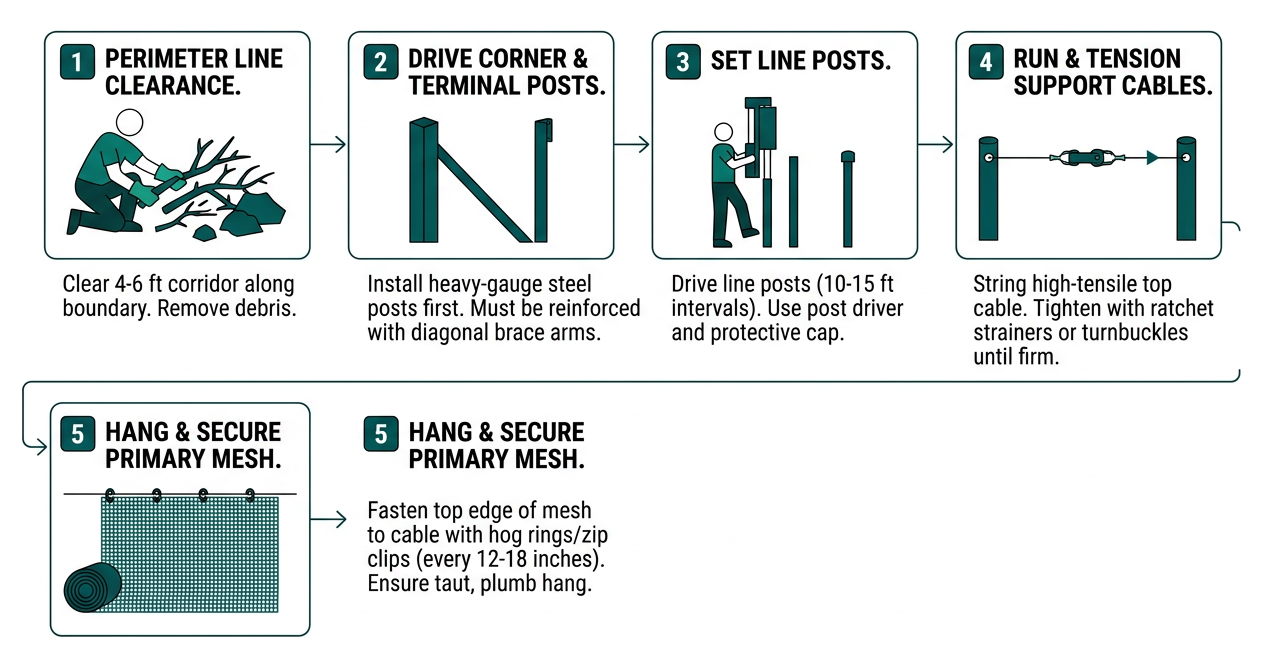
- Perimeter Line Clearance: Clear a 4- to 6-foot corridor along your planned boundary. Remove deadfall, low-hanging tree branches, dense briars, and large rocks. A clear perimeter makes driving posts straightforward and keeps fallen debris from resting against the mesh.
- Drive Corner and Terminal Posts: Install heavy-gauge steel corner posts and end terminals first. Because tensioned systems place continuous inward pressure on corners, every corner and gate post must be reinforced with diagonal brace arms.
- Set Line Posts: Drive intermediate steel line posts along your perimeter line at consistent intervals (typically every 10 to 15 feet, depending on terrain undulation). Using a specialized post driver with a protective cap ensures post tops don't flare or mushroom under impact.
- Run and Tension the Support Cables: String a high-tensile top cable through the post eyelets or line collars, anchored securely at the terminal posts. Tighten the cable using inline ratchet strainers or heavy-duty turnbuckles until the line is straight, level, and firm.
- Hang and Secure the Primary Mesh: Unroll the UV-treated mesh along the fence line. Fasten the top edge of the mesh to the tensioned cable using heavy-duty hog rings or zip clips spaced every 12 to 18 inches. Ensure the mesh hangs plumb and remains taut without sagging between posts.
- Install the Rodent Skirt and Ground Flange: Overlap the lower portion of the fence with 2 feet of galvanized steel wire mesh. Allow 6 to 12 inches of this metal skirt to flare outward along the ground surface toward the outside of the property (the side deer and rodents approach from).
- Stake the Base: Drive heavy-duty kinked ground stakes or rebar anchors through the flared metal skirt every 2 to 3 feet. This prevents deer from nudging under the bottom edge and stops burrowing animals from tunneling beneath the perimeter.
Routine Maintenance and Integrated Pest Management
Once installed, a properly built non-electric system requires very little hands-on effort, but regular seasonal checks ensure long-term performance:
- Bi-Weekly Visual Walks (Spring & Fall): Walk your fence line during peak plant growth and early autumn. Look for fallen branches resting against top cables or signs of ground disturbance near perimeter corners.
- Vegetation Management: Keep weeds, vines, and brush trimmed away from the lower skirt. While non-electric fences do not suffer from the electrical short-circuits that plague power setups, heavy woody vines like wild grape or bittersweet can weigh down mesh over time.
- Anchor Pin Inspection: Check bottom ground stakes in early spring after ground thaws to ensure frost-heaving hasn't dislodged any base pins.
- Integrated Deterrent Layering: In areas experiencing severe herd density, pair your perimeter with smart landscaping practices. Plant deer-resistant perennials (such as lavender, boxwood, and ornamental grasses) directly outside the enclosure. For broad-scale agricultural research into how multi-tiered deterrence systems perform over multi-year deployments, review the findings detailed in utilizing a 3D fence to deter deer for agroforestry tree plantings.
Frequently Asked Questions About Low-Profile Deer Fencing
How high does a deer fence need to be if it is virtually invisible?
For reliable long-term deer exclusion, standard perimeter fencing should stand between 7.5 and 8 feet tall. While deer can leap higher under extreme pressure, an 8-foot vertical barrier exceeds their comfort zone when they cannot clearly identify a landing point. In smaller enclosed areas (such as raised-bed vegetable patches under 25x25 feet), a 5- to 6-foot fence can work because the tight interior dimensions further restrict the animal's take-off and landing clearance.
Can deer run through or damage low-visibility mesh?
High-quality, UV-stabilized carbon poly mesh and high-tensile steel-cable systems have breaking strengths exceeding 600 to 1,000 pounds per square foot. If a startled deer makes accidental contact, the tensioned system flexes, absorbs the kinetic impact, and bounces the animal back without breaking the mesh or injuring the deer. Flimsy garden netting bought in big-box retail rolls, by contrast, can tear or cause dangerous animal entanglement.
Where are low-visibility fences most and least effective?
Low-visibility fences are most effective along wooded boundaries, suburban property lines, ornamental home landscapes, and residential gardens where keeping a natural view is critical. They are least effective when installed blindly across heavily used migratory deer runs without preliminary site clearing, or on steep vertical drop-offs where a deer standing uphill can easily leap over the top cable. In those specific terrain scenarios, custom post extensions and flared boundary angles are required to compensate for elevation changes.
Conclusion
Protecting your garden from destructive deer browse should not force you to live behind an unattractive wooden fortress or a commercial-style chain link cage. By leveraging deer psychology, depth perception limits, and high-performance modern materials, you can create a durable barrier that safeguards your flowers, shrubs, and vegetables while preserving your landscape views.
At Modern Fence Install, we engineer purpose-built, non-electric steel-cable and low-profile mesh fences across CT, NY, and MA. Our no-dig, nearly invisible systems save you 30%+ compared to traditional solid fences and can be fully installed within 30 days. If you are ready to reclaim your garden, explore our professional fence installation services to design an elegant, long-lasting deer barrier tailored to your landscape.