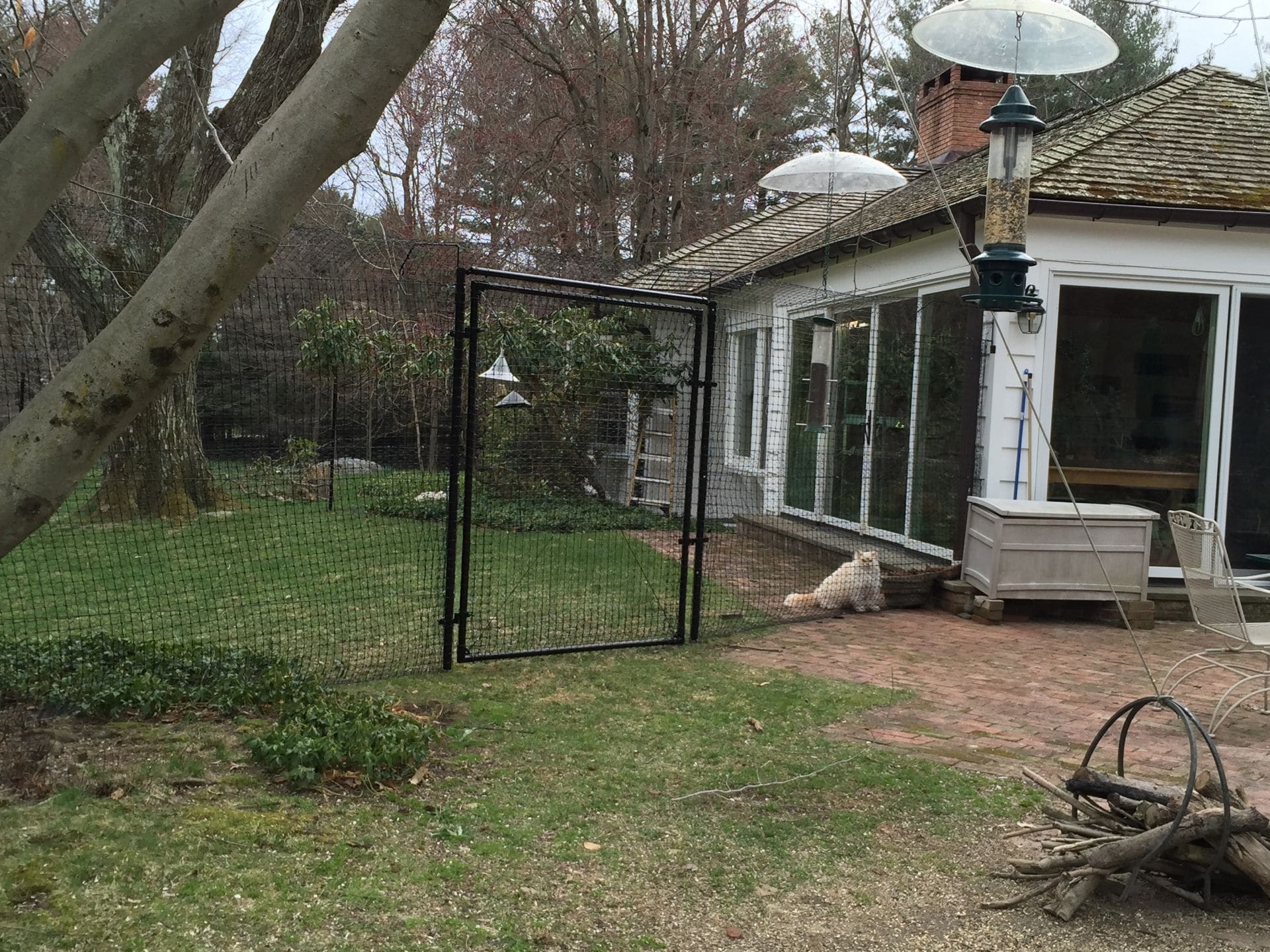
5 Reasons NY Homeowners Prefer Low-Visibility Pet Barriers
Choosing the best containment approach for your property comes down to finding the balance between safety, yard aesthetics, and budget. Traditional stockade or solid vinyl fences can turn an open, picturesque backyard into a walled compound. At the same time, many pet owners prefer to avoid electrical shock collars or fragile electronic setups that require constant troubleshooting.
Here is why low-profile mesh and steel-cable systems are becoming the top choice for residential properties across the state:
- Uncompromised Sightlines and Natural Aesthetics: Our low-visibility mesh virtually disappears against a backdrop of trees, shrubs, and foliage from just fifteen feet away. You get to enjoy your property’s scenic views without looking at bulky wooden slats or industrial metal bars.
- HOA and Neighborhood Compliance: Strict Homeowners Associations and architectural review boards throughout New York frequently ban or heavily restrict tall solid fences. Because discreet fencing maintains open sightlines and blends into the surrounding landscape, it routinely satisfies strict neighborhood guidelines.
- No Collars, Electricity, or Batteries Required: Unlike underground invisible fences that rely on electric correction collars with batteries that can die unexpectedly, a physical containment barrier works unconditionally 24/7. Your pet does not need to wear a heavy, specialized receiver collar, and you never have to worry about electrical misfires during severe storms.
- Substantial Cost Savings: Traditional solid fencing involves high material overhead, significant labor expenses, and costly foundation digging. Modern non-electric low-visibility setups typically save homeowners 30% or more compared to solid privacy fences while providing identical or superior perimeter security.
- Multi-Purpose Garden and Landscape Protection: In addition to keeping your dogs safely within your yard, high-tensile mesh serves as an effective barrier against unwanted intruders. It protects delicate plantings and gardens from foraging deer, rabbits, and wandering wildlife.
Homeowners seeking a dedicated dog fence service quickly find that physical low-profile barriers provide the optimal balance of peace of mind and open-air beauty. For a broader look at how physical barriers compare to other approaches, the pet fence overview explains common containment methods and their trade-offs.
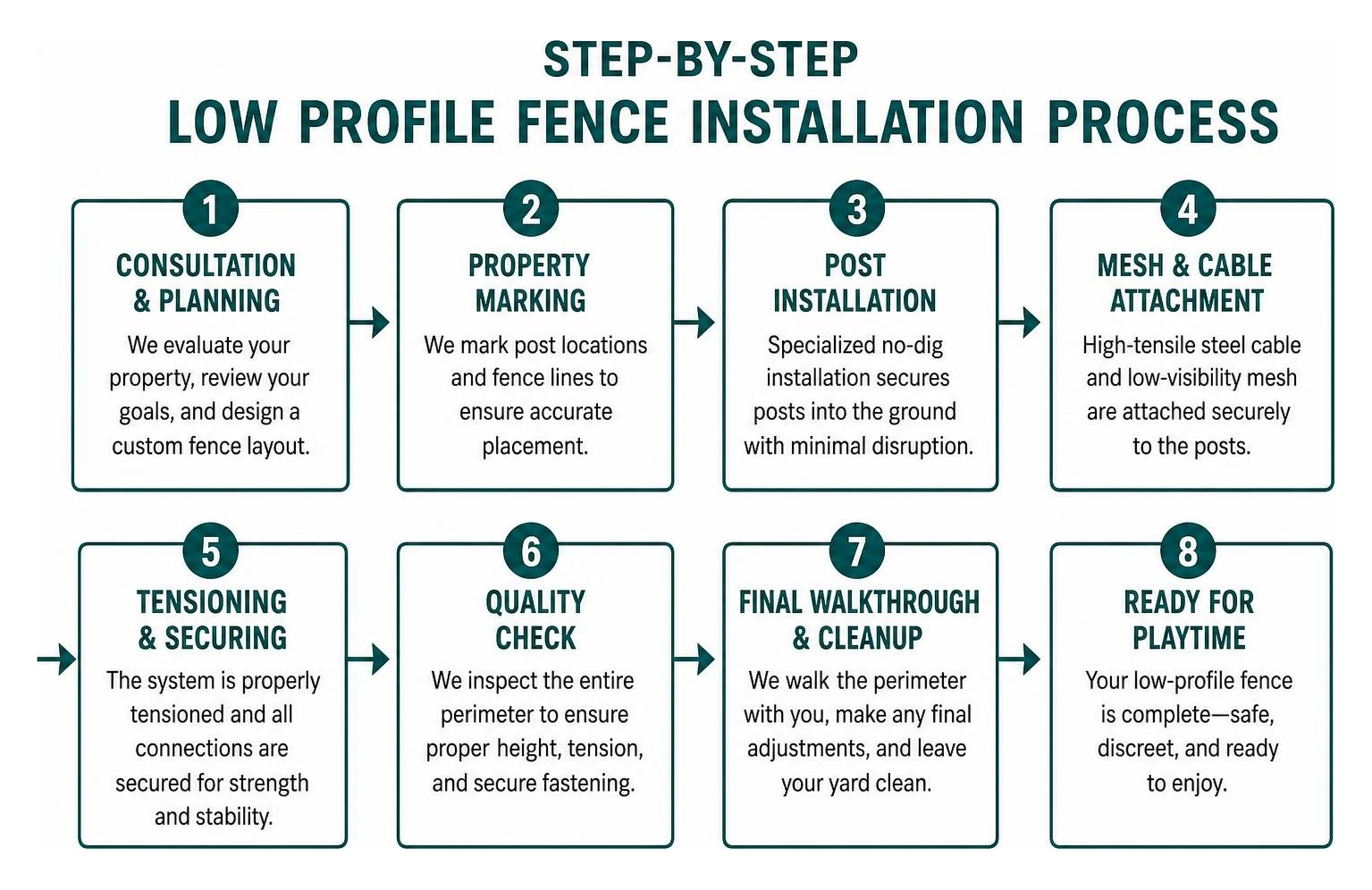
Rapid Installation Without Disruptive Trenching
One of the largest hurdles with conventional fencing or buried wire layouts is property disruption. Heavy machinery tears up pristine turf, leaves deep tire tracks across your grass, and risks slicing into buried irrigation lines or utility conduits.
Our purpose-built systems use specialized, no-dig post installation methods that anchor securely into the earth without massive excavation or concrete pouring. This streamlined approach protects mature tree root systems and delicate landscaping while dramatically speeding up project turnaround. Most residential projects across our New York locations are completed within 30 days of initial consultation, leaving your yard clean, intact, and ready for immediate playtime.
Superior Protection Against Escapes and Wildlife Intrusion
A common failure point of electronic-only boundaries is the "drive-through" effect: an excited dog chasing a squirrel or deer may willingly take a brief correction shock to blow past the boundary line, only to be trapped outside because they fear the shock when attempting to return.
A discreet physical barrier eliminates this failure mode entirely. Engineered using high-tensile steel cable and chew-resistant, UV-stabilized mesh, these barriers physically stop your dog from breaking out regardless of how high their prey drive spikes. Simultaneously, the barrier prevents neighborhood dogs, coyotes, and aggressive wildlife from stepping foot inside your yard, creating an enclosed sanctuary for your pets.
Choosing the Best Pet Containment Fence NY Homeowners Rely On
When evaluating perimeter options, comparing the practical differences between solid fencing, electronic underground wires, and non-electric low-visibility mesh reveals significant operational advantages for physical mesh barriers:
| Feature | Low-Profile Mesh Barrier | Traditional Solid Fence | Buried Electronic Wire |
|---|---|---|---|
| Physical Barrier | Yes (Keeps pets in & pests out) | Yes (Keeps pets in & pests out) | No (Deterrent only) |
| Collar Dependency | None (Zero electronics) | None | High (Requires charged collar) |
| Visual Impact | Virtually Invisible | High (Blocks views) | Invisible |
| Digging / Trenching | Minimal to none | Heavy (Post holes/concrete) | Continuous trenching |
| Relative Cost | Economical (30%+ savings) | Highest material & labor cost | Moderate to high |
| Wildlife Exclusion | Highly effective (Deer/Coyotes) | Effective | None |
| Winter Reliability | 100% (Handles heavy snow) | High (Prone to wind damage) | Moderate (Signal drift/breaks) |
For families living in suburban enclaves like Westchester County, finding a containment strategy that balances security with strict architectural community expectations is essential.
Why Property Layout Affects Your Pet Containment Fence NY Installation
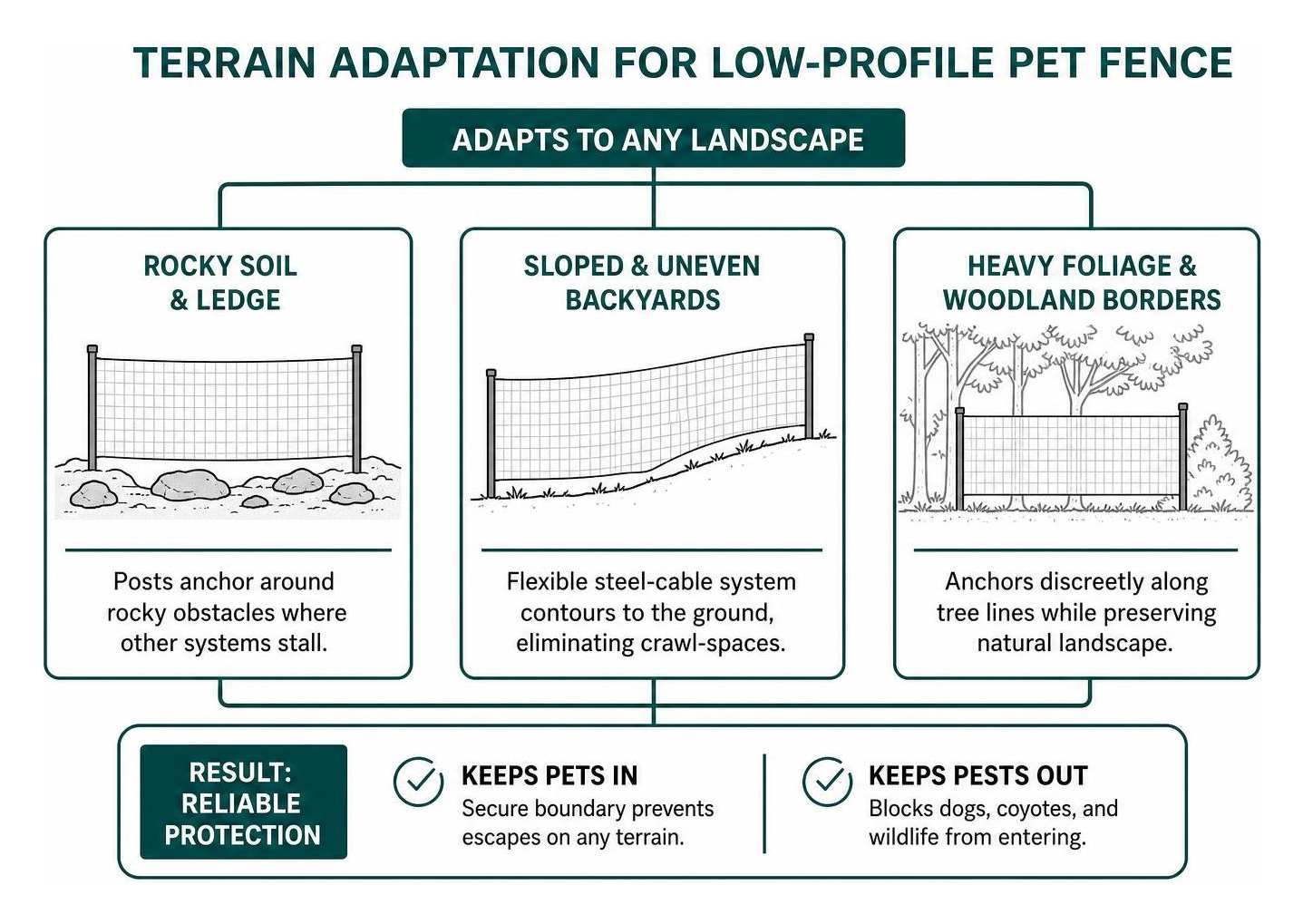
No two New York yards are identical. A system that works on a perfectly flat quarter-acre lot may fail on a rolling, rocky parcel with dense tree cover. When evaluating your boundary layout, several terrain factors come into play:
- Rocky Soil and Ledge: Subsurface rock formations can make post-hole augering or wire-trenching nearly impossible without costly heavy equipment. Low-visibility mesh posts can navigate around rocky obstacles and anchor firmly where other systems stall.
- Sloped and Uneven Backyards: Steep grade transitions often leave large gaps beneath standard rigid fence panels. Flexible steel-cable systems contour cleanly along natural ground undulations, eliminating crawl-spaces that crafty dogs love to exploit.
- Heavy Foliage and Woodland Borders: Affixing discreet systems along established tree lines preserves natural forest buffers while anchoring perimeter boundaries securely across expansive rural properties in the Hudson Valley or throughout Saratoga County.
Key Long-Term Cost Savings with a Pet Containment Fence NY Solution
Beyond initial installation expenses, the true cost of ownership includes ongoing maintenance, equipment replacements, and system upkeep. Electronic fences require ongoing expenditures on specialized proprietary batteries, replacement collar straps, and costly wire repairs when garden tools or seasonal ground movement sever the buried loop.
By contrast, an engineered physical steel-cable barrier incurs virtually zero recurring operational expenses:
- Zero Battery Overhead: No monthly or yearly battery replacements to budget for or remember to change.
- Weatherproof Materials: High-grade polymer coatings and corrosion-resistant steel cables withstand salt air on Long Island and humid coastal conditions across The Hamptons.
- Minimal Maintenance: No delicate electronic transmitters to fry during summer electrical storms or collar receivers to replace after rough play.
Regional Boundary Considerations Across New York Counties
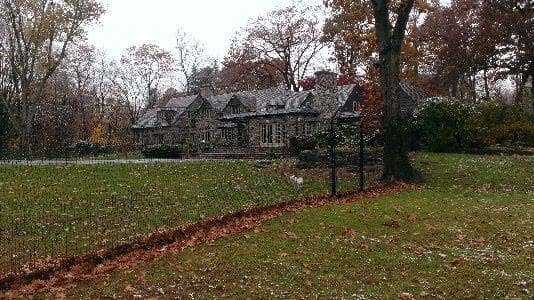
Installing a reliable containment system in New York means taking regional environmental patterns and municipal standards into account. From the historic estates of Bedford to the scenic residential properties in Chappaqua, each community presents unique considerations:
- Freeze-Thaw Frost Cycles: New York winters experience aggressive soil expansion and contraction. Solid concrete footings can heave out of alignment over time. Flexible steel-cable and drive-post configurations absorb seasonal frost heave without leaning or warping.
- Local Setback and Permitting Codes: Many municipalities place restrictions on fence height, placement near property lines, or visible materials. A virtually invisible barrier often bypasses complex permitting red tape because it does not alter the architectural skyline or block neighbor sightlines.
- Large Acreage Demarcation: Enclosing multi-acre lots with traditional wooden post-and-rail fencing can quickly become financially prohibitive. Low-profile mesh allows property owners to enclose several acres of woodland at a fraction of the cost.
Tailoring Boundaries for Suburban Properties and Estates
Suburban properties require a careful blend of security and understated elegance. In tree-lined neighborhoods like Armonk or sprawling coastal acreage around Huntington, homeowners often want to keep their pets from straying into dense brush where ticks and wildlife lurk. Custom perimeter layouts can hug the exact contours of wooded borders, keeping pets safely on managed turf while leaving the surrounding forest untouched.
Frequently Asked Questions About NY Pet Fencing
Will a low-profile mesh fence keep large or energetic dogs secure?
Yes. Our systems are engineered using high-tensile strength steel cables and industrial-grade poly mesh capable of handling impact from large, high-energy breeds such as German Shepherds, Labradors, and Golden Retrievers. The bottom edge is securely flared and staked flush against the ground, preventing energetic diggers from pushing their way underneath.
How do non-electric discreet fences withstand New York winters?
Our barriers are purpose-built for harsh northeastern winters. The open-mesh design allows heavy blowing snow and wind to pass directly through without creating structural resistance or snowdrifts that could push the fence down. All metal hardware is fully rust-resistant and treated to withstand sub-zero temperatures, heavy ice accumulation, and seasonal freeze-thaw soil movement.
Are low-visibility physical fences permitted by strict New York HOAs?
In the vast majority of cases, yes. Most HOA architectural restrictions target unsightly chain-link or bulky privacy fences that disrupt neighborhood consistency. Because our non-electric steel-cable and low-profile mesh systems blend into the natural backdrop and become virtually invisible from a short distance, they routinely satisfy strict aesthetic and preservation requirements.
Conclusion
Every dog deserves the freedom to run, explore, and play safely outdoors, and every homeowner deserves a beautiful yard free from obstructive visual barriers. By choosing a non-electric, low-visibility containment system, you protect your pets with a reliable physical boundary while saving 30% or more over traditional privacy fencing.
Ready to create a secure, open outdoor space for your four-legged family members? Contact our team today for a professional on-site yard assessment to design the ideal containment layout for your home.