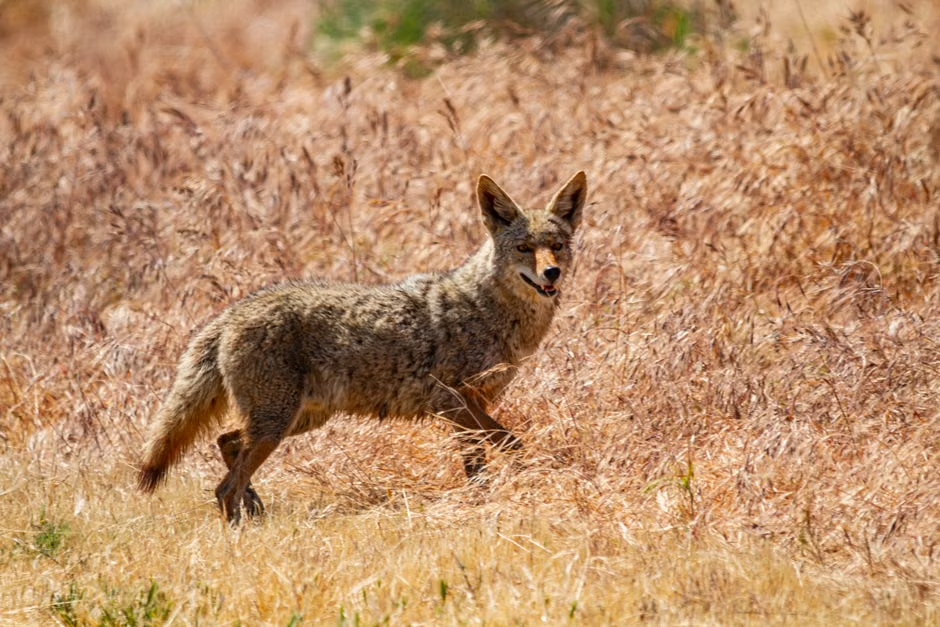
Can a Coyote Jump a 6-Foot Fence? Yes - and Your Dog May Still Be at Risk
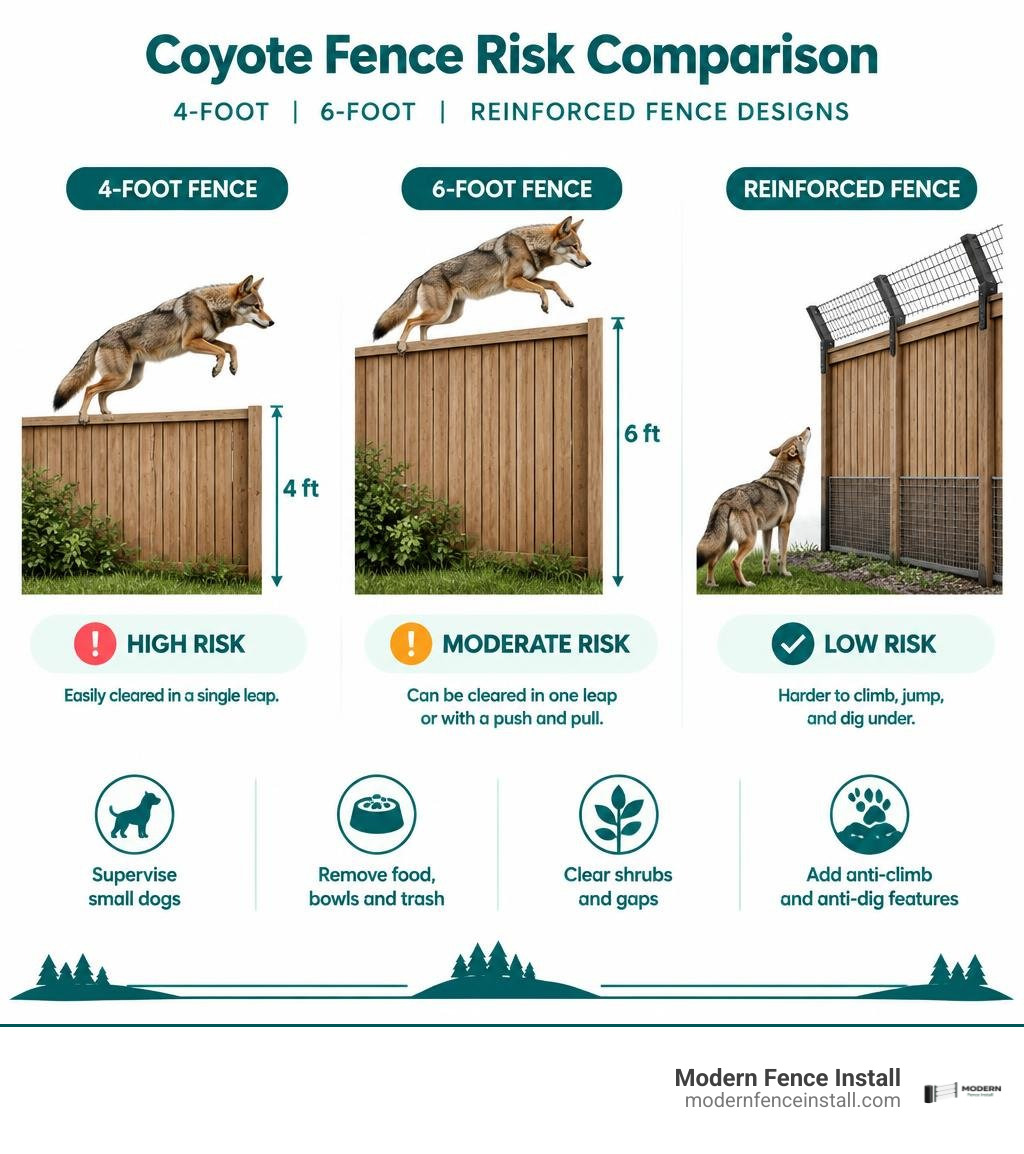
Yes, a coyote can jump a 6-foot fence. A healthy, motivated coyote may clear it in one leap or use its front paws to gain purchase and pull itself over. A standard 4- or 5-foot backyard fence is even less reliable, especially if it is chain link, has nearby shrubs, or has gaps underneath.
For pet owners, the practical takeaway is simple:
- Do not treat a 6-foot fence as a complete coyote barrier.
- Supervise small dogs outside, especially around dusk and dawn.
- Remove food, pet bowls, fallen fruit, and unsecured trash.
- Add anti-climb and anti-dig features if coyotes are active nearby.
Coyotes do not always enter a yard to chase a pet. They may be following a familiar route, looking for rodents or food, or passing through an urban area. But a small dog or cat can trigger prey drive, and a fence that is easy to jump, climb, or dig under gives a coyote an opening.
I am Jason Levine, EMT-B, a Senior Consultant at Modern Fence Install, where I help homeowners in Connecticut, New York, and Massachusetts choose discreet fencing systems for dogs, gardens, and wildlife pressure. When clients ask, "can a coyote jump a 6 foot fence," I help them look beyond height alone and assess the full perimeter for climbing, jumping, and digging risks.
Can a Coyote Jump a 6-Foot Fence? The Biomechanics of Wildlife Leaps
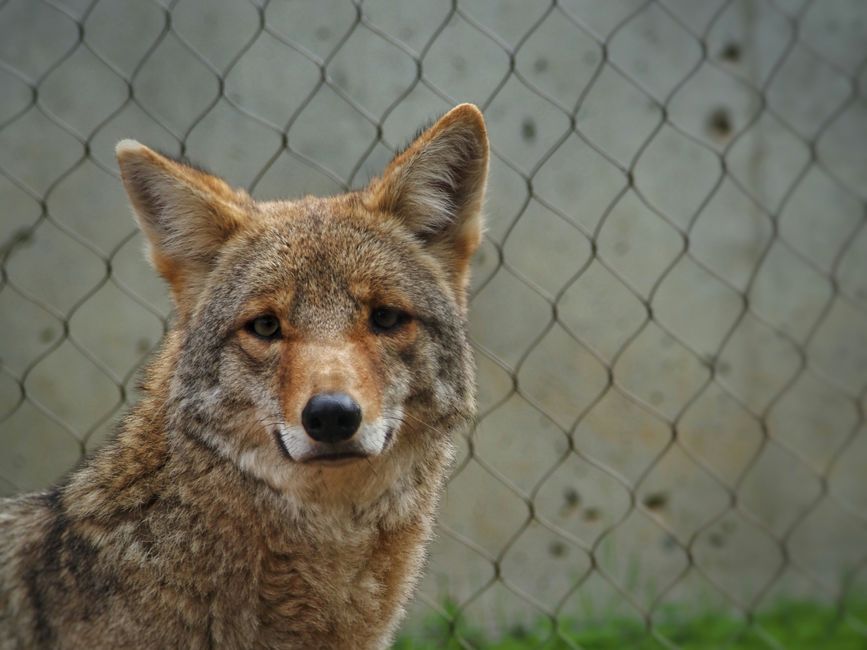
Understanding why standard backyard barriers fail starts with the biomechanics of wild canids. Coyotes are agile predators built for speed and elevation. An adult coyote can hit top running speeds of 43 mph and execute horizontal leaps spanning up to 13 feet. When facing vertical obstacles, their athletic capability surprises most suburban homeowners.
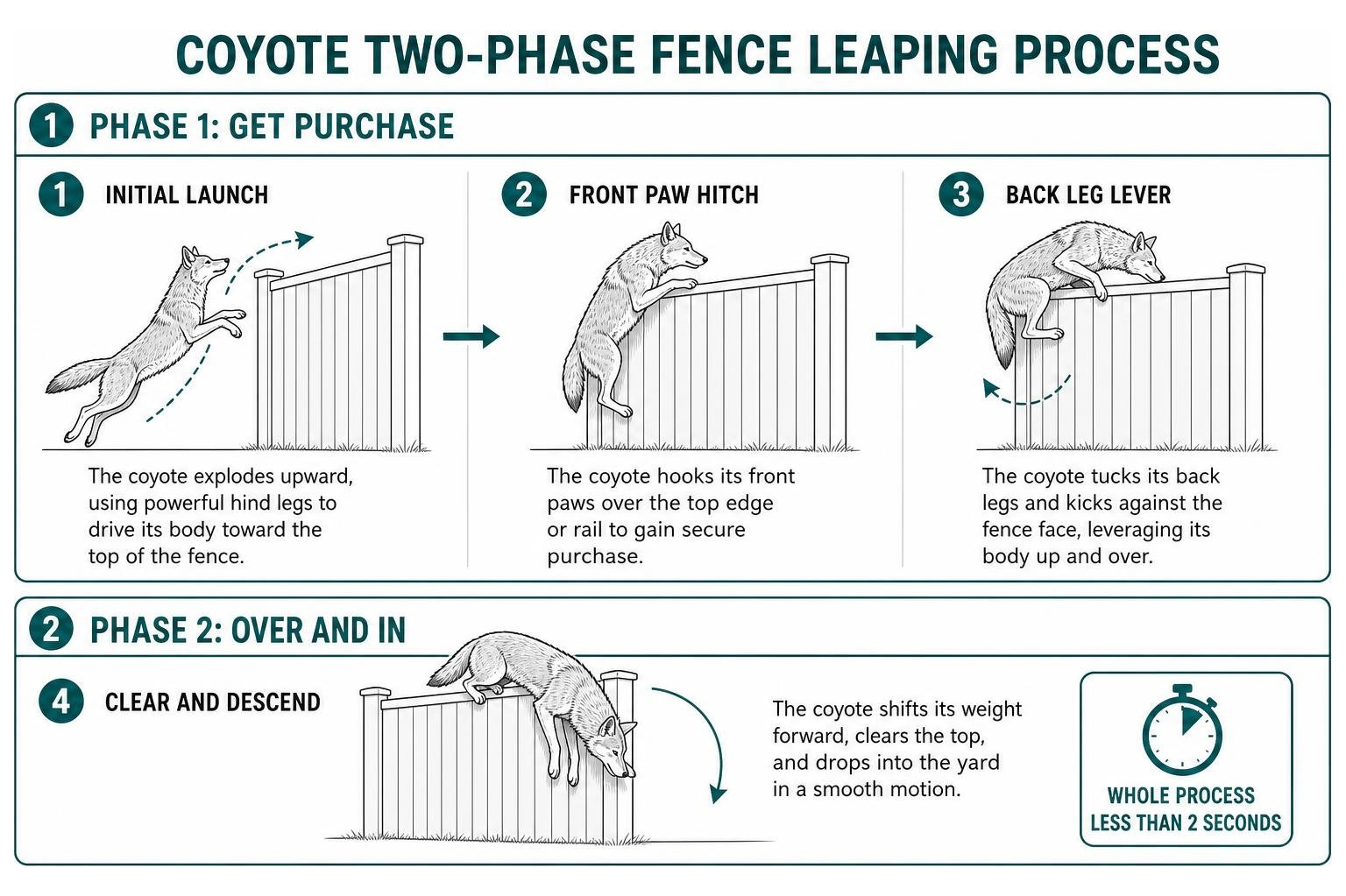
While an unassisted, pure vertical leap from a flat surface often peaks between 4 and 5 feet, coyotes rarely rely on an Olympic high-jump style to get into a yard. Instead, they utilize a two-phase leaping technique:
- The Initial Launch: The coyote explodes upward, using its powerful hindquarter muscles to drive its upper torso to the top rail or edge of the barrier.
- The Front Paw Hitch: Rather than clearing the structure cleanly in mid-air, the coyote hooks its front paws over the top edge of the fence board or rail.
- The Back Leg Lever: Tucking its back legs underneath its core, the coyote kicks against the vertical face of the fence, leveraging its body weight up and over in a continuous, fluid movement.
Using this coordinated sequence, clearing a 6-foot wooden privacy panel takes less than two seconds. As detailed in this scientific guide to coyote fence jumping capabilities, motivated coyotes routinely navigate structures that look insurmountable to domestic pet owners.
How Coyotes Clear High Barriers Beyond Pure Vertical Leaps
When pure leaping falls short, coyotes deploy impressive climbing and scrambling strategies. Their non-retractable claws, flexible wrist joints, and light body frames (typically 25 to 40 pounds) allow them to turn textured vertical surfaces into ladders.
- Chain-Link Exploitation: The diamond weave of chain-link fencing provides toeholds for agile paws. Coyotes can scramble up chain-link fences 8 to 14 feet tall by walking up the mesh.
- Corner Wedging: Fences meeting at 90-degree corners offer structural bracing. Coyotes can shimmy upward by pressing their limbs against perpendicular walls.
- Kinetic Momentum: Given a short running start, a coyote converts forward momentum into vertical thrust, scaling smooth wooden pickets with ease.
For a deeper breakdown of coyote survival and climbing tactics, behavioral researchers note that environmental adaptability makes these animals persistent problem-solvers when pursuing food or escaping threats.
Can a Coyote Jump a 6-Foot Fence from a Standstill?
A coyote can clear or scale a 6-foot fence from a complete standstill if the fence offers any traction for its paws. While a flat, standing vertical leap with zero physical contact tops out around 5 feet for most coyotes, the presence of a top rail, horizontal stringer board, or textured surface lets them spring up, grab the rim, and pull through without needing a running start.
Why Coyotes Target Fenced Yards and Threaten Domestic Pets
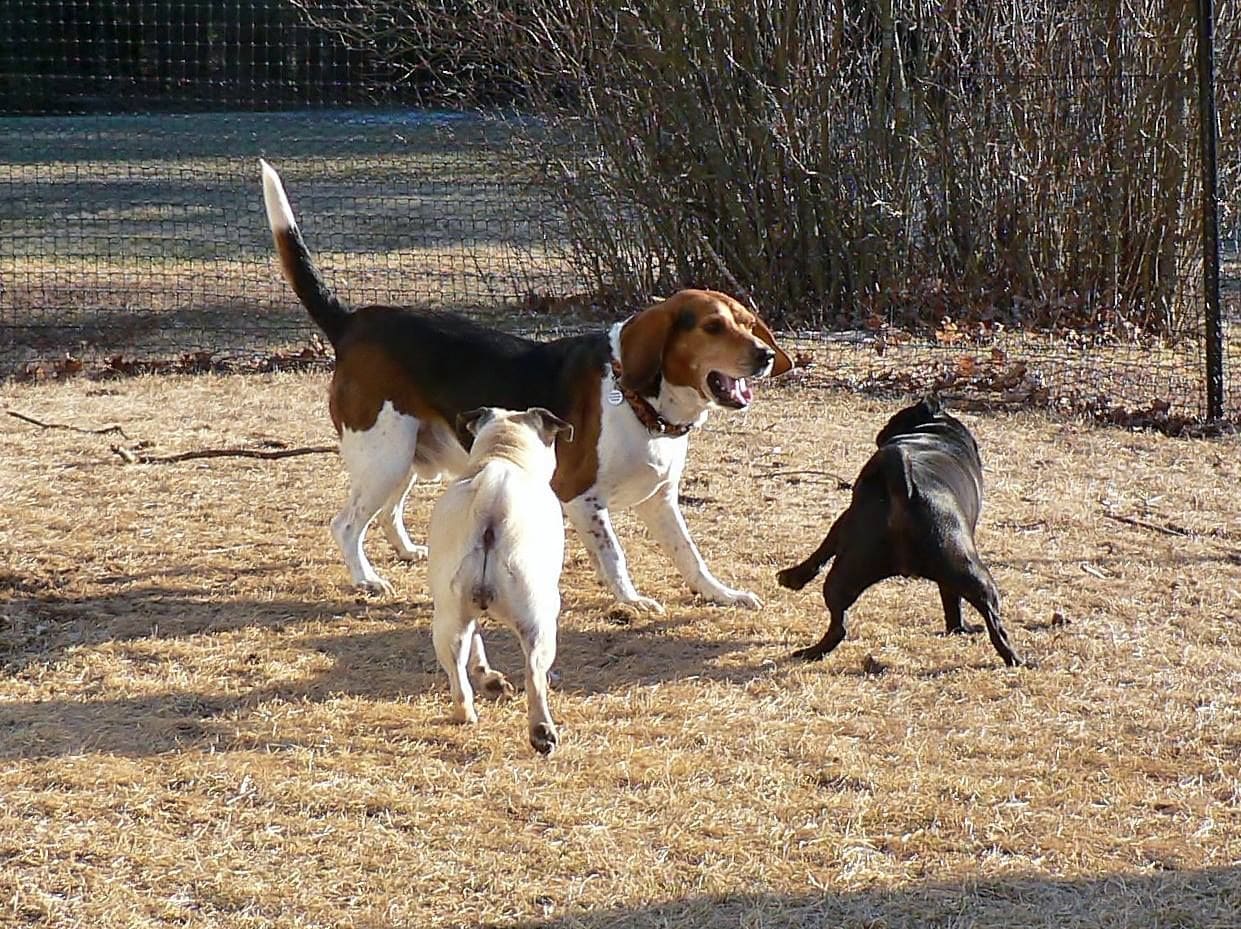
Backyards back up against greenbelts, power lines, golf courses, and conservation corridors across the Northeast and broader United States. Coyotes view fenced yards not as human sanctuaries, but as enclosed foraging patches.
Urban habituation has significantly reduced the natural fear coyotes historically held toward people. Well-manicured yards offer reliable resources: mice feeding on birdseed, fallen orchard fruit, open compost, outdoor cat food, and accessible pets.
Pet vulnerability correlates directly with animal size:
- Small Dogs (< 25 lbs): Account for approximately 70% of recorded coyote attacks on domestic pets. To a hungry coyote, small breeds resemble natural prey like rabbits and groundhogs.
- Domestic Cats: Represent roughly 20% of coyote pet encounters.
- Medium to Large Dogs (> 25 lbs): Comprise roughly 10% of conflicts, which are driven primarily by territorial disputes during mating season rather than predation.
An analysis of coyote pet predation patterns reveals that winter food scarcity magnifies risk. Around 60% of pet attacks happen during the coldest months of the year, with 41% of verified fence jumps concentrated in January and February.
Seasonal Coyote Behavior and Pack Dynamics
Coyote behavior follows strict seasonal rhythms that impact backyard security throughout the year:
- Breeding Season (January – March): Coyotes become bolder and more territorial. Large dogs are viewed as competitive threats, while unpaired coyotes travel wider circuits.
- Pup-Rearing Season (April – August): Adults actively forage to supply litters in nearby dens. Encounters near property borders rise as parent coyotes defend territory spanning 5 to 6 miles in diameter.
- Dispersal Season (September – December): Yearlings venture out to claim new territories, leading to unpredictable sightings across suburban neighborhoods.
Effective Physical Fence Designs to Stop Coyote Incursions
To exclude coyotes, a physical enclosure must address three vectors: jumping over, climbing up, and digging under.
| Fence Type | Standard Height | Jump & Climb Resistance | Dig Protection | Pet Safety Rating |
|---|---|---|---|---|
| Standard Wood Privacy | 6 Feet | Moderate (Paws can grip top rail) | Low (Prone to bottom rot/gaps) | Fair |
| Traditional Chain-Link | 4–6 Feet | Very Poor (Acts like a ladder) | Poor (Liftable bottom tension) | Unsafe |
| Split Rail with Wire | 4–5 Feet | Poor (Easily cleared in stride) | Poor (Open underneath) | Unsafe |
| Engineered Anti-Climb Mesh | 6–8 Feet | Excellent (No toeholds; flexible top) | Excellent (Buried apron/flange) | Maximum |
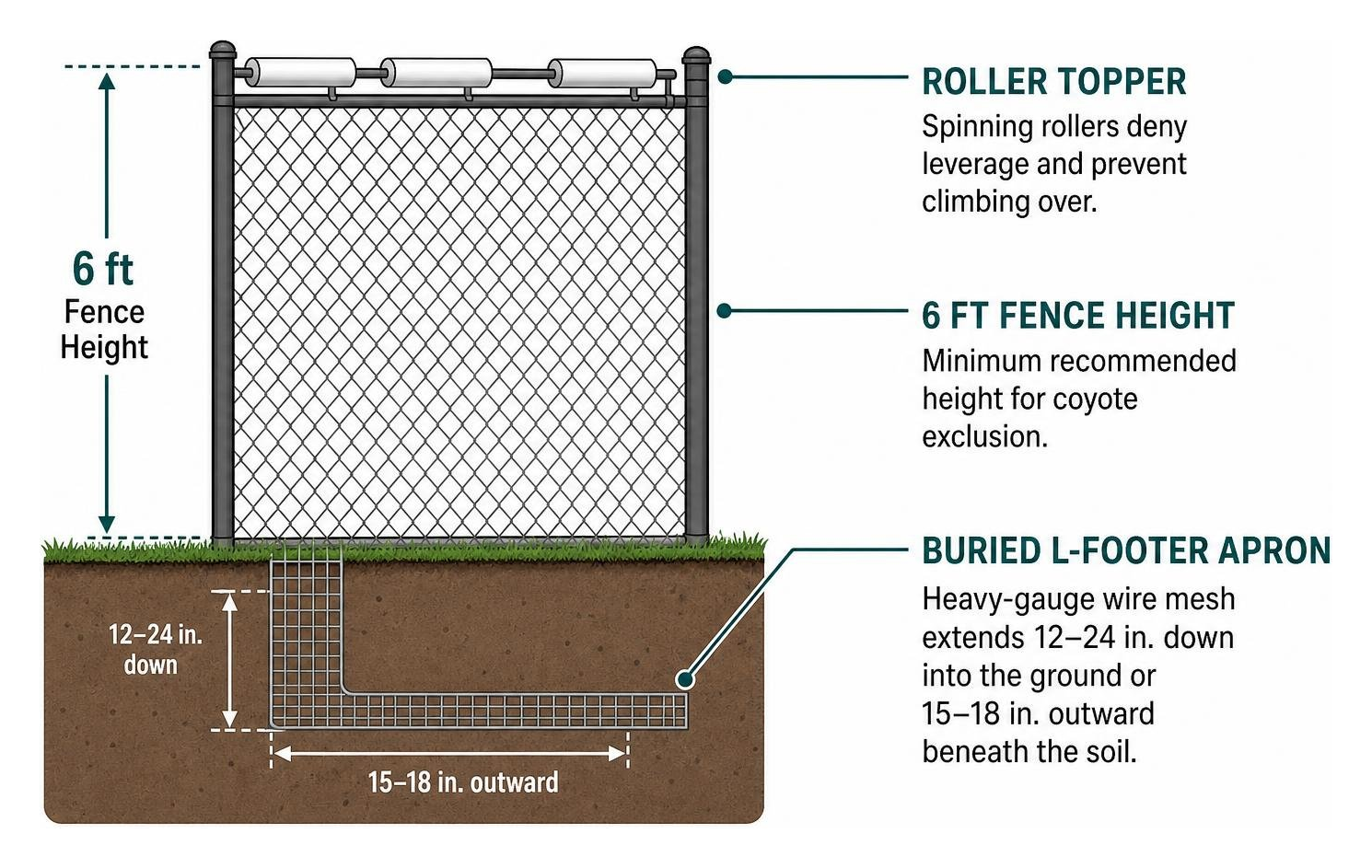
Standard residential fence heights of 4 to 6 feet fail to prevent determined wildlife entry. An 8-foot total barrier height—or a 6-foot non-climbable fence equipped with specialized toppers—is the baseline standard for wildlife exclusion.
To prevent digging underneath, fences should incorporate a buried wire apron (an L-footer). Heavy-gauge galvanized mesh extends 12 to 24 inches down into the soil, or runs 15 to 18 inches flat outward beneath the turf along the yard perimeter. When a coyote attempts to dig at the fence line, its claws hit the wire mesh, shutting down subterranean entry.
Upgrading Existing Enclosures with Rollers and Toppers
If replacing an existing 6-foot fence is not practical, retrofitting the perimeter with anti-climb hardware helps deter jumping:
- Coyote Rollers: These specialized mechanical assemblies feature 4-inch diameter aluminum or PVC tubes mounted on free-spinning center axles along the top fence rail. When a jumping coyote places its front paws on the fence line to pull itself up, the roller spins freely under its weight, denying leverage and causing the animal to slip back down.
- Inward-Angled Mesh Overhangs: Adding an angled bracket that extends mesh 15 to 20 inches inward at a 45-degree angle stops coyotes from clearing the top rail.
- Clearing Perimeter Launch Pads: Trim tree branches, move firewood piles, and position storage sheds at least 6 feet away from the fence interior and exterior so coyotes cannot use them as jump platforms.
Layered Deterrents: Scent, Sound, and Yard Management Strategies
Physical barriers perform best when supported by yard management practices that remove attractants:
- Auditory and Visual Hazing: Motion-activated floodlights, strobe lights, and sprinkler systems startle visiting predators. Keep an air horn, whistle, or shaker can (a soda can filled with pennies) by the back door to haze coyotes away.
- Scent Deterrents: Dusting perimeter zones with cayenne pepper or spraying predator urine formulas offers short-term disruption, though scent barriers wash away in rain and require frequent reapplication.
- Eliminating Food Attractants: Feed domestic pets indoors. Secure outdoor trash cans with locking lids, harvest fallen fruit from trees immediately, and clean grease trays on outdoor barbecue grills.
- Supervision Routines: Never leave small pets unattended in the backyard between dusk and dawn, regardless of fence design.
Frequently Asked Questions About Coyote Fence Barriers
Can a coyote jump a 6-foot fence to attack a pet?
Yes. If a coyote spots a small dog or cat inside a yard, predatory drive can prompt it to jump a 6-foot barrier. The coyote can enter the yard, attack, and scale back over the fence with small prey in a matter of seconds.
Is a 4-foot chain-link fence enough to keep coyotes away from dogs?
No. A 4-foot chain-link fence provides no real protection. Coyotes can clear a 4-foot barrier from a standstill without touching it, or use the chain links as footholds to climb over.
At what fence height are small dogs completely safe from coyotes?
A smooth, non-climbable 8-foot fence with an anti-dig buried apron provides comprehensive perimeter protection. Alternatively, a 6-foot smooth-faced fence fitted with commercial coyote rollers and an L-footer apron reliably excludes coyotes.
Conclusion
A standard 6-foot wooden or chain-link fence is not an impenetrable barrier against wildlife. Coyotes are agile, intelligent jumpers that exploit vertical rails, climbing surfaces, and ground gaps to reach food sources and pursue prey.
Safeguarding pets requires a multi-layered approach: eliminating yard attractants, supervising vulnerable animals, and upgrading to purpose-built, non-climbable physical barriers. We install engineered, low-visibility steel-cable and discreet mesh fence systems across Connecticut, New York, and Massachusetts that integrate anti-dig and anti-climb protection without disrupting yard aesthetics. Explore our engineered non-electric coyote fencing solutions to protect your property and keep your pets safe.