Coyote populations have exploded across the suburban Northeast and Mid-Atlantic over the past decade. If you have a small dog, a cat that goes outside, or chickens, the question isn't whether coyotes are around — it's how well your fence handles them. The good news: a properly built fence stops coyotes reliably. The bad news: most residential fences are not properly built for it.
This guide covers the actual specs that work — drawn from properties we've fenced where coyote sightings dropped to zero after install — plus the common mistakes that turn an expensive fence into an expensive suggestion.
Understanding coyote behavior (so the fence makes sense)
Coyotes are opportunists, not athletes. They prefer the path of least resistance: walking around your fence, slipping under a gap, or digging at a soft spot. Climbing and jumping are last resorts. That's why the fence design that actually stops them looks different from one designed against, say, a determined dog.
- Most coyote intrusions happen at gaps, gates, or dig sites — not over the top.
- Coyotes hunt most actively at dawn and dusk; nighttime intrusions are common in summer.
- A single coyote will assess and leave; a pack will probe more aggressively.
- Suburban coyotes lose fear of fences faster than rural ones — they've seen more of them.
The minimum spec that actually works
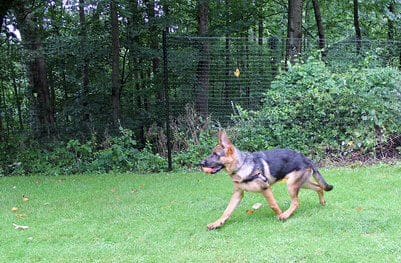
- Height: 6 feet absolute minimum, 7 feet preferred.
- Mesh: tight enough that a coyote head won't fit through (typically 2-inch or smaller at the bottom).
- Dig prevention: buried apron or L-footer at the base — coyotes dig before they jump.
- No climbable surface adjacent — woodpiles, trash bins, A/C units near the fence are escape ladders.
- Solid, self-latching gates with no gap at the bottom.
- No gaps at corners or where the fence meets buildings.
Do coyotes dig under fences? Mesh, height and dig prevention
| Component | Minimum | Recommended | Notes |
|---|---|---|---|
| Height above grade | 6 ft | 7 ft | 8 ft+ for high-pressure areas |
| Bottom mesh opening | 2 in | 1.5 in or smaller | Prevents head-through and pup intrusion |
| Buried apron width | 12 in | 18 in | Outward L-footer; doesn't need a full trench |
| Apron depth | Surface | 4–6 in | Just enough to defeat scratch-digging |
| Post depth | 24 in | 36 in (with concrete on corners) | Frost-line varies by region |
| Gate gap at ground | <2 in | Brush seal or buried | Most-overlooked weak point |
What about coyote rollers?
Coyote rollers (spinning bars at the top of the fence) work well as an upgrade to an existing 5–6 foot fence, but they're a band-aid. They prevent the climb-and-pull-over technique used by larger dogs and coyotes. If you're installing new, build to height instead — taller is cheaper than retrofitting toppers later.
What does not work
- Invisible / electric fences — they do nothing to keep coyotes out, only your dog in.
- Open-bottom split rail or post-and-rail — coyotes walk through.
- Decorative metal fencing under 5 feet — easily jumped or climbed.
- Solar-powered predator deterrent lights — short-term effect at best; coyotes habituate.
- Coyote urine, ammonia, or hair-from-a-barber-shop tricks — all anecdotal, none reliable.
- A loose dog 'on patrol' — increases risk of a direct encounter rather than reducing it.
Real-world spec we use for coyote-prone properties
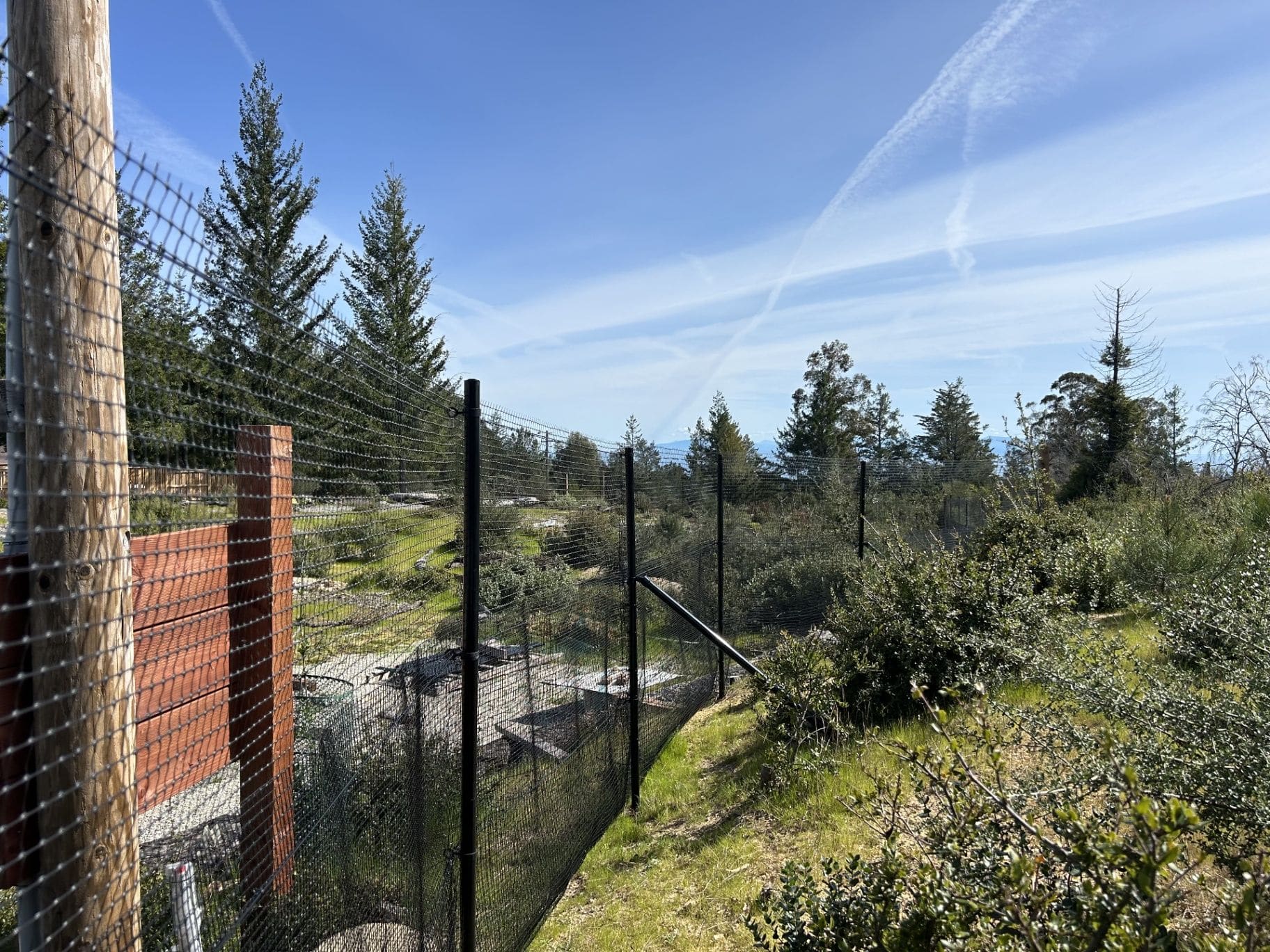
On properties with documented coyote pressure, we typically install 7-foot black knotted polypropylene mesh on galvanized steel posts, with a 12-inch buried apron and tightened corners. The mesh is barely visible against trees but functionally impassable for canines. For acreage with chickens or small livestock, we'll go to 8 feet plus a 2-inch hardware-cloth bottom band to defeat fox and raccoon as well.
Gates: the weak link nobody talks about
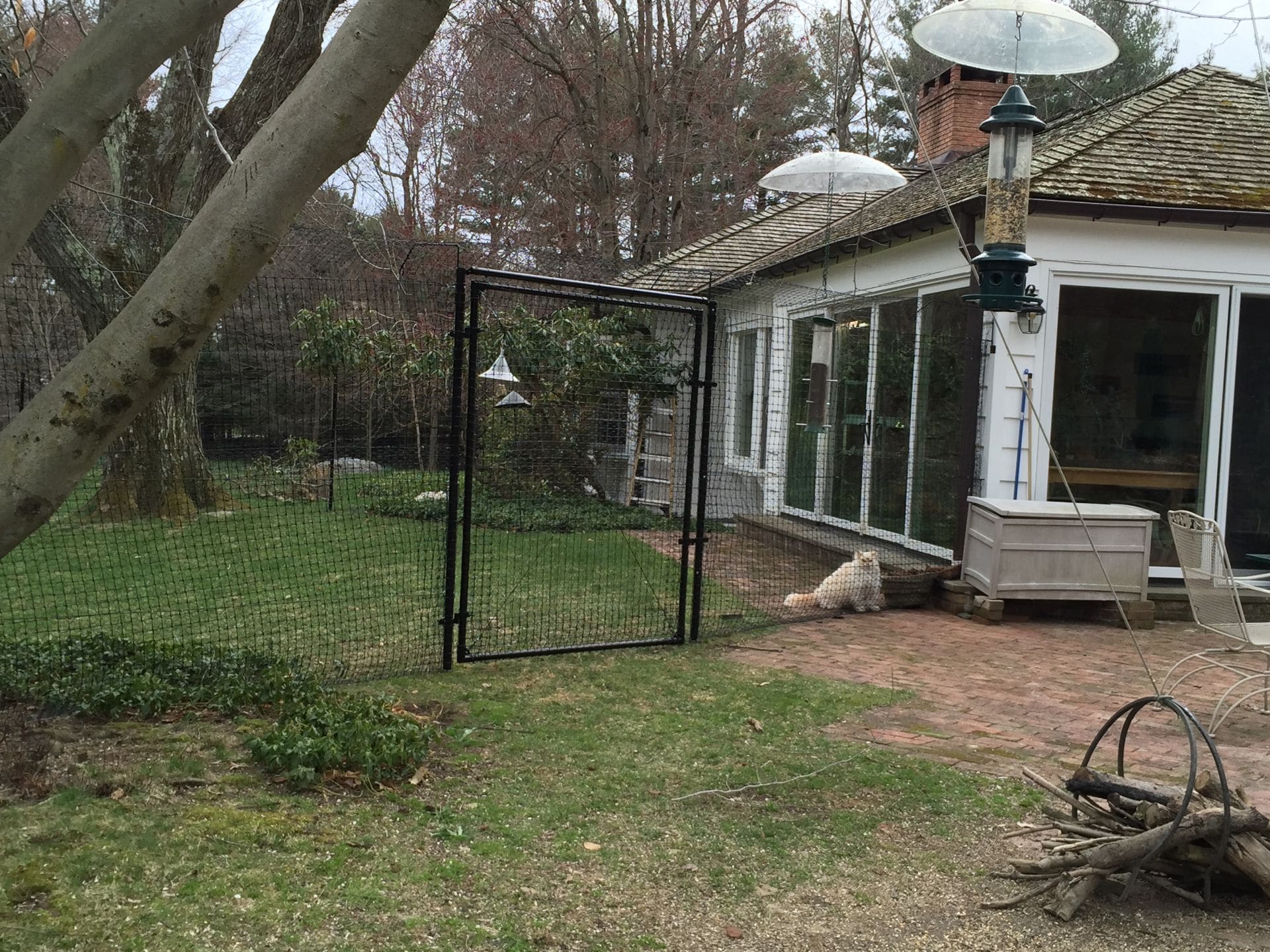
We've inspected many properties where the fence is solid but the gate has a 4-inch gap underneath, a latch that doesn't self-close, or hinges that allow the gate to be pushed inward. A coyote can be through a bad gate in seconds. Spec your gate to the same standard as the fence — same height, same mesh, same ground clearance, plus a self-closing latch that engages even if it's only swung 6 inches.
Layered protection for high-risk yards
- Primary: 7+ ft mesh perimeter with buried apron and tight gates.
- Secondary: motion-activated lights at the most likely approach corners.
- Tertiary: clear sight-lines — remove brush within 8 ft of the fence so coyotes can't approach unseen.
- Behavioral: don't leave pet food, fallen fruit, or bird feeders accessible — they invite the test.
- Vigilance: supervise small dogs at dawn and dusk even with a good fence; gates are the failure mode.
What does coyote-rated fencing cost?
Expect $14–$20 per linear foot installed for a proper 7-ft mesh system with apron. A typical suburban backyard (300–500 ft) lands $4,500–$10,000. That's substantially more than a basic 4-ft chain link, but the alternative — losing a pet — is what most clients are trying to avoid.
Ready to talk specifics?
Get a custom dog fence installation quote
Free virtual consultation, no pressure, custom recommendation for your property. Your install timeline is confirmed in your written proposal.