Deer fence pricing varies more than almost any other home improvement project — because it's driven less by square footage and more by perimeter, terrain, and gates. A 1-acre lot with a clean, flat perimeter can cost less than a quarter-acre lot full of slope, ledge, and trees. Here are real 2026 numbers from actual residential installs across the Northeast and Mid-Atlantic, plus the variables that move the price up or down so you can budget accurately.
Most homeowners we talk to have already gotten one or two quotes that came in 2-3x apart, and they're trying to figure out which one is real. The honest answer: both might be — they're often pricing different fences. This guide breaks down what you're actually paying for so you can compare apples to apples.
The 2026 ballpark range
These ranges are for professionally installed 7.5–8 ft black knotted polypropylene mesh on galvanized steel posts — the spec that actually keeps deer out long-term. Cheaper kits exist; they fail in 2–4 winters.
| Project size | Linear feet (perimeter) | Typical install cost | Cost per foot |
|---|---|---|---|
| Garden / orchard enclosure | 200 – 500 ft | $3,500 – $9,000 | $15 – $20 |
| Backyard perimeter | 500 – 1,200 ft | $8,000 – $20,000 | $14 – $18 |
| Full property (1–3 acres) | 1,000 – 2,000 ft | $15,000 – $35,000 | $13 – $18 |
| Estate (3–10+ acres) | 2,000 – 5,000+ ft | $25,000 – $90,000+ | $11 – $18 |
What's actually included in a quote
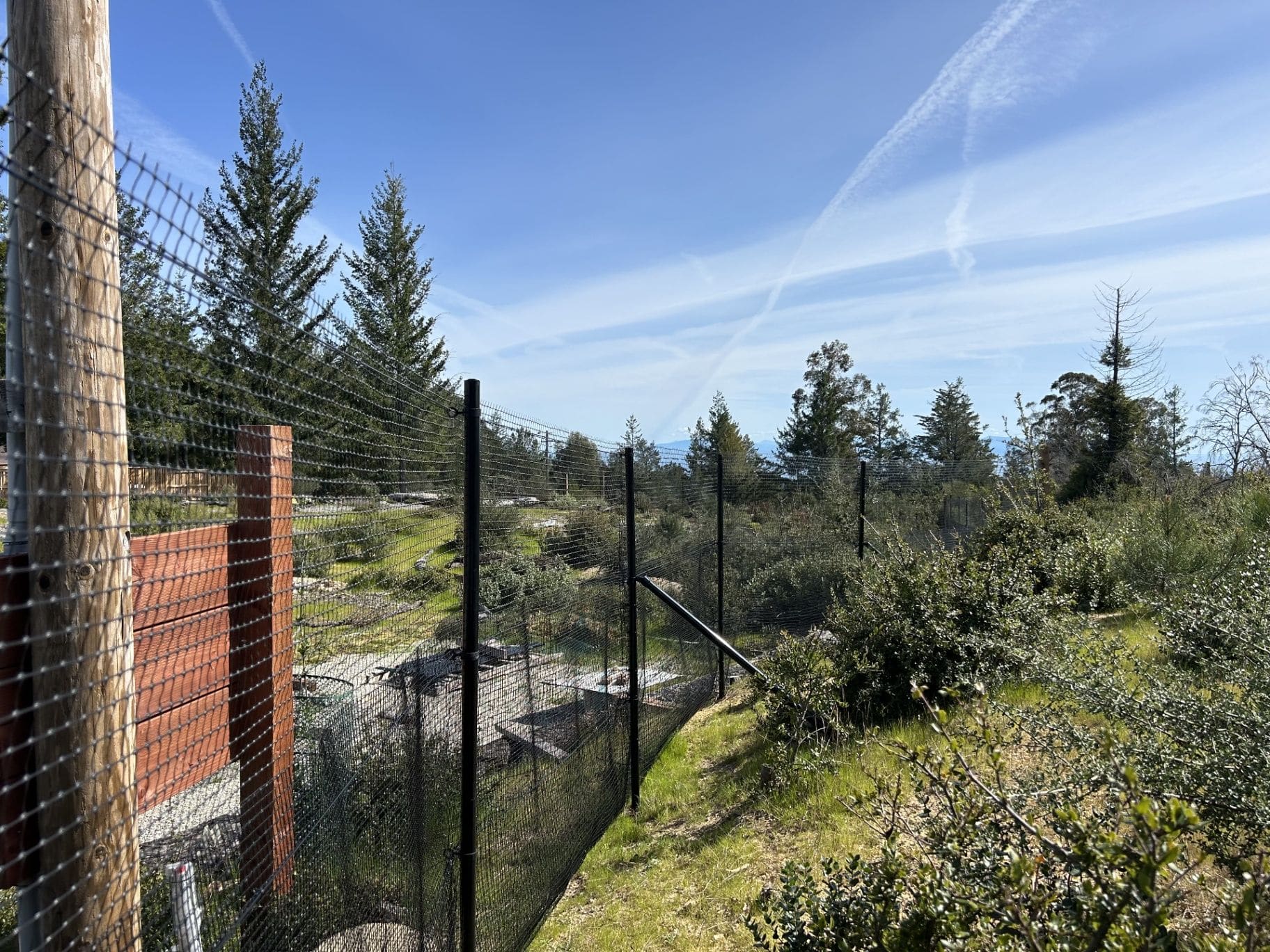
Two quotes for the same property can differ by $10,000 — and both can be 'fair' — because they include different things. Here's what a complete deer fence quote should itemize:
- Mesh — type (knotted polypropylene vs welded wire), height, gauge, color, and warranty.
- Posts — material (galvanized steel vs T-post vs wood), diameter, depth, and spacing.
- Concrete — for terminal and corner posts (and how many).
- Hardware — tensioning system, ground stakes, ties, brackets.
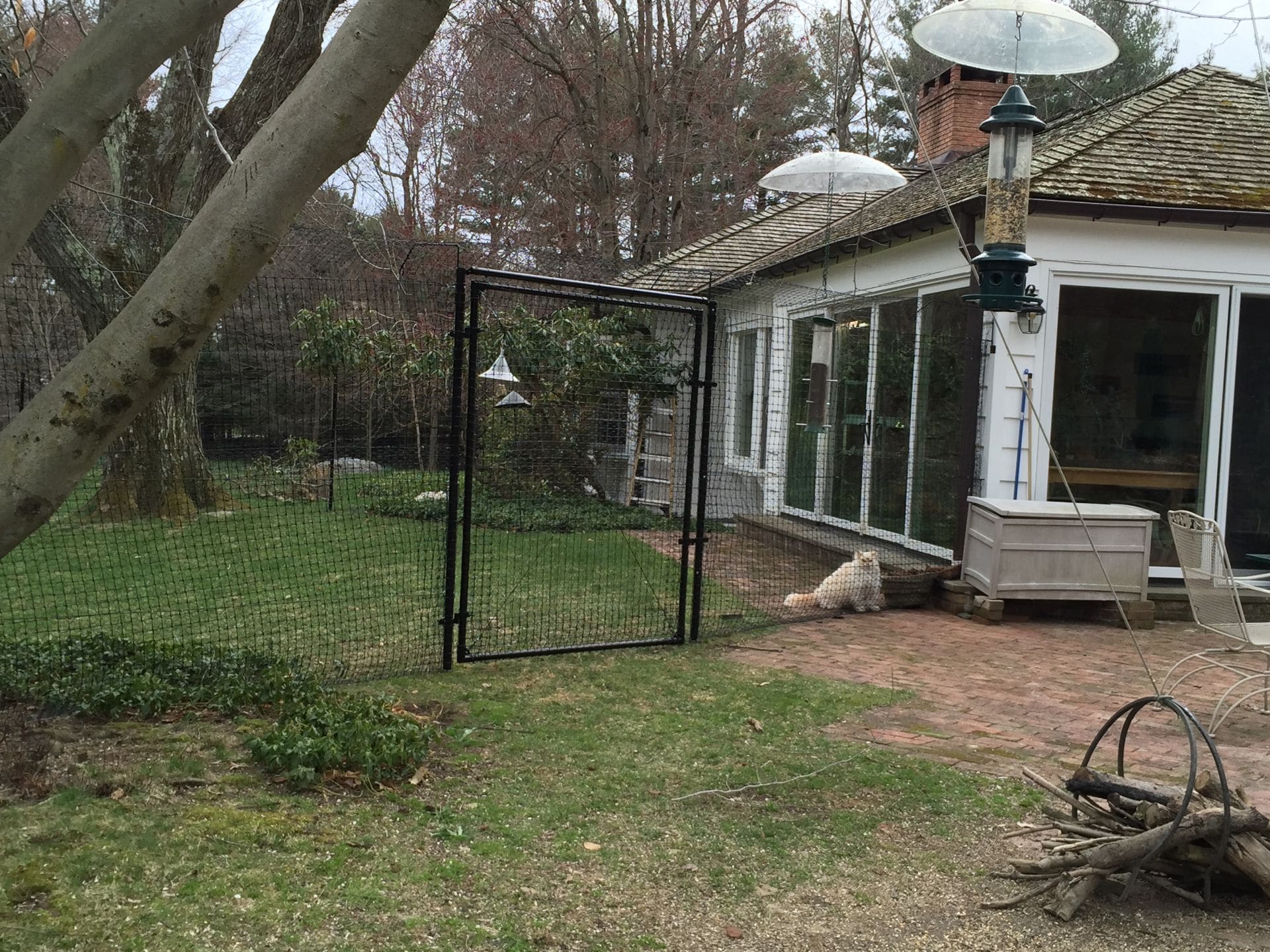
- Gates — quantity, width, walk-through vs vehicle, latch type.
- Site work — clearing brush, removing existing fencing, hauling debris.
- Permits — if your municipality requires one.
- Warranty — labor and materials separately, with a clear duration.
What drives cost up
- Gates — every walk-through gate adds $400–$900; double-leaf vehicle gates $1,500–$4,000.
- Tree clearing along the fence line — $5–$15 per linear foot of cleared run.
- Slope, ledge, or wetlands requiring custom post setting or hand-augering.
- Reinforced corners and tension points on long perimeters.
- Premium hardware (galvanized vs powder-coated stainless).
- HOA-required aesthetic upgrades (decorative posts, top rails, screening plantings).
- Tall sections — going from 7.5 ft to 10 ft adds roughly 20% material cost.
- Remote sites — anything more than ~30 minutes from the contractor's base may carry a travel surcharge.
What drives cost down
- Straight, flat perimeters with few corners.
- Existing cleared fence line (no tree work needed).
- Standard 7.5–8 ft height (vs custom 10 ft estate spec).
- Fewer gates — consolidate to one main entry where possible.
- Off-season scheduling (late fall / winter) — often 5–10% lower.
- Bundling with neighbors — if two adjacent properties install at once, mobilization is shared.
- Skipping aesthetic upgrades that don't affect performance (decorative caps, etc.).
Material types and what they cost
| Material | Lifespan | Visibility | Relative cost |
|---|---|---|---|
| Black knotted polypropylene mesh | 20+ years | Very low | $$ (our default) |
| Welded wire (galvanized) | 15–25 years | Medium | $$ – $$$ |
| Vinyl-coated chain link | 20–30 years | High | $$$ |
| Wood post-and-rail with mesh | 10–15 years | Highest | $$$$ |
| DIY T-post + plastic mesh kit | 2–4 years | Medium-high | $ (failure-prone) |
What you should not skimp on
Three things that always pay back: (1) galvanized hardware rated for your climate — coastal salt air destroys cheap hardware in 5 years; (2) properly tensioned mesh — under-tensioned fences sag within 2 winters; and (3) terminal post depth and concrete. A cheap install fails at the corners first, and corners are also the most expensive thing to fix retroactively.
Financing and payment structure
Most reputable installers use a 3-stage payment: deposit at contract (typically 25–35%), progress payment when materials are delivered or posts are set, and final payment at walkthrough. Be cautious of any contractor who wants more than 50% upfront — that's a red flag for cash-flow problems.
How to get a real estimate
- Walk your perimeter with a measuring wheel or estimate from satellite imagery (Google Maps measure tool works well).
- Count gates and decide where vehicle access is needed.
- Note slope, wetlands, and any tree clearing.
- Get 2–3 itemized quotes — not per-foot quotes.
- Ask each contractor what hardware brand and gauge they use.
- Verify warranty terms in writing — labor and materials separately.
- Check at least 2 references for installs over 3 years old (anyone can install a fence; the question is how it looks at year 5).
Long-term cost of ownership
A properly installed deer fence has near-zero ongoing cost for the first 15+ years. Budget $0–$200/year for occasional re-tensioning or gate hardware. Compare that to repeated garden replanting, lost orchard fruit, or landscaping damage — most of our clients calculate payback within 2–4 seasons.
Ready to talk specifics?
Get a custom deer fence installation quote
Free virtual consultation, no pressure, custom recommendation for your property. Your install timeline is confirmed in your written proposal.