A productive vegetable garden in deer country is a buffet with a sign on it. Deer can erase a year of work in a single night, rabbits clear out seedlings before they have a chance to root, and groundhogs methodically eat their way through everything you planted. Here's the spec that actually keeps everything out — without turning your garden into Fort Knox or breaking the budget.
This guide covers the actual hardware combinations that work, sizing, gate design, and the cheap tricks to retrofit an existing garden enclosure. We'll also cover what doesn't work — there's a long list of repellents, sprays, and gimmicks that sell well and fail in the field.
The threats, ranked by what they do
| Pest | Damage pattern | Counter |
|---|---|---|
| Deer | Browses everything overnight; tops off taller plants | 7–8 ft fence height or 6 ft + visual deterrent |
| Rabbits | Chews seedlings to the ground at the stem | Tight mesh at base, ≤1 inch opening, 24-in tall |
| Groundhogs | Digs in, eats everything to the ground | Buried L-footer or apron, 18-in outward |
| Voles | Tunnels under, eats roots and bulbs | Hardware cloth under raised beds, ¼-in mesh |
| Birds | Eats berries, seedlings, fruit | Netting overhead during fruit/seed window |
| Squirrels | Tomatoes, sunflowers, sweet corn | Overhead netting; nothing else reliable |
| Raccoons | Sweet corn (specifically) the night before harvest | Electric strand at top + closed gate |
| Chipmunks | Bulbs, seeds, strawberries | Tight base mesh; very hard to fully exclude |
The all-in-one spec we install most often
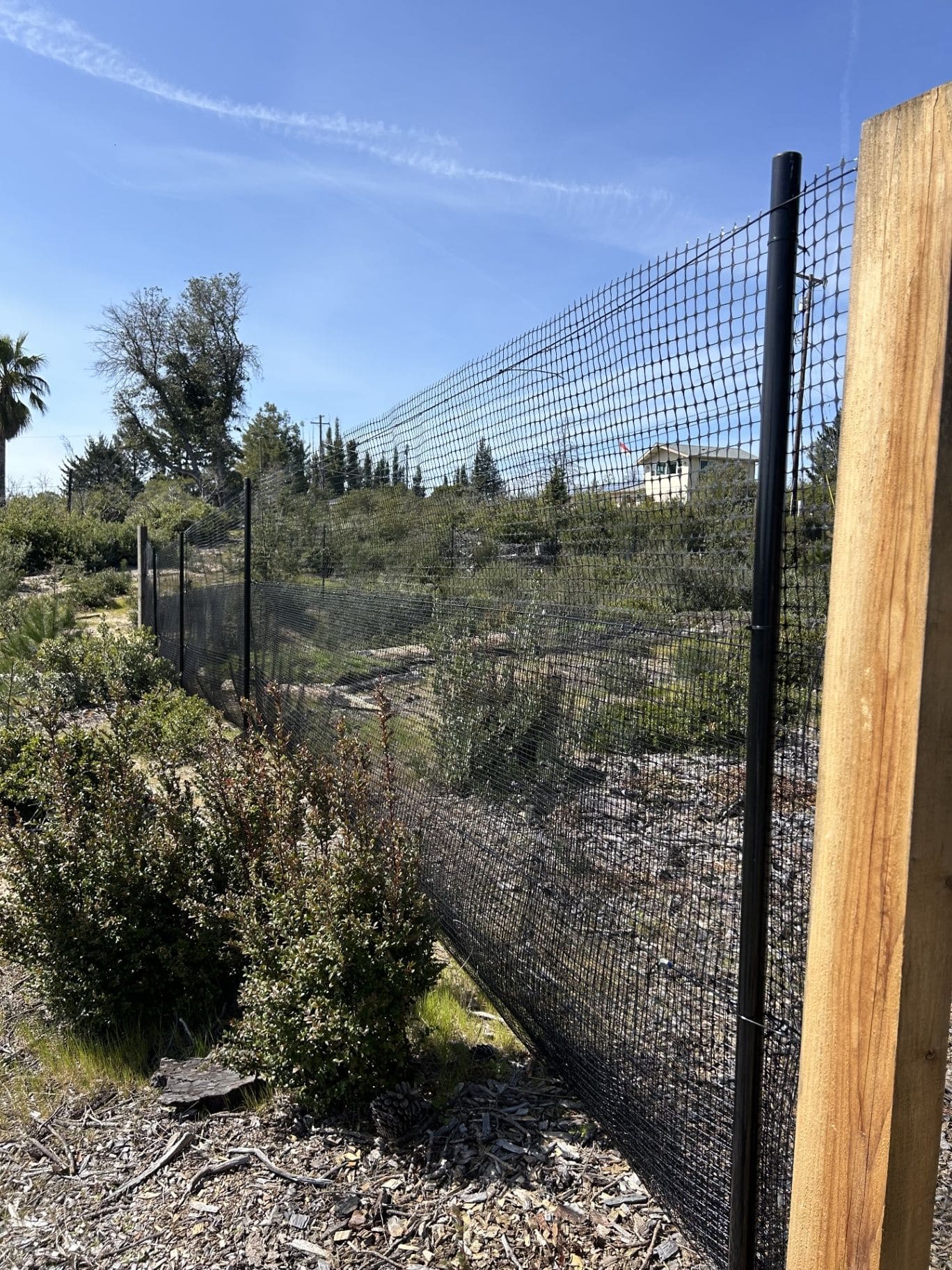
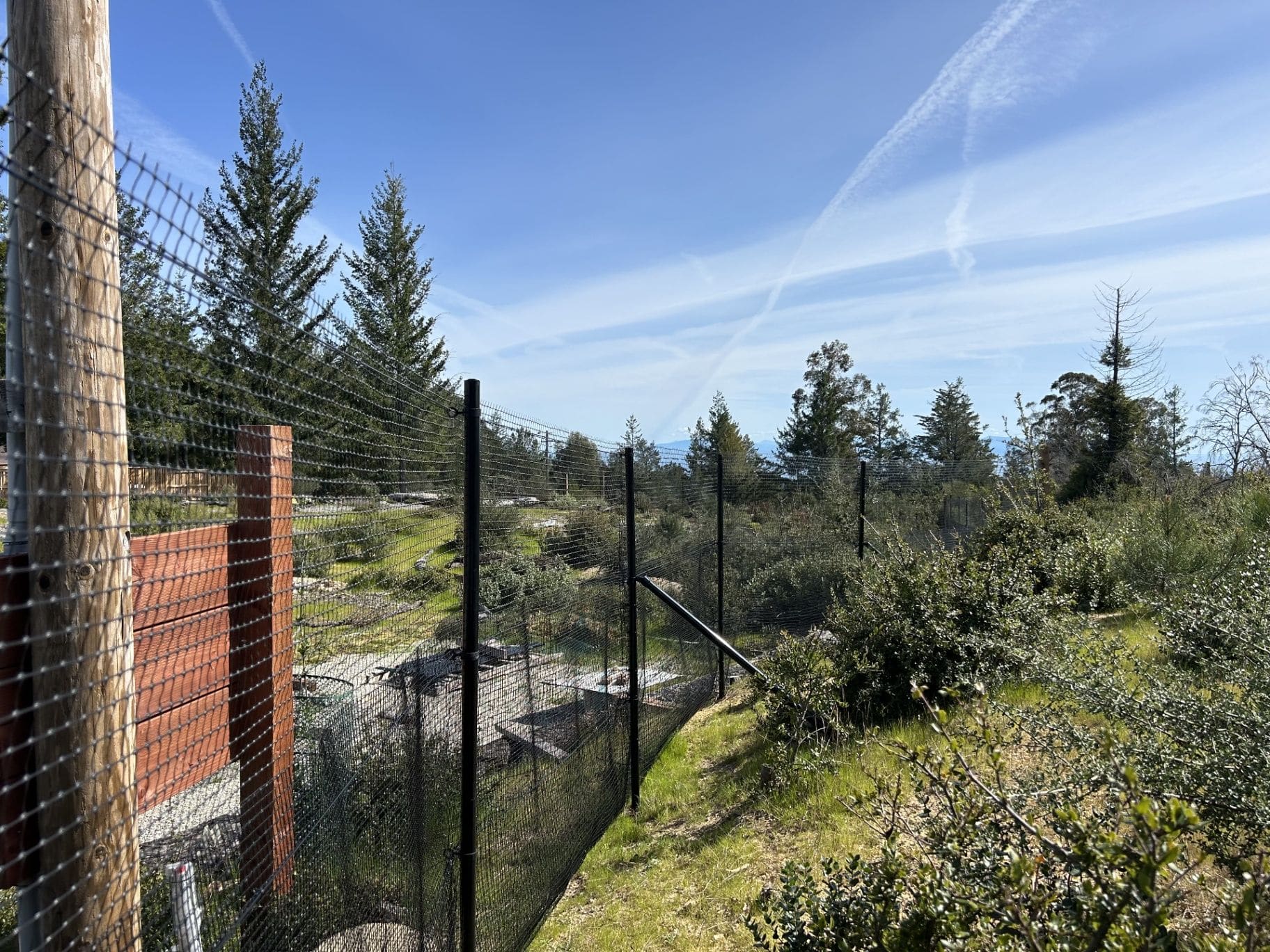
- 7–8 ft black knotted polypropylene mesh for deer.
- 1-inch galvanized hardware cloth on the bottom 24 inches for rabbits.
- 12–18-inch buried apron at the base for groundhogs.
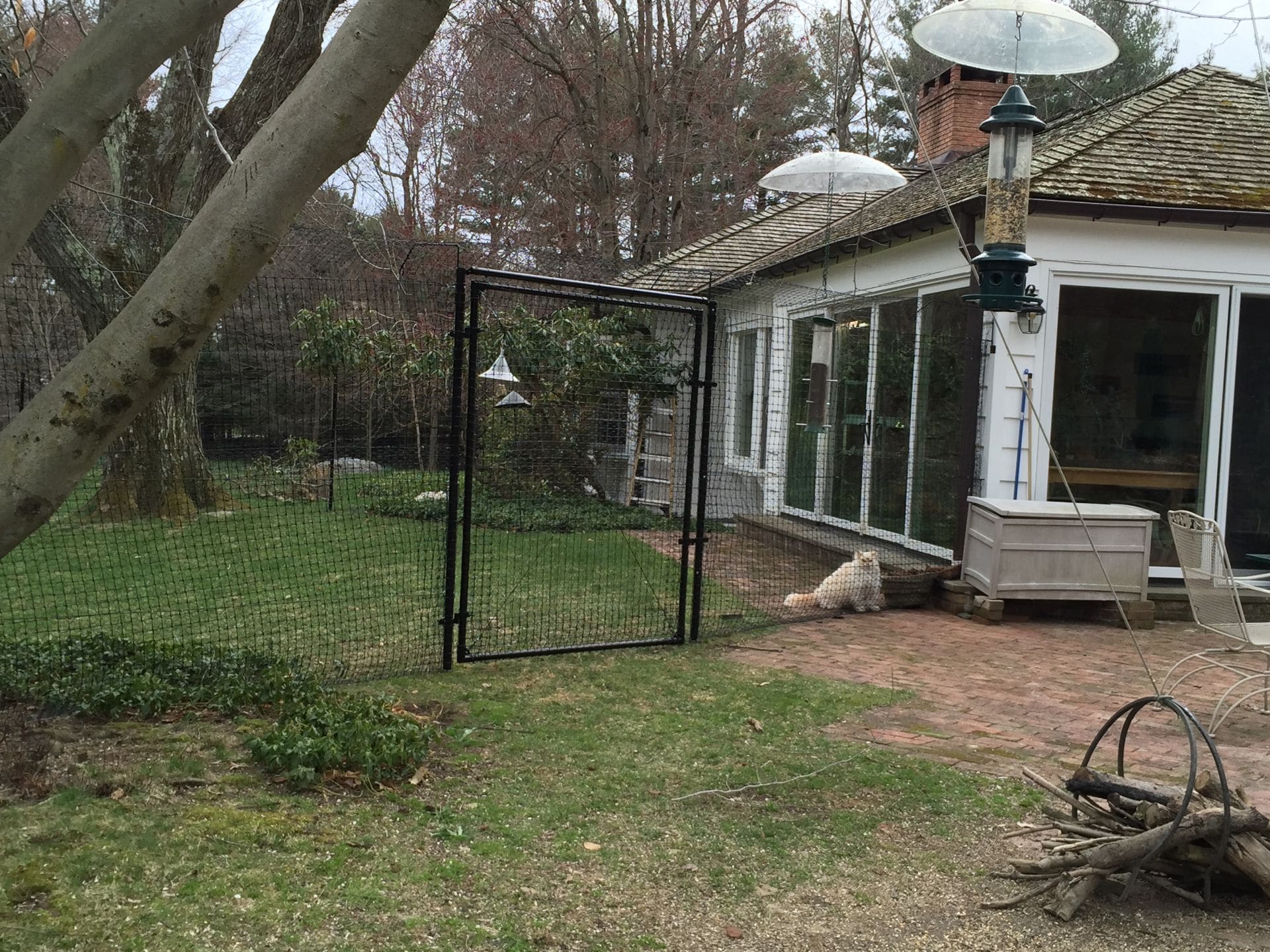
- One 4-ft walk-in gate with a self-closing latch.
- Optional removable bird netting along the top during berry season.
- Galvanized steel posts on 8–10 ft spacing.
- Tensioned top wire to prevent mesh sag.
Sizing the enclosure
Build for what your garden will be in 5 years, not what it is today. The marginal cost of an extra 50 feet of perimeter is small; the cost of expanding later — repositioning posts, splicing mesh, redoing corners — is large. We routinely see clients regret going small within 2 seasons.
A useful rule: take your current garden footprint and add 50% for paths, future beds, a compost area, and a small tool storage spot. That's the size to fence. The annual cost of fencing a 25%-larger garden is roughly zero; the value of the extra growing space is significant.
Mesh height and what it actually stops
| Height | Stops | Typical use |
|---|---|---|
| 4 ft | Rabbits, dogs | Light-pressure suburban gardens with no deer |
| 6 ft | Rabbits, most deer (light pressure) | Suburban with occasional deer; needs visual deterrent |
| 7.5 ft | Rabbits, deer (most cases) | Standard rural / heavy-suburban garden |
| 8 ft+ | Rabbits, deer (heavy pressure), most jumpers | Orchards, market gardens, heavy-deer areas |
| 8 ft + electric strand | All of the above + raccoon, bear | Sweet corn growers, high-value orchards |
Layout: rectangle vs irregular
A simple rectangle is the cheapest fence per square foot of growing space. Every corner adds material and reduces tension stability. If your garden has odd shapes (curves, jogs around trees), the cost premium can be 30%+. Where possible, simplify to a rectangle that includes everything you want protected — even if you have to fence in a bit of unused space.
Raised beds vs in-ground inside the fence
Raised beds inside a deer fence are still vulnerable to voles and chipmunks, which tunnel underneath. Line the bottom of each bed with ¼-inch hardware cloth before filling — this is the cheapest single addition to a vegetable garden and it lasts the life of the bed.
What does not work (skip the gimmicks)
- Deer repellent sprays — work for a week, then deer ignore them; rain washes them off.
- Bars of soap, hair clippings, predator urine — short-term novelty effect at best.
- Single-strand fishing line at deer height — works occasionally; not in heavy pressure.
- Motion-activated sprinklers — fine for one bed; can't protect a real garden.
- Ultrasonic devices — no field evidence of effectiveness.
- 'Deer-resistant' plant lists — useful for landscaping; irrelevant for vegetables (deer eat anything when hungry).
Cost expectations
A complete 30 ft × 50 ft (160 perimeter feet) garden enclosure with the all-in-one spec above runs $3,500–$5,500 professionally installed in our area. Larger orchard enclosures (1/4 acre+) typically come in at $13–$17 per linear foot. Compared to repeated replanting, lost harvest, and the hours you'll save not chasing deer out of your beds, payback is usually 1–2 seasons.
Maintenance and seasonal checks
- Spring: walk the perimeter, look for winter damage, re-tension if needed.
- Summer: clear vines and weeds off the mesh (they trap moisture and hide damage).
- Fall: remove bird netting, inspect gate latches, look for rodent burrows at the apron.
- Winter: knock heavy snow off the top to prevent stretching.
Ready to talk specifics?
Get a custom garden fence installation quote
Free virtual consultation, no pressure, custom recommendation for your property. Your install timeline is confirmed in your written proposal.