Most older fences look worse than they are. The posts are usually fine; the mesh, hardware, and tension are usually the problem. That's good news — it means restoration is often the right call, often at 30–50% of the cost of a fresh install. But not always: there's a tipping point past which restoration is throwing good money after bad.
This guide shows you how to evaluate your existing fence, what's economically restorable vs not, what restoration actually costs, and how to think about insurance claims for storm damage. We restore 40+ fences a year — these are the patterns we see.
How to evaluate your existing fence in 15 minutes
Walk your perimeter slowly with a notepad. You're looking for five things: post condition, mesh condition, hardware condition, line position, and original spec adequacy. Score each as Good / Marginal / Failed.
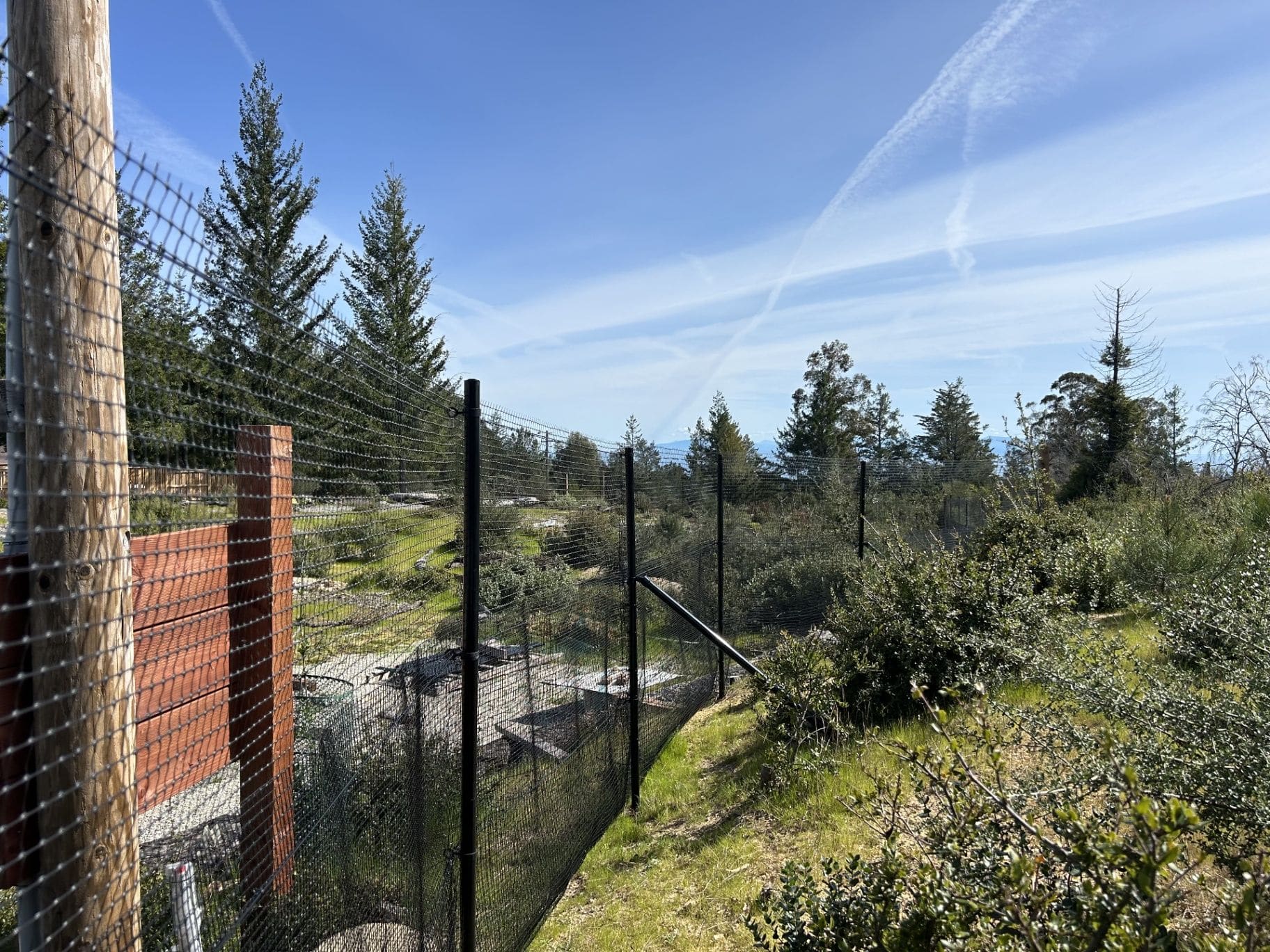
- Posts: Are they plumb? Solid at the base? Push them gently — any wobble?
- Mesh: Sagging is fine; brittleness, holes larger than original mesh openings, or rust scaling means the mesh is at end of life.
- Hardware: Look at ties, brackets, gate hinges. Surface rust is normal; through-rust into the post is not.
- Gates: Do they close fully without dragging? Latches engage cleanly?
- Original spec: Is the fence still tall enough for current pressure? A fence built for a 35-lb dog 12 years ago may be undersized for today's coyote pressure.
Restore if…
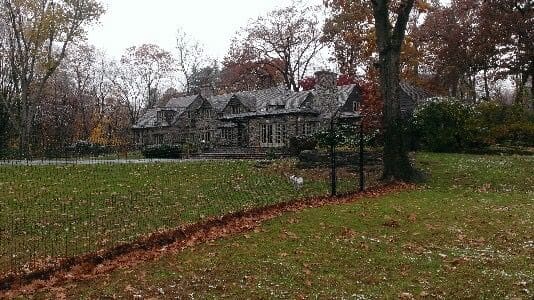
- Posts are plumb and rot-free at the base.
- Mesh is sagging but intact — no large tears or brittleness.
- Hardware is corroded but replaceable.
- One or two sections have storm damage.
- The line is fundamentally where you want it.
- The fence is less than 15 years old and was decently built originally.
- Total restoration estimate is under 50% of fresh install cost.
Replace if…
- More than 30% of posts are leaning, rotting, or heaved out of the ground.
- Mesh is brittle and crumbles when handled.
- Hardware corrosion has eaten into the post itself.
- You want a different height, layout, or perimeter.
- The original install was undersized for current pressure (deer, dogs, coyotes).
- The fence is over 25 years old and original mesh is intact (unusual; often means the rest will fail soon).
- Total restoration estimate exceeds 50% of fresh install cost.
What restoration usually includes
| Service | Typical scope | Cost range |
|---|---|---|
| Re-tensioning | Tighten sagging mesh, true up posts | $400 – $1,200 |
| Hardware replacement | Brackets, ties, gate hardware | $300 – $900 |
| Mesh patching | Repair tears, splice damaged sections | $200 – $1,500 |
| Single post replacement | Per post, including concrete | $150 – $400 |
| Gate rebuild | New frame on existing posts | $400 – $1,200 |
| Storm-damage section | Posts + mesh for one downed section | $800 – $2,500 |
| Full re-mesh on existing posts | Strip and replace all mesh | 40–60% of new install |
What restoration usually costs (project totals)
Most residential restorations land between $1,500 and $6,000 — re-tensioning, hardware replacement, mesh patching, and a few new posts. Larger estate restorations on long perimeters can run $8,000–$15,000. Storm-damage repair is often insurance-eligible if the cause was a covered event (windstorm, tree fall, ice load).
Insurance: what's typically covered
- Tree fall damage — usually covered, subject to deductible.
- Wind damage during named storms — usually covered.
- Ice load damage — often covered as 'weight of ice and snow'.
- Vehicle impact — covered under your auto policy if you hit it; under homeowners if a third party did.
- Vandalism — covered.
- Wildlife damage (deer crashing through, bear) — varies; check policy.
- Wear and tear, settling, gradual corrosion — never covered.
- Improper installation defects — never covered (pursue contractor warranty).
When restoration is actually a hidden replacement
Be careful of contractors who quote 'restoration' but end up replacing 60–70% of the fence. At that point you're paying restoration prices for what is effectively a partial new install — often without the new-install warranty. If the scope keeps growing during the assessment, get a true new-install quote for comparison.
Lifespan after a quality restoration
A well-restored fence typically gets another 10–15 years of life — sometimes more. The components we replace (hardware, mesh patches, gate hinges) are usually the components that failed the original; the posts and line you're keeping have already proven they hold. We warranty restoration work for 3 years on labor and pass through any manufacturer warranties on replaced materials.
Ready to talk specifics?
Get a custom fence restoration quote
Free virtual consultation, no pressure, custom recommendation for your property. Your install timeline is confirmed in your written proposal.