Fence height for a large dog isn't really about the dog's size — it's about their drive. A 90-lb couch-potato Lab needs less fence than a 50-lb whippet with a squirrel obsession. The other variable that matters more than weight is what's on the other side of the fence: a quiet woodlot needs less containment than a yard backing onto a busy road or a deer trail.
This guide is built from years of installing dog fences for breeds that came with reputations as escape artists. The recommendations below assume a properly installed fence with no climbable surfaces nearby — if your fence has gaps under it, brush leaning against it, or a gate that doesn't latch, height won't save you.
Quick recommendations by breed type
| Dog type | Recommended height | Notes |
|---|---|---|
| Lab, Golden, Bernese, Newfoundland | 5 ft | Low jump drive; height is mostly about stopping climbing. |
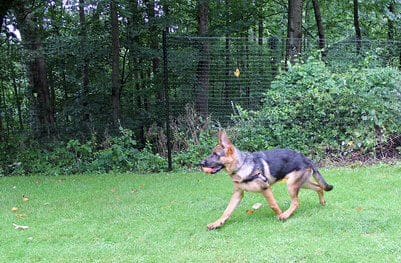
| German Shepherd, Belgian Malinois | 6 ft | Athletic and high-drive; 5 ft is jumpable. |
| Husky, Malamute | 6 – 7 ft | Notorious escape artists; consider a top inward kicker. |
| Greyhound, Whippet, Saluki | 6 ft | Sprint-jumpers; need height plus enough run-up space. |
| Hound (beagle, bloodhound, foxhound) | 5 – 6 ft | Will follow a scent; reinforce gates and corners. |
| Border Collie, Aussie | 6 ft | Jump-trained dogs can clear 5 ft easily. |
| Pit / Bully type | 5 – 6 ft | Strong but low jumpers; focus on dig prevention. |
| Doberman, Rottweiler | 6 ft | Athletic but rarely escape from a properly fenced yard. |
| Standard Poodle, Wheaten | 5 – 6 ft | Smart problem-solvers; gate latches matter. |
| Great Dane, Mastiff | 5 ft | Tall enough to look over but rarely motivated to jump. |
Why 'drive' matters more than size
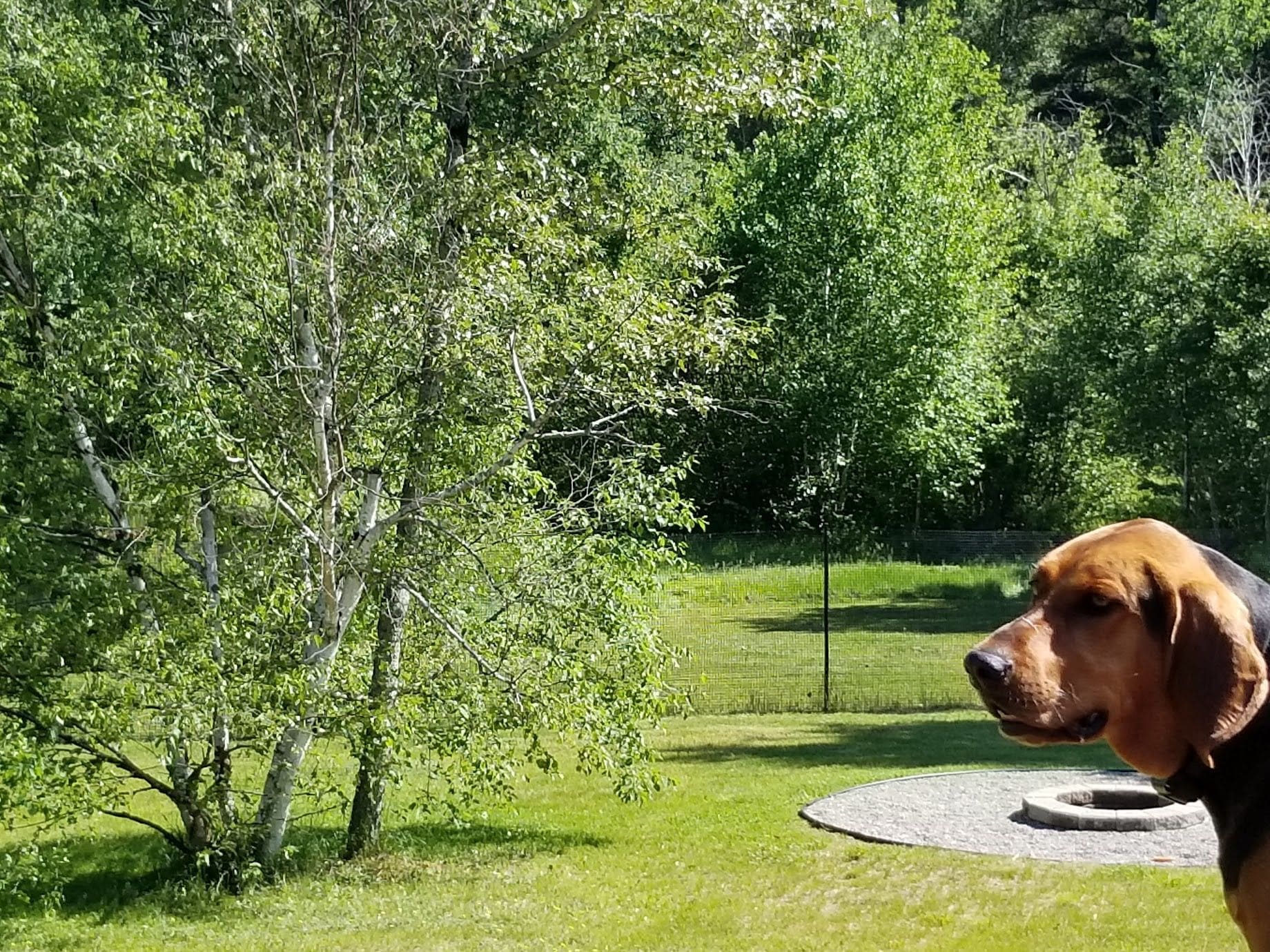
We've installed 4-ft fences that have held high-drive working Malinois for years, and 7-ft fences where a determined husky still found a way out. The difference is what the dog wants and how much energy they have to find a way. Drive comes from a few sources: prey drive (chasing squirrels, deer, rabbits), social drive (other dogs walking by), separation distress (owner leaves and the dog panics), and boredom (under-exercised athletic breeds).
- High prey drive: add 1 ft over the chart and clear sight-lines through the fence so the dog can't see prey easily.
- High social drive: opaque or semi-opaque sections at street-facing portions reduce trigger.
- Separation distress: address the underlying issue — height won't fix this; the dog will keep escalating.
- Boredom: more exercise, more enrichment, and the fence becomes nearly irrelevant.
When to go taller than the chart says
- Documented escape attempts (even once) — dogs that have escaped successfully will try harder next time.
- High prey drive — dog stares at squirrels, deer, or birds for hours.
- Coyote pressure in the area (height also helps keep predators out).
- Yard with raised landscaping (mulch beds, slopes near the fence give a launching point).
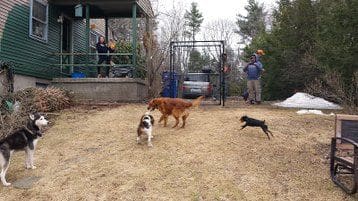
- Multi-dog households — pack behavior amplifies escape motivation.
- Reactive or anxious dogs that fixate on a specific trigger across the fence.
Dig prevention is half the battle
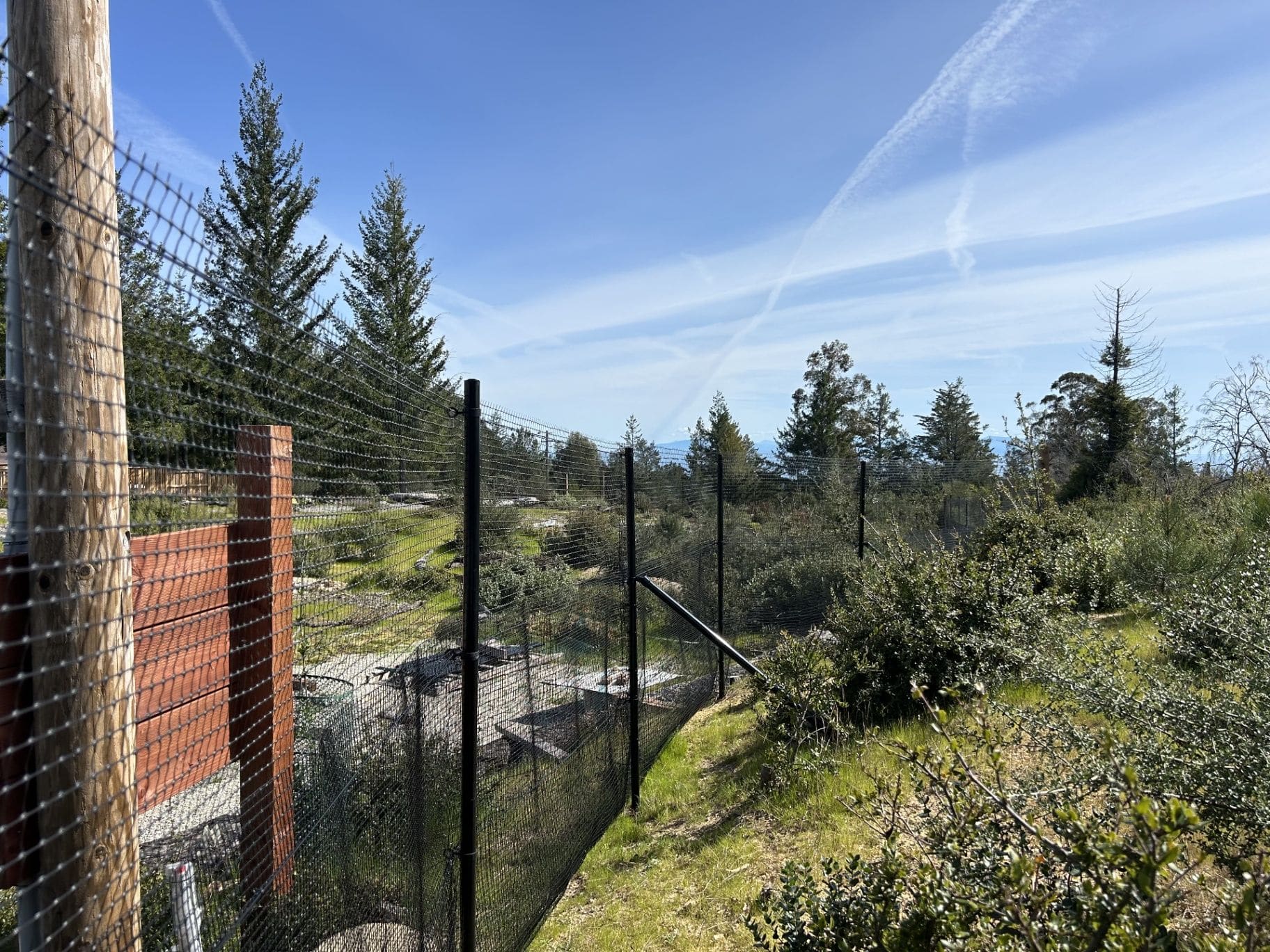
For breeds that dig (terriers, huskies, beagles, dachshunds), height alone is irrelevant if the bottom of the fence isn't sealed. We use a buried L-footer — 12 inches of mesh extending outward at the base, buried 4–6 inches deep. It's invisible after grass grows in and it stops 95% of dig-out attempts. For dedicated diggers we'll add a concrete grade beam.
- L-footer (12-in outward apron, 4-in deep) — standard for most breeds.
- Hardware cloth at the base (2-ft tall, buried 6-in) — for terriers and small dedicated diggers.
- Concrete grade beam (4-in wide, surface-flush) — for the most determined dogs.
- Pavers along the inside fence line — fast retrofit if your fence is already up.
Climbing vs jumping vs digging — match the fix to the failure mode
| Escape style | Common breeds | Best fix |
|---|---|---|
| Vertical jump | Malinois, Aussie, GSD | Add 1 ft height + inward kicker |
| Climbing (paw over paw) | Husky, Pit, terrier | Smooth top rail, kicker, no horizontal mesh weave |
| Digging | Beagle, terrier, Dachshund | Buried L-footer or grade beam |
| Squeezing through gaps | Small/medium any breed | Tighter mesh; check gates and corners |
| Gate-busting | Powerful breeds | Self-closing latch + secondary chain or carabiner |
| Fence destruction (chew/dig) | High-drive any breed | Coated steel mesh; no plastic-only fences |
Sight-line management for reactive dogs
If your dog spends hours barking at a specific spot in the fence, the issue isn't the height — it's the visual stimulus. We often install a 2-ft semi-opaque insert at the worst hot-spots (street-facing corners, neighbor-dog adjacencies). Reactive arousal drops within days, and overall escape motivation drops with it.
What height is overkill?
Anything over 7 ft for a single-dog residential property is usually overkill unless coyote pressure is the actual driver. 8 ft is appropriate for working-line GSDs, multi-dog households, or properties with deer-jumping (which becomes its own escape trigger). Above 8 ft starts running into HOA caps and adds cost without much marginal containment benefit.
Ready to talk specifics?
Get a custom dog fence installation quote
Free virtual consultation, no pressure, custom recommendation for your property. Your install timeline is confirmed in your written proposal.