Can Coyotes Climb Fences and Get Into Your Yard?
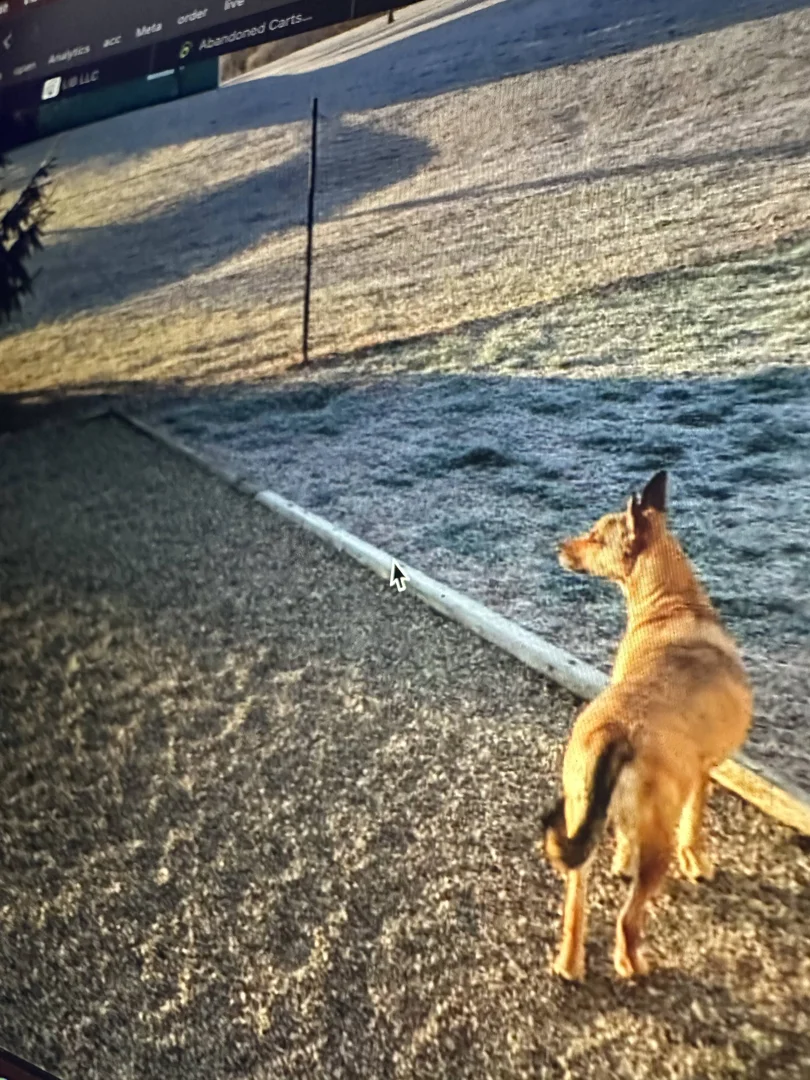
Yes, coyotes can climb fences. They can also jump over many standard 4- to 6-foot backyard fences. Chain-link, wood slats, horizontal rails, and fence corners can give a coyote the footholds it needs to scramble up and over. A motivated coyote may also use a trash bin, woodpile, wall, or other nearby object as a boost.
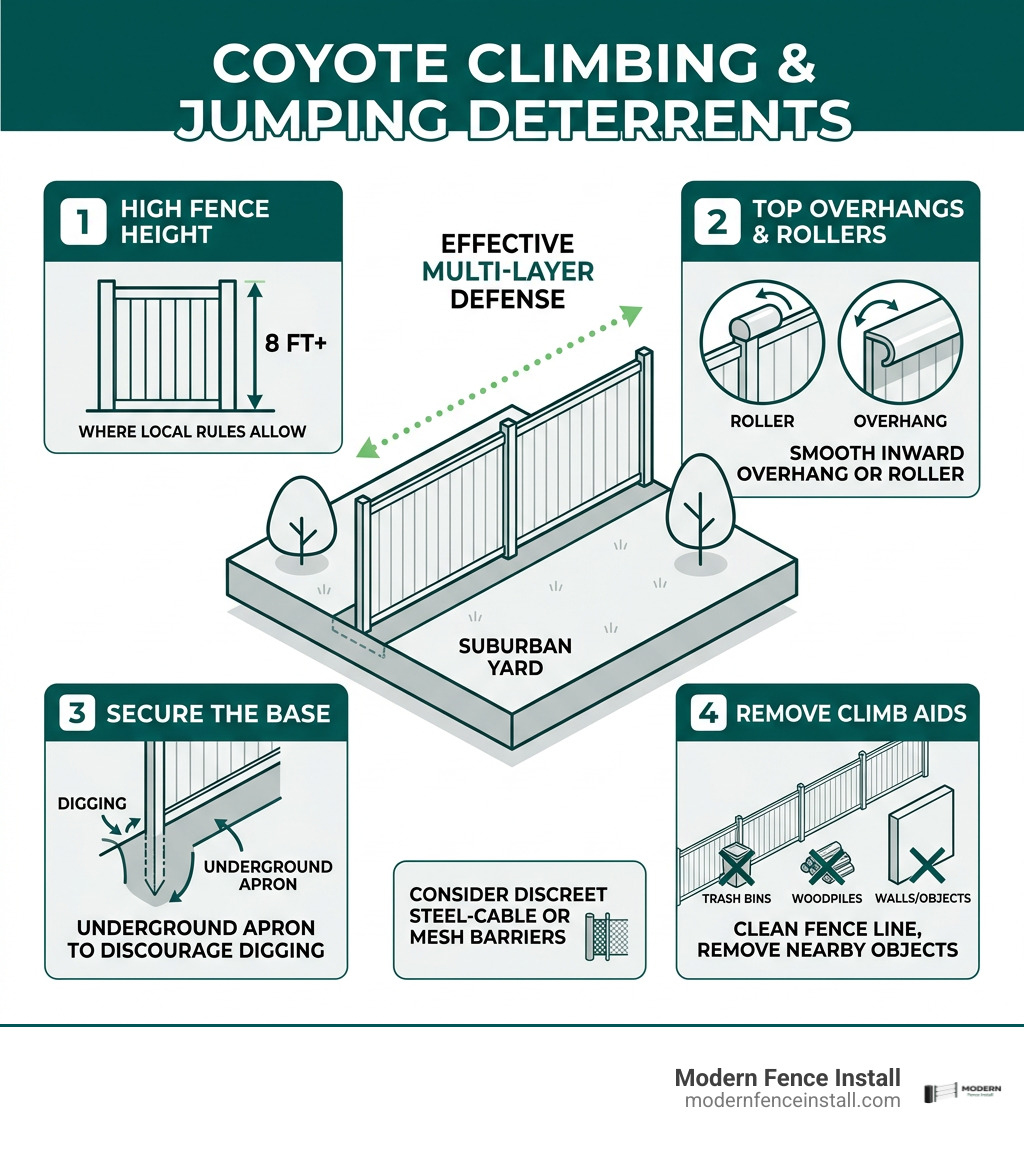
For a safer yard, use a layered barrier:
- Choose a fence around 8 feet high where local rules allow.
- Remove climb aids from both sides of the fence.
- Add a smooth, inward-facing overhang or roller at the top.
- Close gaps and use an underground apron to discourage digging.
Height matters, but it is not enough on its own. Research on coyote exclusion fences found that crossings drop sharply at about 168 cm (roughly 5.5 feet), yet climbable material, large openings, weak corners, and nearby leverage can still create a route in. This is especially important for homeowners with small dogs, chickens, or gardens that attract rodents and other prey.
I am Jason Levine, EMT-B, Senior Consultant at Modern Fence Install, where I help homeowners in CT, NY, and MA choose discreet steel-cable and mesh barriers for dogs, gardens, and wildlife concerns. Understanding can coyote climb fence questions means looking beyond height to the whole perimeter: grip, gaps, corners, ground clearance, and what is sitting nearby.
Can Coyote Climb Fence Structures and Scale Backyard Enclosures?
When homeowners ask us how a wild canine bypassed their enclosure, they often picture a clean, deer-like leap. While coyotes possess remarkable vertical jumping power, scaling an enclosure often relies on climbing mechanics. A coyote does not need to leap cleanly over a barrier; it uses a dynamic two-stage jump-and-climb technique.
In the first stage, the coyote bounds upward, planting its front paws onto the top rail or grasping the mesh surface. In the second stage, it drives its powerful hind legs against the fence face to gain upward thrust. Once its rear paws find purchase on horizontal crossbars, woven wire knots, or textured wood slats, it pulls its chest over the top edge and drops down into the yard.
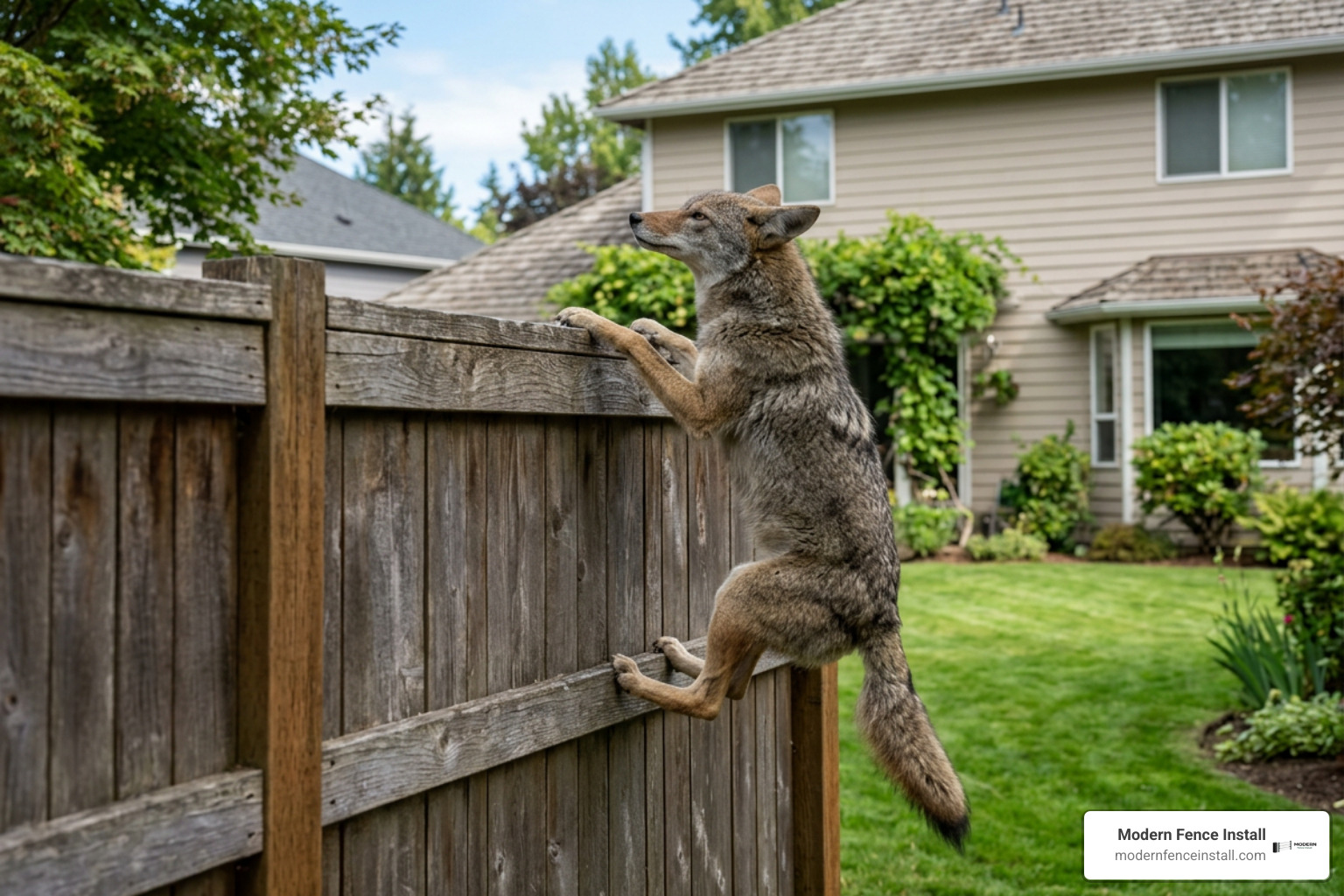
The biomechanics of this motion mirror parkour. Coyotes do not possess opposable digits, but their sharp claws and strong rear leg musculature provide formidable traction against textured materials. A landmark scientific study on fence designs for coyote exclusion proved that wild canines constantly test barriers for vertical grip. If a barrier provides friction, horizontal rigidity, or toeholds, a coyote can scramble over structures well above its standing vertical reach.
How Can Coyote Climb Fence Corners and Chain-Link Wire?
Fence corners and chain-link fabrics are among the easiest structures for wild canines to breach. Traditional chain-link creates an open diamond pattern that acts like a ladder for a wild animal's paws. When an animal strikes the mesh, its claws sink into the open weave, creating an instantaneous foothold that counteracts vertical gravity.
Corners present an even greater structural vulnerability. Where two fence lines meet at a 90-degree angle, a coyote can brace its front limbs against one side while driving its hind quarters into the adjacent panel. This allows the animal to shimmy upward like a rock climber navigating a chimney crevice. As noted in this guide to coyote jumping and climbing capabilities, eliminating climbable corner junctions and wide wire mesh is essential for keeping these agile predators out of your yard.
Why Can Coyote Climb Fence Heights Up to 14 Feet With Leverage?
In natural terrain, wild canines regularly navigate boulders and fallen timber. In suburban backyards, they apply this same environmental problem-solving to human structures. When an animal has access to intermediate boost points—such as outdoor trash bins, stacked firewood cords, low shed roofs, decorative retaining walls, or air conditioning units—it breaks a tall vertical ascent into manageable hops.
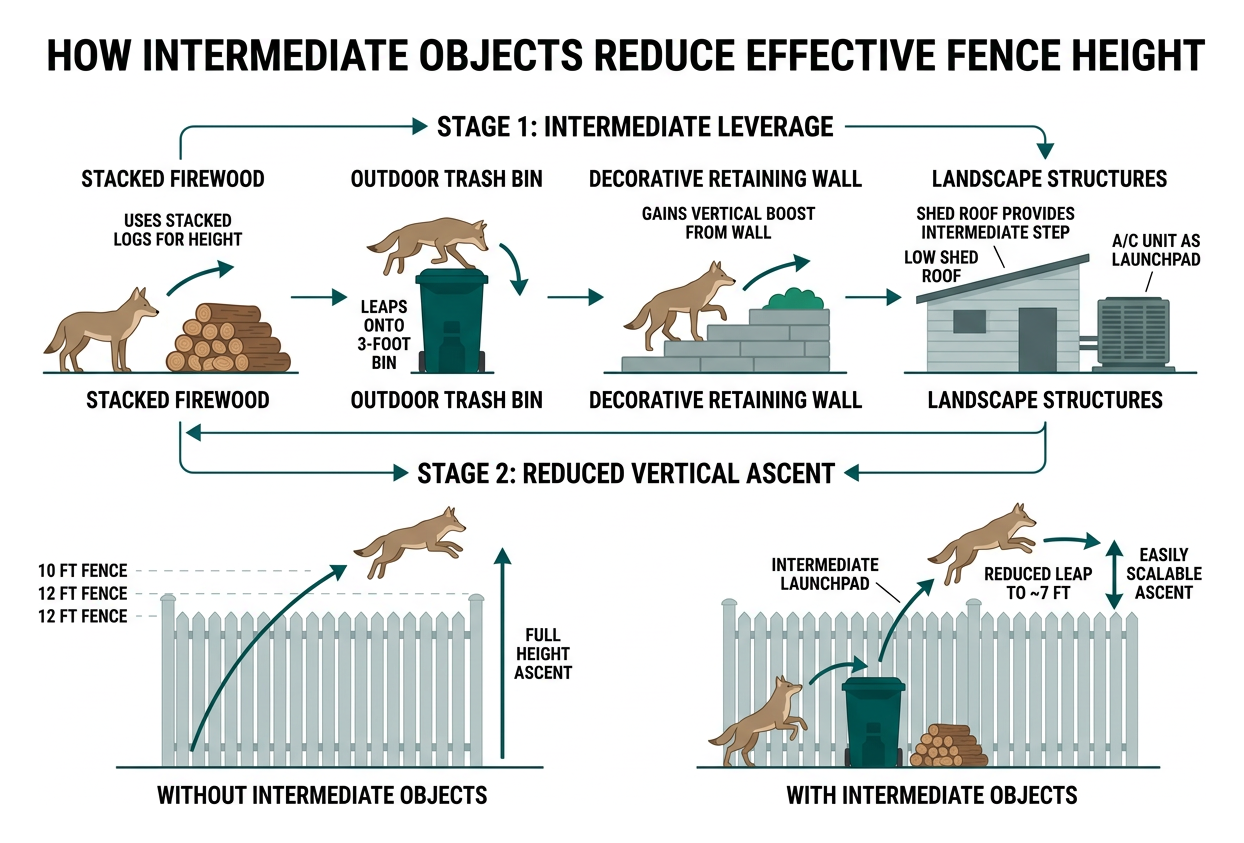
By leaping onto a 3-foot trash container or landscape retaining wall, a coyote effectively reduces a 10-foot or 12-foot enclosure down to an easily scalable 7-foot leap. Research on wild canine athleticism shows that with running momentum and intermediate leverage, these animals can scale obstacles measuring up to 14 feet tall. As detailed in research on coyote obstacle clearance, any solid structure located within 6 to 8 feet of your perimeter acts as an unintended launchpad.
Coyote Jumping vs. Climbing: Biomechanics and Height Thresholds
Understanding how these animals navigate barriers requires separating pure jumping power from assisted climbing:
- Standing Vertical Jump: From a complete standstill without momentum, an adult coyote can cleanly leap 4 to 5 feet into the air.
- Running Leap: With an unobstructed sprint, a coyote can launch its body upward over a 6- to 8-foot barrier without touching the top rail.
- Horizontal Clearance: During a chase, these animals can clear horizontal gaps spanning up to 12 to 13 feet.
- Assisted Climbing: When using paw grip, mesh toeholds, or intermediate leverage points, barriers ranging from 8 to 14 feet tall can be scaled.
Scientific evaluations reveal that a fence height of approximately 168 cm (about 5.5 feet) serves as a critical threshold. At or above this height, coyotes can no longer clear the barrier in a single unassisted leap; they repeatedly strike the fence surface. If the material provides grip, they climb; if the surface is smooth, loose, or angled, they fail. A 1982 wildlife management baseline established that traditional fences under 66 inches offer virtually no protection against an active predator.
| Fence Type / Height | Physical Grip Level | Unassisted Jump Risk | Climbing Risk | Overall Containment Rating |
|---|---|---|---|---|
| 4-Foot Split Rail / Picket | High (gaps & low rail) | Extremely High | High | Ineffective |
| 5-Foot Chain-Link | Very High (ladder mesh) | High | Severe | Very Poor |
| 6-Foot Solid Wood Privacy | Moderate (horizontal rails) | Moderate | High (if rails exposed) | Fair |
| 8-Foot High-Tensile Mesh | Minimal (tight grid) | Low | Low | Excellent |
| 8-Foot Mesh with Angled Top | None (overhang deflection) | Zero | Zero | Maximum Security |
Field tests show that without top-edge climb prevention, barrier height alone does not guarantee security. For a broader breakdown of residential heights, see this practical fence height analysis.
Essential Physical Barriers and Fence Modifications That Deter Coyotes
To secure a perimeter against wildlife capable of jumping 6 feet and climbing 8 feet or more, an enclosure must combine adequate height with non-climbable physical properties. A purpose-built perimeter should stand at least 8 feet high where municipal zoning permits.
Beyond overall height, the surface texture is critical. Smooth, high-tensile steel cable and small-aperture polypropylene mesh prevent canines from establishing the paw purchase required for a two-stage climbing leap. At Modern Fence Install, we engineer low-visibility systems across Connecticut, New York, and Massachusetts that blend seamlessly into wooded tree lines while eliminating the rigid crossbars that predators use as ladders. Homeowners looking to protect larger boundaries often choose our engineered deer fence installations, which provide tall, scalable-resistant boundaries that protect expansive landscapes without disrupting scenic views. For dedicated agricultural patches, our protective garden fence options keep both small rodents and large predators out of food plots.
Preventing Digging and Crawling Underneath Fences
Securing the top of a fence solves only half the problem. Canines are natural excavators and instinctively test the bottom edge of a barrier before attempting an athletic jump or climb. If a fence line features loose soil, uneven ground swales, or gaps greater than 4 inches, a predator will quickly scrape out a crawl space.

To prevent crawling and digging:
- Install an Underground Wire Apron: Fasten a heavy-gauge, galvanized wire mesh apron to the bottom of the fence fabric.
- Flare Outward: Extend the apron 15 to 24 inches horizontally away from the yard along the ground surface, or bury it in a shallow trench.
- Pin Securely: Fasten the apron to the earth using heavy-duty ground stakes spaced every 2 to 3 feet.
- Cover with Sod: Backfill the trench with topsoil or allow grass to grow through the mesh to lock the steel into the root structure.
When a canine approaches the fence line and attempts to dig at the base, its claws strike the buried metal mesh, stopping excavation immediately. If your existing property perimeter has developed ground gaps or loose fabric, professional structural fence restoration can reinforce weak footings and secure vulnerable soil margins.
Coyote Rollers and Non-Climbable Top Attachments
When municipal regulations or neighborhood association covenants limit fence height to 5 or 6 feet, top-edge modifications are essential. The most proven mechanical additions include:
- Coyote Rollers: These smooth, free-spinning aluminum or PVC cylinders mount along the top rail using heavy-duty brackets. When an animal attempts to plant its front paws on the top edge to pull itself up, the roller spins freely under its weight. Deprived of leverage and balance, the animal falls backward to the ground.
- Inward- or Outward-Angled Overhangs: Steel bracket extensions extending 15 to 18 inches at a 45-degree angle make it physically impossible for an animal to swing its hind legs over the fence line.
- Sightline Deflectors: Non-rigid mesh top-sections bend under weight, denying the solid platform an animal needs to push off.
To see how these purpose-built configurations look in real residential applications, explore our completed barrier installations.
Yard Management and Attractant Elimination Strategies
A physical barrier is most effective when paired with disciplined yard management. Coyotes are opportunistic foragers driven by calories; they rarely risk injury on a tall barrier unless attracted by food or easy prey.
Implement these property maintenance practices to minimize wildlife interest:
- Eliminate Pet Food Sources: Never leave dog or cat food outside overnight. Clean outdoor grill grease trays regularly.
- Lock Refuse Bins: Store household trash and compost in heavy-duty bins fitted with airtight, animal-proof latches.
- Clear Landscape Boost Points: Maintain an 8-foot buffer along your fence line. Remove stacked firewood, patio benches, and landscape boulders that could serve as intermediate jump platforms.
- Harvest Fallen Tree Fruit: Pick up windfall apples, berries, and nuts, which draw mice, rats, and squirrels—the primary prey species that attract predators into suburban neighborhoods.
- Install Motion Lighting: While lights alone will not stop a determined predator, sudden illumination combined with active hazing helps prevent animals from feeling comfortable near your home.
When planning your property investments, reviewing our updated residential deer fence cost 2026 guide provides helpful pricing frameworks for budgeting multi-acre boundary projects.
Frequently Asked Questions About Coyotes and Fences
Can a coyote jump over a standard 6-foot fence?
Yes. An adult coyote with a short running start can clear a standard 6-foot fence in a single bound. If the fence is constructed from chain-link, split rail, or wood panels with exposed horizontal support runners, the animal does not even need to clear it cleanly—it simply leaps 4 feet up, grabs the rail with its front paws, and kicks off the crossbeam to scramble over the top. Small dogs and livestock should never be left unsupervised inside a standard 6-foot enclosure without anti-climb top extensions.
How deep should a fence be buried to stop coyotes from digging?
To stop digging, fences should feature an apron buried 15 to 24 inches deep or flared horizontally along the ground surface. Coyotes are surface-level diggers that look for fast crawl paths beneath a bottom rail. When they encounter a steel mesh apron pinned tight against the ground, they quickly abandon the attempt rather than tunneling deep beneath the barrier.
Will motion-sensor lights or coyote rollers keep coyotes out of my yard?
Coyote rollers provide an effective physical barrier by removing top-rail traction. In contrast, motion-sensor lights act only as a temporary psychological deterrent. While sudden bursts of light may startle a timid animal initially, urban and suburban wildlife quickly become habituated to lights, noises, and scent sprays. Mechanical barriers like rollers, high-tensile mesh, and buried ground aprons deliver permanent, physical protection.
Conclusion
Coyotes possess extraordinary physical capabilities, from clearing 6-foot barriers from a sprint to scaling 14-foot obstacles using intermediate yard leverage. Standard residential fences built from chain-link or horizontal rail wood frequently provide the exact footholds, friction, and stability these agile predators need to climb directly into suburban backyards.
Protecting your pets and family requires an engineered, layered barrier that eliminates footholds, extends to an effective height, and blocks digging along the ground line. At Modern Fence Install, our low-visibility steel-cable and high-tensile mesh systems are designed specifically to exclude wildlife without blocking your landscape views or requiring costly solid construction. To design the right perimeter system for your property, read our complete guide on proven fence solutions to stop coyotes or contact our team for a site assessment.