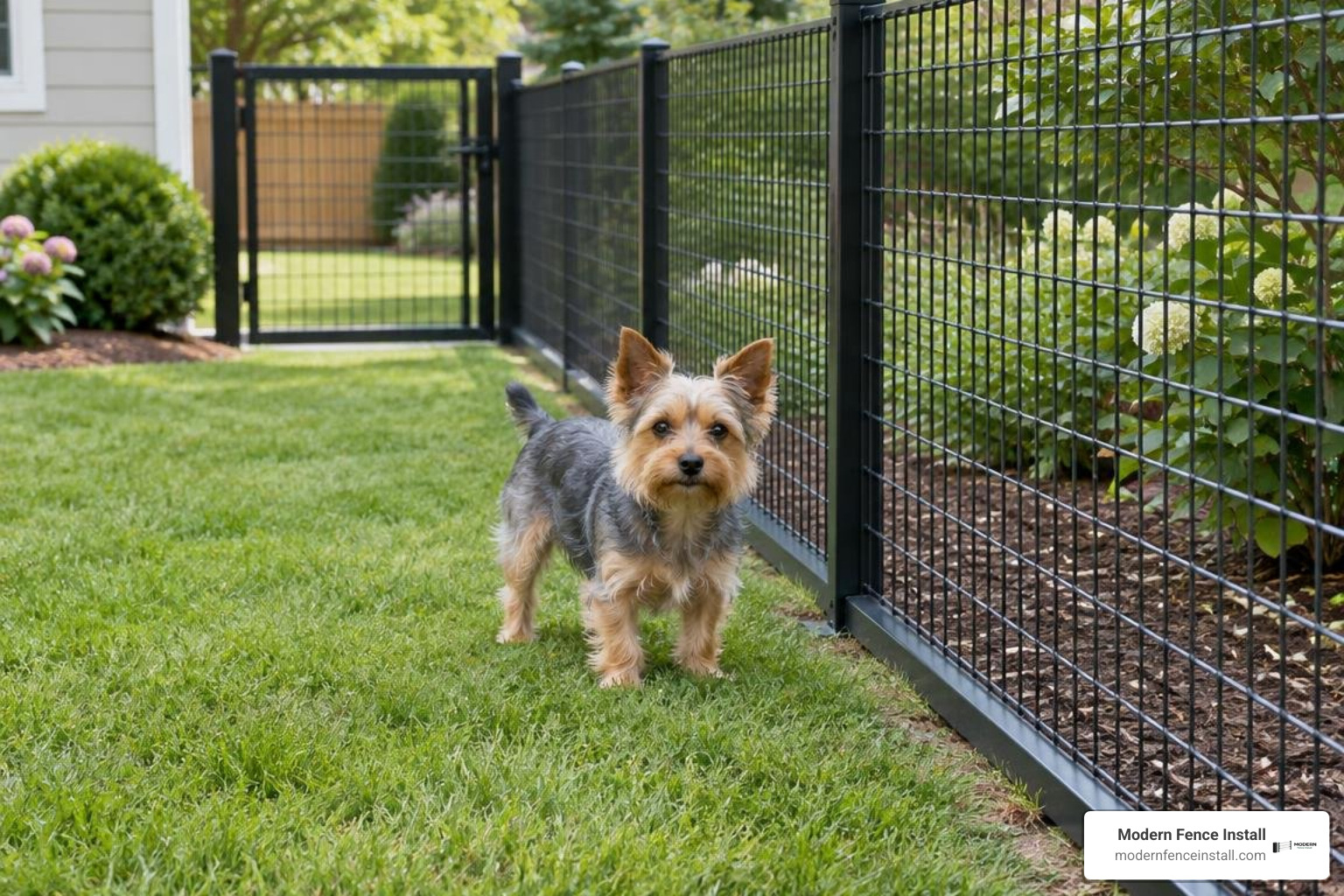
Best Dog Fence Solutions for Small Dogs Start With Physical Security
The best dog fence for small dogs is usually a physical barrier with narrow openings, no gap at ground level, and enough height for your dog's jumping ability. For most petite pups, choose a 4- to 5-foot fence with openings too small for their head or body to pass through, then add a dig-proof apron or secured bottom mesh if they tunnel.
Small dogs are not automatically easy to contain. Terriers may dig or climb, reactive dogs may bark at every passerby, and some athletic breeds can clear surprisingly tall barriers. A solid wood or vinyl fence can reduce outside visual triggers, while engineered steel mesh offers a discreet option that blocks squeezing and can be reinforced at the ground.
The right choice depends on your pup's size, breed traits, escape habits, yard layout, and local rules. Wireless and invisible systems can be portable, but they do not stop other animals from entering the yard and rely on collar-based feedback rather than a true physical boundary.
I am Jason Levine, EMT-B, a Senior Consultant at Modern Fence Install. I help homeowners choose and install purpose-built, non-electric steel-cable and mesh dog fence for small dogs systems that provide low-visibility, secure containment without digging or electricity.
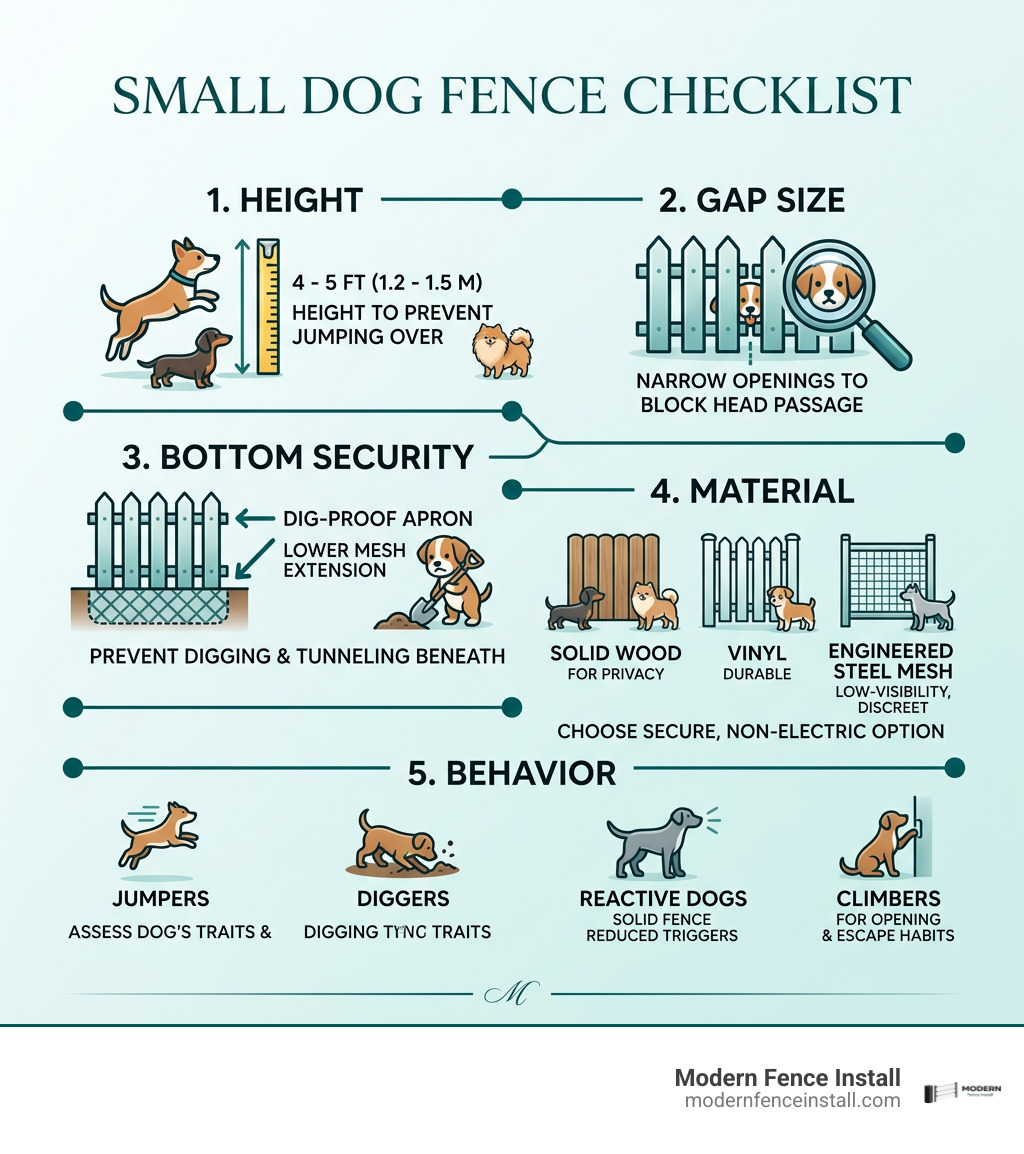
Choosing the Best Dog Fence for Small Dogs
Selecting the right barrier for a petite pet requires balancing safety, yard aesthetics, pet behavior, and budget. While a small dog might weigh under 15 pounds, their natural curiosity, prey drive, and agility can quickly turn an improper barrier into an open door.
Below is an overview of how traditional and modern physical fencing options compare for small dog containment:
| Fence Type | Durability Score | Escape Prevention | Visual Privacy | Cost Profile | Best Suited For |
|---|---|---|---|---|---|
| Engineered Steel Mesh | Very High | Excellent (Near 100%) | Transparent (Low-Profile) | High Value (Saves 30%+) | All small breeds, diggers, chewers |
| Solid Vinyl | High | Excellent | Full Privacy | Moderate to High | Reactive barkers needing visual blocks |
| Wood Privacy | Moderate | Good (Watch for gaps) | Full Privacy | High | Traditional aesthetic yards |
| Traditional Chain Link | High | Fair to Poor | Open Sightlines | Moderate | Basic perimeter without tight gap needs |
| Ornamental Iron/Aluminum | High | Poor (Unless retrofitted) | Open Sightlines | High | Decorative yards (Risky picket spacing) |
| Portable / Temporary Panels | Low | Low (52% Effective) | Open Sightlines | Low | Temporary travel or camping only |
When planning an installation, neighborhood aesthetic standards are often a factor. Homeowners can review HOA approved dog fences to understand how low-profile mesh or approved solid materials meet community guidelines while maintaining high safety standards.
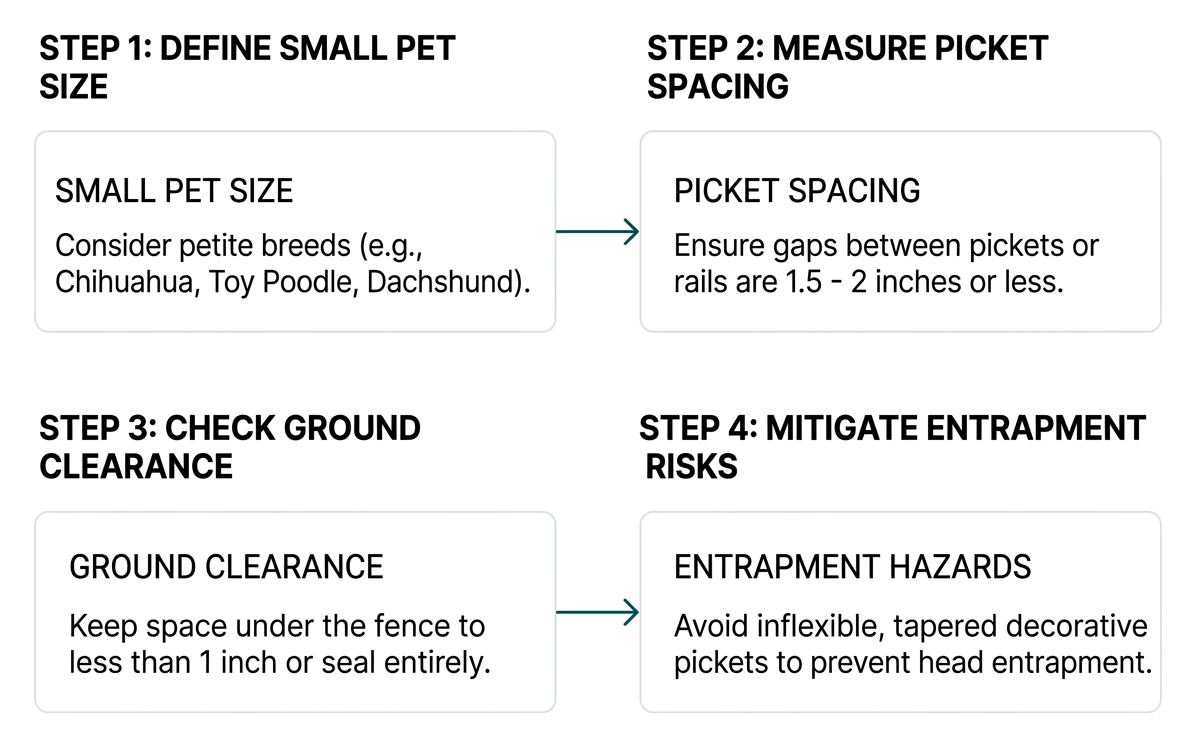
Gap Size and Spacing Essentials for a Dog Fence for Small Dogs
The most common failure point for small dog containment is spacing between pickets or rails. A petite pup can often squeeze through any opening that accommodates their head. If the skull fits through, the body usually follows.
- Picket Spacing: Standard decorative aluminum and wrought-iron fencing frequently features 4-inch picket gaps. A Chihuahua, Toy Poodle, or Dachshund can easily slip through these spaces. For petite breeds, spacing should never exceed 1.5 to 2 inches.
- Ground Clearance: Many standard fences leave 2 to 4 inches of clearance above the turf to prevent rot or facilitate lawn mowing. Small dogs can slide directly beneath these gaps. Ground clearance should be kept under 1 inch or sealed entirely.
- Entrapment Hazards: Inflexible, tapered decorative pickets present severe head entrapment risks for small dogs attempting to push through.
Material Selection: Traditional Barriers vs. Steel Mesh
Different materials address distinct behavioral needs:
- Chew Resistance: Puppies and small terriers can gnaw through wooden pickets or thin plastic netting. High-tensile steel mesh and galvanized wire resist persistent chewing.
- Visual Stimulation and Reactive Barking: Solid wood or vinyl provides an opaque barrier that eliminates visual triggers like passing pedestrians or squirrels, helping calm excitable dogs. However, solid fencing alters yard airflow, blocks natural light, and requires substantial maintenance.
- Low-Profile Mesh Systems: Engineered steel-cable and high-strength mesh systems blend into the landscape, preserving views while providing superior containment. Unlike wood that can rot or chain link that may sag, powder-coated steel mesh with rust inhibitors ensures multi-decade longevity without ongoing staining or painting.
Comparing Physical Fences and Wireless Systems
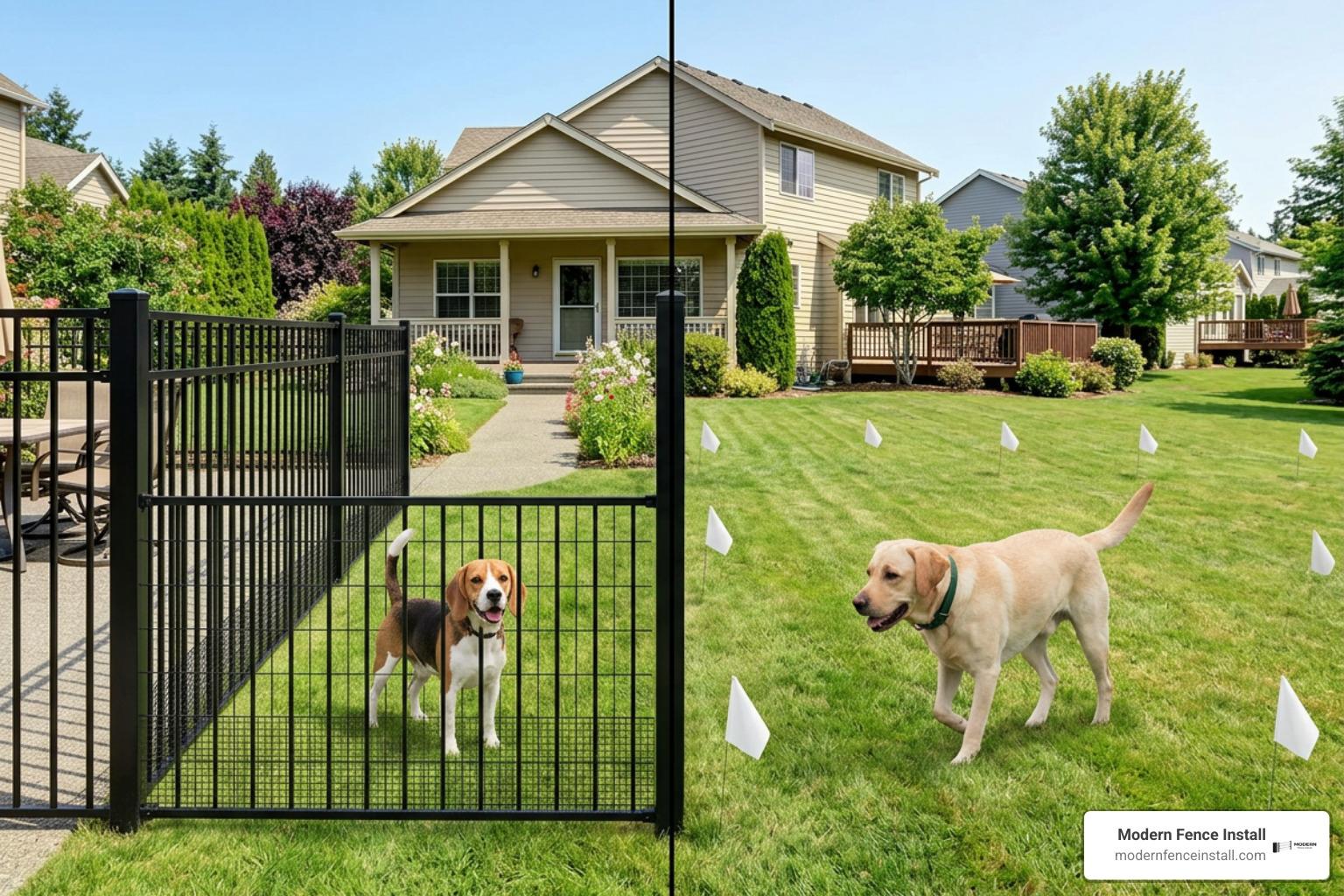
Many pet owners weigh physical barriers against electronic alternatives. Reviewing an invisible fence vs physical dog fence breakdown highlights critical functional differences between physical containment and collar-dependent systems.
Engineered Mesh and Non-Electric Boundaries
Engineered non-electric boundaries use high-tensile steel cables strung between durable posts, supporting specialized low-profile mesh anchored firmly into the ground. Through our dog fence service, these systems deliver robust perimeter security:
- Full Physical Exclusion: Physical barriers keep your pup in while preventing stray dogs, coyotes, and other predators from entering.
- Ground Anchoring: Heavy-duty ground stakes pin the lower tension cable and mesh flush to the earth, stopping dogs from squeezing underneath uneven terrain.
- Zero Ongoing Shocks: Physical barriers work passively 24/7 without batteries, collar charging, or static correction.
Limitations of Wireless and Electronic Boundaries
Electronic options like the Stay & Play® Compact Wireless Fence | PetSafe® or the Petsafe Little Dog Fence - Dog Goodies (designed for pets over 8 lbs) rely on signal transmitters and receiver collars. Similarly, the MimofPet X3 Mini Wireless Dog Fence & Training Collar for Small Dogs – MimofPet is built for dogs from 5 to 50 lbs.
While these units offer adjustable boundaries and portability, electronic systems feature notable drawbacks for petite dogs. Reviewing non-electric vs electric dog fences demonstrates several critical limitations:
- Collar Weight and Bulk: Even lightweight receivers can be heavy or bulky on small necks.
- Boundary Run-Through: A high-prey-drive small dog chasing wildlife may disregard static correction and run through the invisible boundary. Once outside, the fear of receiving another shock often prevents them from returning.
- Signal Drift and Dead Zones: Wireless boundaries can fluctuate based on weather, yard topography, and metal interference, creating shifting borders that confuse small pets.
- Lack of Inbound Protection: Invisible fences do nothing to keep wild animals, neighborhood pets, or strangers out of your yard.
Managing Common Escape Tactics: Digging, Climbing, and Jumping
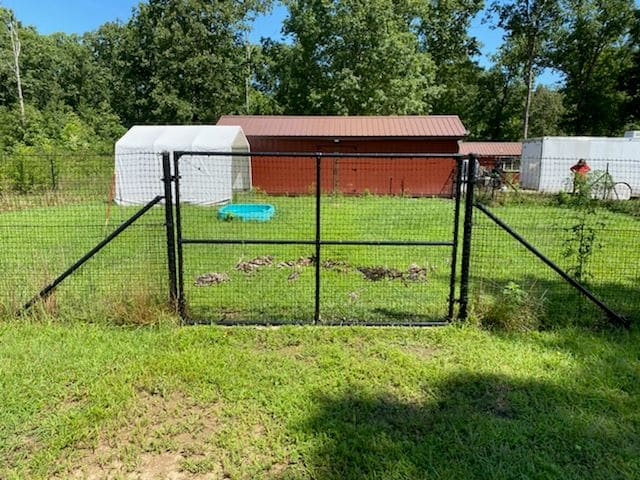
Small dogs exhibit varied escape styles. Terriers love to dig, agile breeds like Jack Russells can jump surprisingly high (some up to 6 feet), and slender toy breeds excel at finding weak points.
Modifying Existing Enclosures into a Dog Fence for Small Dogs
If your yard already has a split-rail, chain-link, or ornamental iron barrier, you can reinforce it without a complete replacement:
- Dig-Proof Aprons: Install a 12- to 24-inch galvanized steel mesh apron extending flat along the ground from the base of the fence, pinned with ground stakes. Turf grows through the mesh, locking it in place and completely blocking tunneling attempts.
- Picket Gap Backing: Attach black powder-coated steel mesh to the interior face of open iron or wooden pickets to close gaps while preserving external curb appeal.
- Bottom Tension Cable: Fasten a high-tensile bottom steel wire along the lower fence line to eliminate fabric flex where small dogs attempt to push through.
Height Guidelines and Anti-Climb Barriers
Fence height needs vary based on pet agility:
- Standard Petite Breeds (4 Feet): A 4-foot height provides reliable security for most small, non-jumping breeds like Pugs, French Bulldogs, and Shih Tzus.
- Athletic Jumpers (5 to 6 Feet): Energetic breeds such as Jack Russell Terriers, Rat Terriers, and small mixed hunting dogs can clear standard 4-foot fences when motivated. A 5-foot or 6-foot barrier is recommended for high-energy jumpers.
- Anti-Climb Measures: Ensure the interior side of the fence lacks horizontal crossbars that small paws can use as ladder rungs.
Frequently Asked Questions About Small Dog Fencing
What is the ideal fence height for small dogs?
For most small breeds, a 4-foot fence provides sufficient containment. However, agile breeds with high jumping capacity benefit from a 5-foot barrier.
How do I stop my small dog from squeezing through fence pickets?
Attach a weather-resistant, black powder-coated wire mesh or heavy-duty poly barrier to the inside of your existing fence. Fasten the mesh securely along the top, bottom, and pickets to prevent gaps.
Are wireless and electric containment collars suitable for small dogs?
While wireless units offer tone and static settings, they depend entirely on consistent collar wear, battery charging, and animal compliance. Physical fences provide 100% physical containment and keep outside predators away from your pet.
Conclusion
Securing your yard gives your petite pup the freedom to explore safely while offering you complete peace of mind. While wireless systems and solid privacy barriers have specific use cases, low-profile, non-electric steel-cable and mesh systems deliver reliable containment, prevent digging, and preserve yard views.
Modern Fence Install designs and installs engineered steel-cable and low-profile mesh containment systems across Connecticut, New York, and Massachusetts. Our purpose-built installations require no digging or electricity and save 30%+ compared to traditional solid fencing. To explore our comprehensive residential containment options, visit our deer fence installation services to learn how engineered mesh keeps your entire yard protected.