If you're shopping for a way to keep your dog in your yard safely, you've almost certainly seen two very different pitches: a 'non-electric' physical fence (posts, mesh, gates — an actual barrier) and an 'electric' or 'invisible' fence (a buried wire and a shock collar). They are not the same product with a different price tag — they're fundamentally different containment strategies. This guide walks through the seven things that actually matter when you choose between them.
What 'non-electric' and 'electric' actually mean
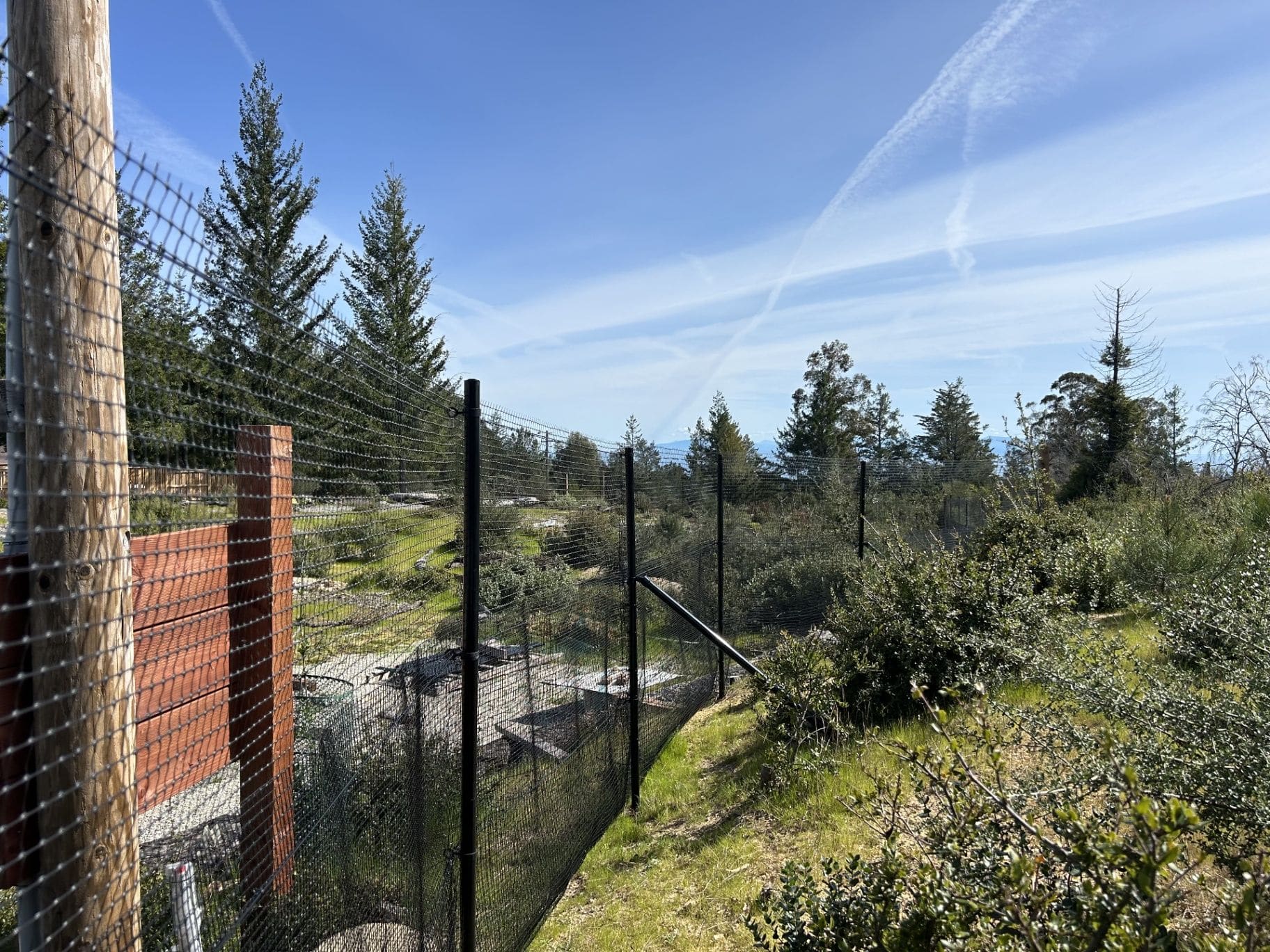
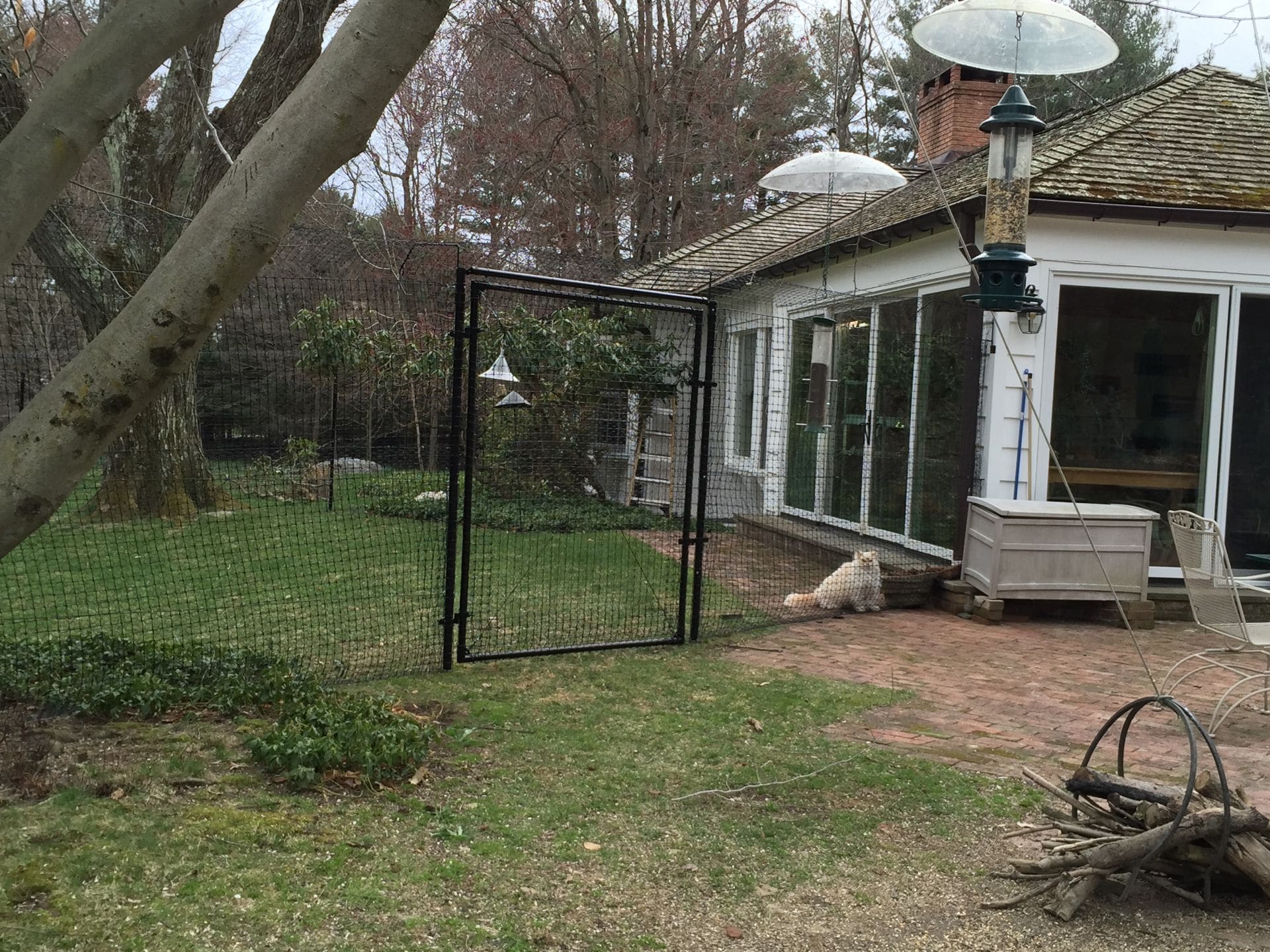
A non-electric dog fence is a physical barrier. The dog physically cannot get past it — no training required, no battery, no signal. A modern non-electric system is usually a series of slim steel posts, a heavy-gauge mesh, and tensioned cable. Done right, it's nearly invisible from the road but utterly impassable for a determined dog.
An electric (or 'invisible') fence is a buried wire that creates a perimeter signal. Your dog wears a battery-powered collar with two metal probes against their neck. When the dog approaches the boundary, the collar beeps; if the dog keeps going, the collar shocks them. The dog learns, over multiple training sessions, that crossing the line hurts. It is — by design — a pain-based correction system.
The seven differences that decide it for most families
1. Does it actually contain the dog?
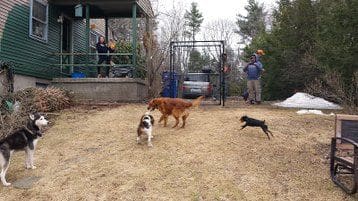
A non-electric fence contains 100% of dogs, 100% of the time. There is no 'training period' and no failure mode where the dog decides the shock is worth it. With an electric fence, a meaningful percentage of dogs — especially prey-driven breeds, anxious dogs, and young dogs — will run through the correction in pursuit of a deer, a squirrel, or another dog, and then refuse to come back in because they'll get shocked re-entering. That single failure mode is the most common reason families switch from electric to non-electric.
2. Does it keep wildlife out?
Non-electric fences keep coyotes, foxes, deer, and stray dogs out of your yard. Electric fences do nothing for wildlife — there's no collar on the coyote. For families in suburban or rural areas with active coyote populations (now most of the Northeast and Mid-Atlantic), this is not a minor consideration. Small dogs lost to coyote attacks inside electric-fence boundaries is a depressingly common story.
3. Training stress and ongoing maintenance
Electric fences require weeks of structured training — including deliberately walking your dog into the correction zone — and continued retraining when the system fails or batteries die. Non-electric fences require zero training. Your dog walks outside on day one and is contained.
4. What happens during a power or battery failure
Non-electric fences don't fail when the power goes out — they're a physical object. Electric fences depend on three things working simultaneously: house power (or a charged backup), the buried wire being intact, and the collar battery being charged. Any one of those failing means your dog is not contained. Buried wires get cut by lawn services and landscapers more often than any of the manufacturers will admit.
5. Visual impact on your property
A modern non-electric fence is engineered to disappear visually — the mesh and posts are sized so they read as 'nothing' from 30 feet away. From the road, most installs look like an open yard. Unlike traditional 6 to 8-foot wood, chain-link, or PVC fencing, our system is in a category of its own — engineered steel rail and cable mesh designed specifically to protect dogs, deer, or gardens while nearly disappearing. The 'invisible' name on electric fences refers to having no visible structure at all, which is genuinely invisible — but at the trade-offs above.
6. HOA approval and resale value
HOAs increasingly approve modern non-electric systems specifically because of how little they affect sightlines. Many HOAs that prohibit traditional fencing allow a discreet physical system. Electric fences typically don't need HOA approval at all (there's nothing to see), but they also add zero resale value to a property — and a physical fence reliably does, especially in dog-heavy markets.
7. Lifetime cost
Upfront, an electric fence is cheaper — typically $1,500 to $3,000 installed for an average yard, vs. $6,000 to $20,000+ for a non-electric physical fence depending on linear footage. But over 10 years, electric fences accumulate cost: replacement collars, batteries, wire repairs, retraining, and (in the worst case) the cost of a lost or injured dog. A well-built non-electric fence typically lasts 25+ years with effectively no maintenance.
| Factor | Non-Electric Fence | Electric (Invisible) Fence |
|---|---|---|
| Containment reliability | 100% — physical barrier | Variable — depends on dog & training |
| Keeps wildlife out | Yes | No |
| Training required | None | Weeks of structured training |
| Power / battery dependence | None | House power + collar battery |
| Upfront cost | $6k–$20k+ | $1.5k–$3k |
| 10-year cost | Effectively zero maintenance | Batteries, collars, retraining, wire repairs |
| Adds resale value | Yes | No |
| Pain-based correction | Never | Yes, by design |
Which fence is right for which family?
The honest answer: electric fences make sense for a narrow set of situations — typically a low-prey-drive adult dog, no wildlife concerns, a strict HOA that won't allow any physical structure, and an owner committed to the ongoing training. For most families with dogs they actually love and a yard worth protecting, the non-electric fence is the better long-term call. It's why the families who can afford to do it right almost always pick the physical option.
Common questions we get
These come up on every consult — quick answers below, more detail in the FAQ section.
Ready to talk specifics?
Get a custom dog fence installation quote
Free virtual consultation, no pressure, custom recommendation for your property. Your install timeline is confirmed in your written proposal.