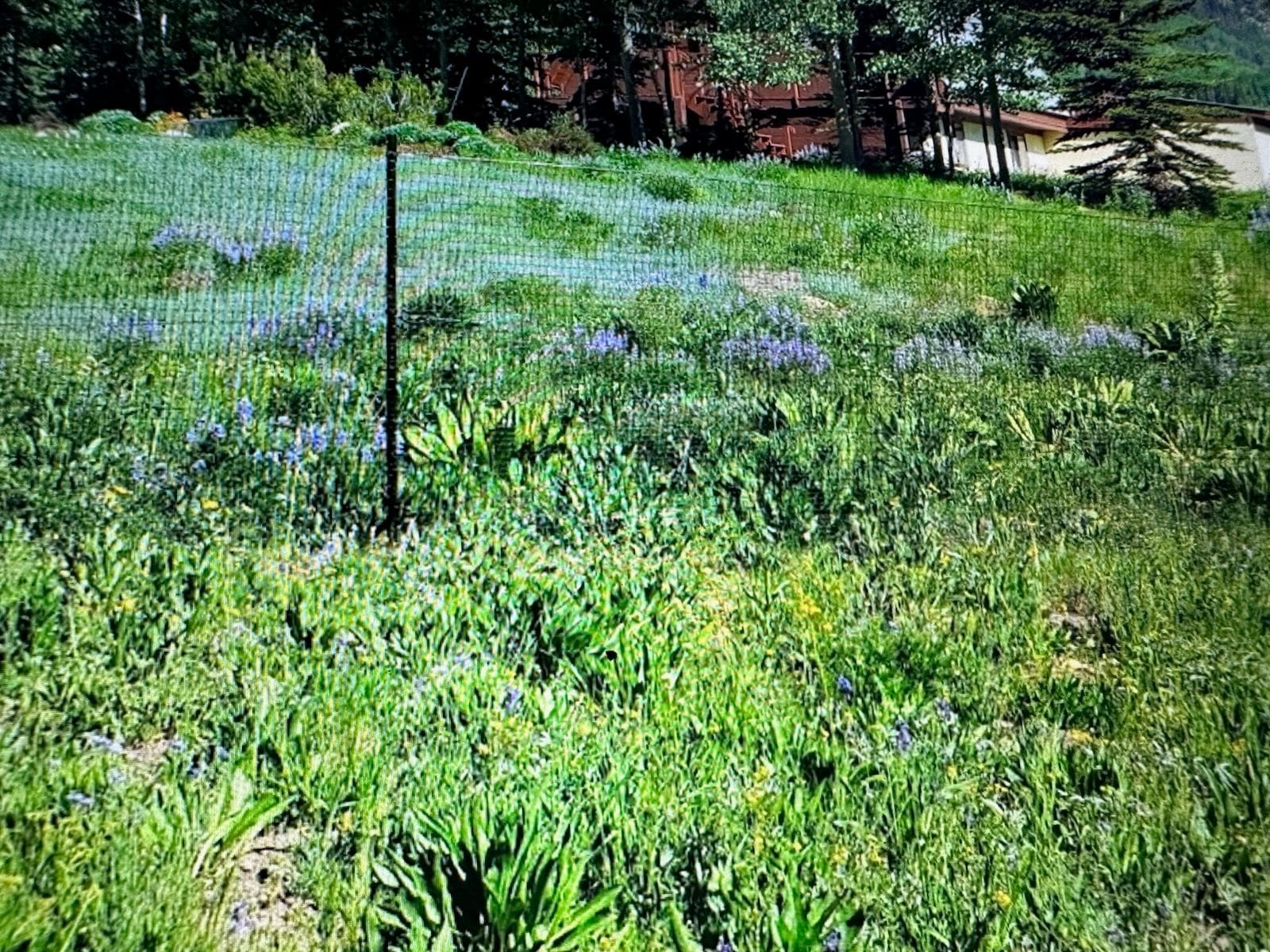
A Coyote Fence for Rural Areas Starts With Height and Ground Protection
The most effective coyote fence for rural areas combines a physical barrier that is hard to jump, climb, or dig under. For livestock pens, dog areas, and gardens, plan for a fence 6 to 8 feet tall, tight mesh openings, and a buried or ground-level wire apron extending 12 to 18 inches to block digging. Add an inward overhang or rolling top where coyotes can climb, especially on chain-link fencing.
A strong rural design should also account for slopes, washouts, gates, and brush near the fence line. Electric wire can add a useful deterrent, but a well-built non-electric mesh or cable system provides a dependable physical boundary without relying on power or constant voltage checks.
Coyotes are adaptable. A standard 4- or 6-foot fence may slow one down, but gaps beneath the fence, loose mesh, climbable rails, and open gates give it an easy route into an enclosure. The goal is not just a taller fence. It is a continuous perimeter with no obvious weak point.
I am Jason Levine, EMT-B, Senior Consultant at Modern Fence Install, where I help property owners in Connecticut, New York, and Massachusetts choose discreet, engineered fencing for dogs, gardens, and wildlife pressure. In this guide, I will break down how to plan a coyote fence for rural areas that fits your land, protection needs, and budget.
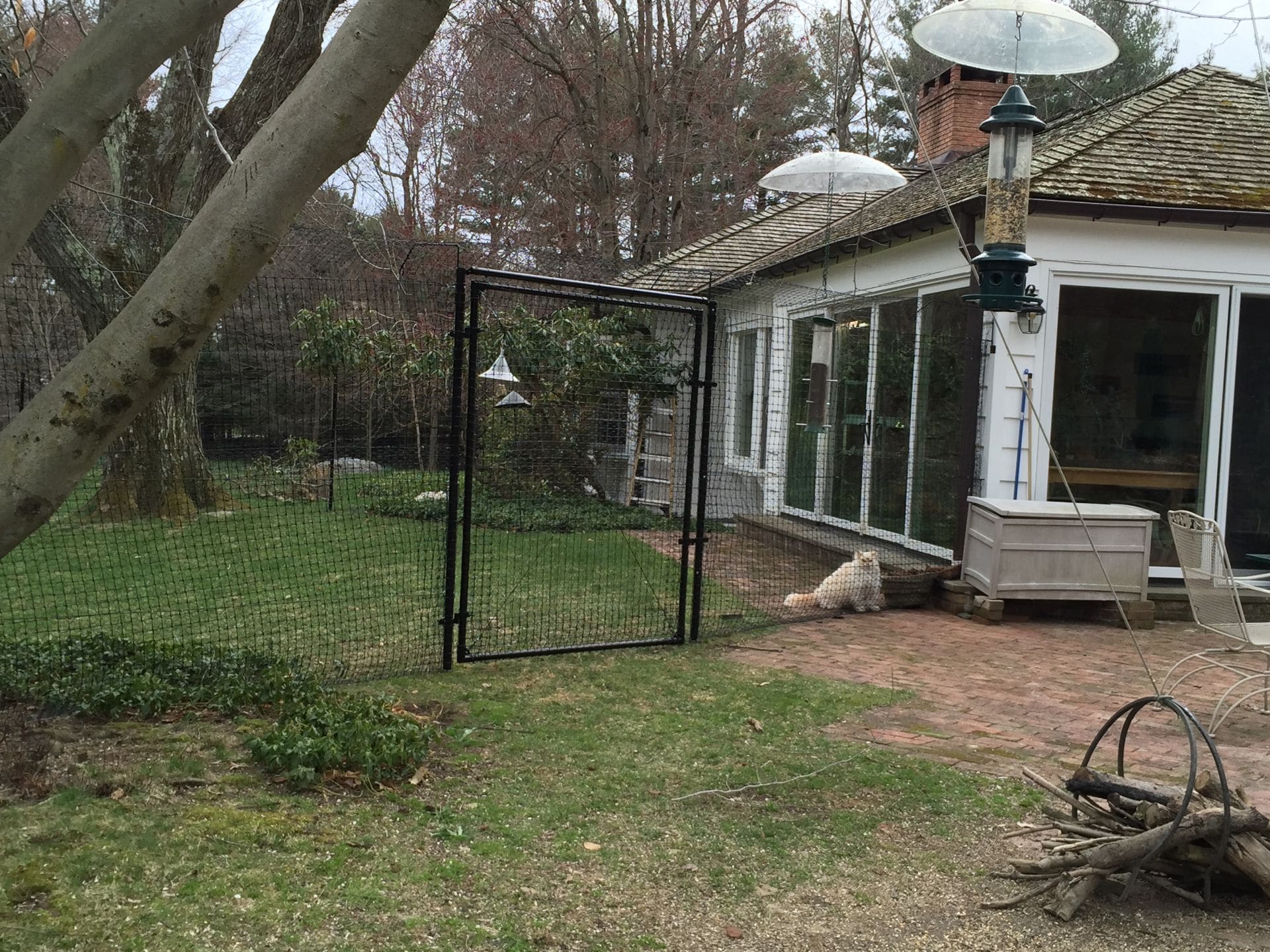
Designing an Effective Coyote Fence for Rural Areas
Coyotes possess extraordinary physical agility. A motivated predator can leap high over standard field fences, scramble over chain link using paw holds, or dig beneath bottom wires in under five minutes. When designing a barrier for rural pastures, you must evaluate three core vulnerabilities: jumping, climbing, and digging.
Much like determining the optimal fence height for large and athletic dogs, coyote containment requires anticipating an animal's vertical leap and momentum. Coyotes rarely clear fences purely in the air like deer; instead, they leap, hook their front paws over the top rail, and pull their bodies over. Eliminating that top purchase point while securing the base transforms an ordinary pasture boundary into an impenetrable barrier.
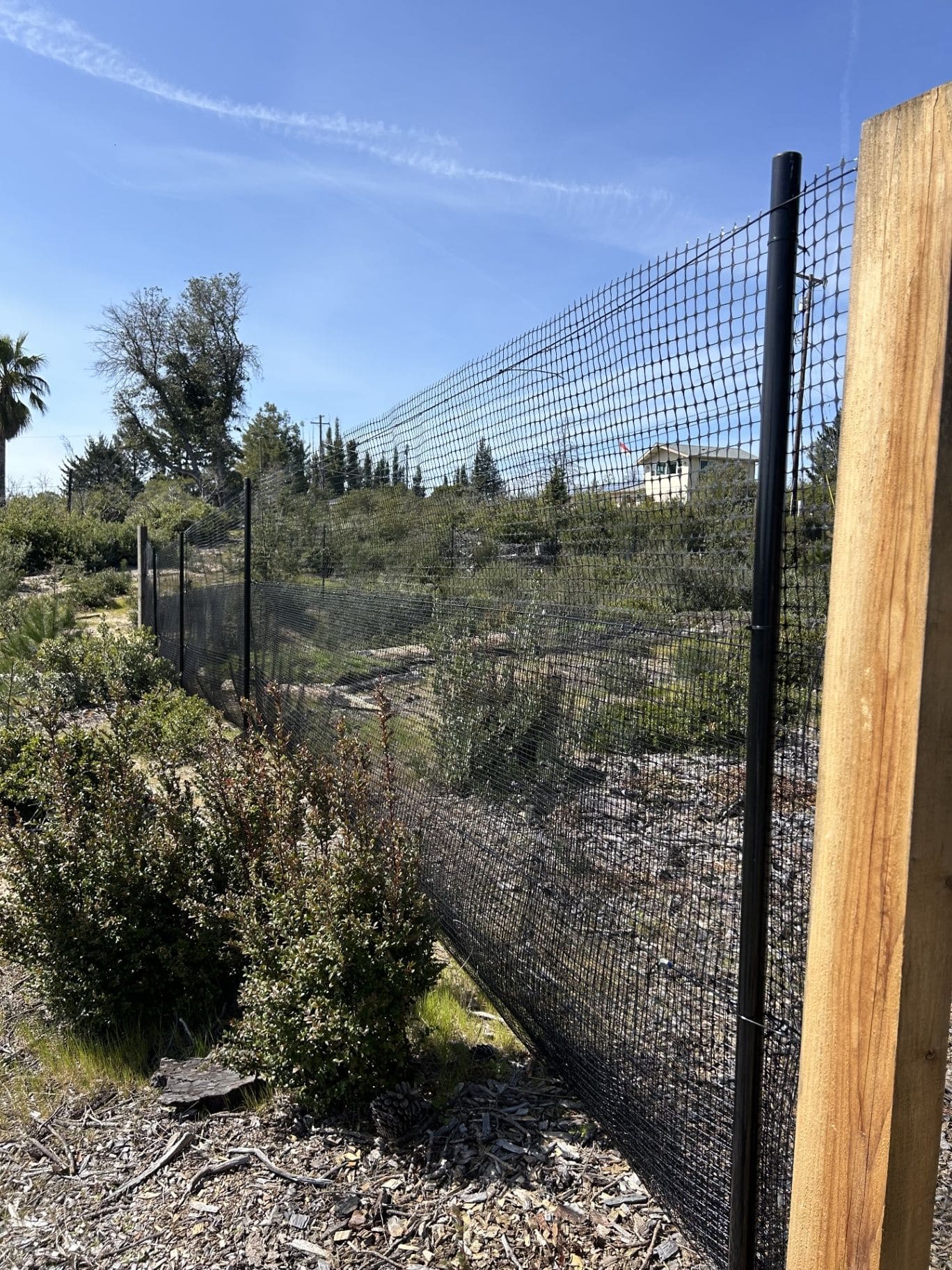
Height, Overhangs, and Coyote Rollers
To stop jumping, a physical perimeter should stand at least 6 feet high, though an 8-foot height is standard practice for high-predation zones. If local zoning or visual preferences limit you to 6 feet, top modifications are essential:
- Angled Overhangs: Installing extensions that angle outward (toward the predator) at a 45-degree angle for 15 to 20 inches prevents coyotes from vaulting the top. When they attempt to jump, the overhang forces them backward.
- Coyote Rollers: These are free-spinning aluminum or PVC cylinders mounted along the top line. When a climbing coyote reaches up to grasp the top edge, the roller spins, denying traction and dropping the animal safely back to the ground.
- Low-Traction Mesh: Using flexible steel-cable mesh rather than rigid chain link eliminates footholds, making it nearly impossible for canids to climb.
For rural homeowners balancing predator exclusion with residential pet safety, our dedicated dog fence systems integrate these non-climb principles directly into discreet layouts.
Underground Aprons and Anti-Dig Barriers
Coyotes prefer to go under a fence rather than over it. If a fence meets the soil without reinforcement, predators will quickly exploit natural depressions or excavate beneath the bottom wire.
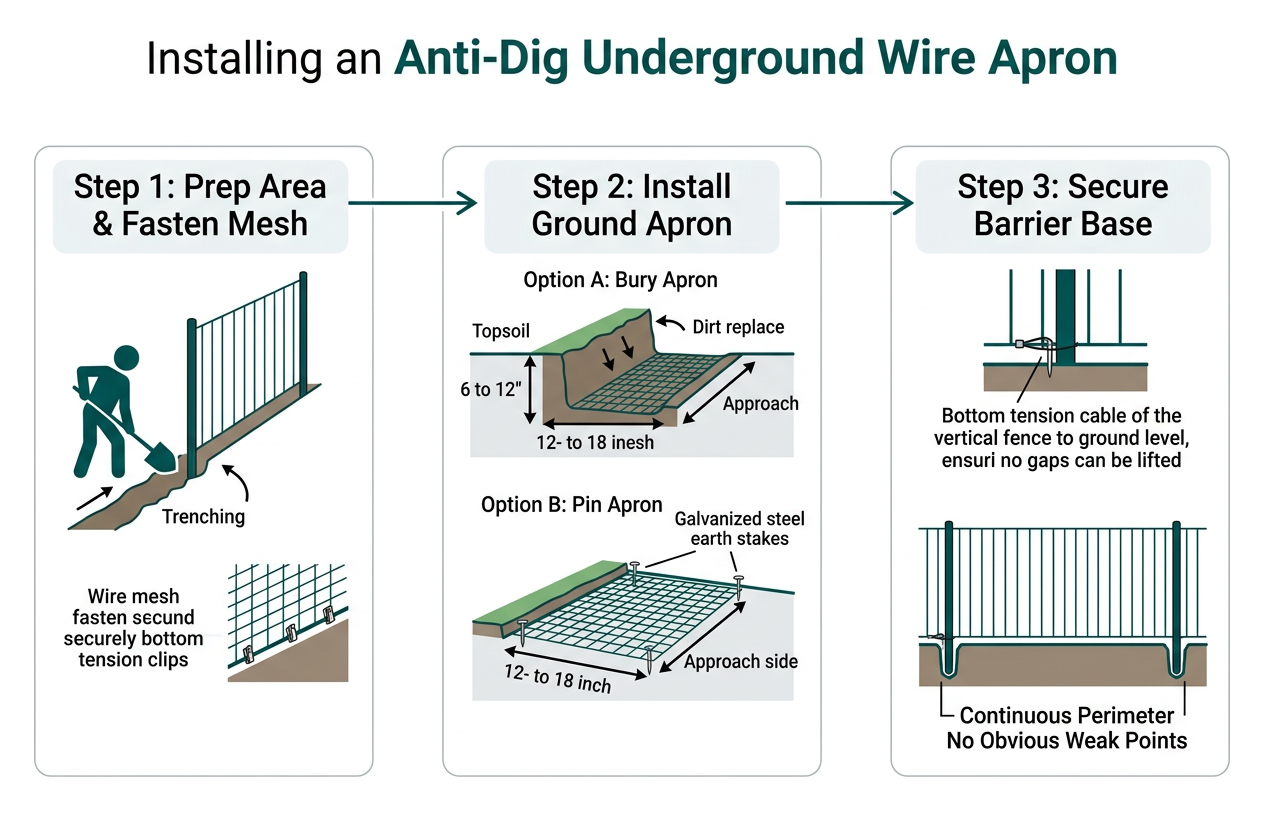
An underground apron stops this behavior entirely. Rather than simply driving posts deep, install heavy-gauge, galvanized hardware cloth or high-tensile steel mesh along the base:
- L-Shaped Ground Apron: Fasten a 12- to 18-inch width of wire mesh to the bottom of the upright fence, extending it flat along the ground outward toward the approach side.
- Trenching or Pinning: You can bury this apron 6 to 12 inches beneath the topsoil, or pin it directly to the surface using galvanized steel earth stakes. Over time, grass and root systems grow through the mesh, locking it into the earth.
- Bottom Tension Cable: Fasten the upright mesh to a high-tension steel bottom cable pinned securely at ground level to ensure no nose can lift the barrier.
When a coyote attempts to dig at the fence line, its paws hit the metal mesh apron immediately, disrupting the natural digging instinct.
Comparing Fencing Types for Rural Coyote Control
Selecting the correct materials involves balancing upfront installation costs, ongoing maintenance, and physical reliability over decades.
| Fence System Type | Expected Lifespan | Maintenance Level | Coyote Deterrence Mechanism | Primary Weakness |
|---|---|---|---|---|
| High-Tensile Electric (7-9 Wire) | 25–30+ years | High (frequent clearing, voltage checks) | Psychological shock barrier | Vegetation shorts, power failure, animal habituation |
| Electric Net Fencing | 5–7 years | Very High (fragile, sag-prone) | Psychological shock barrier | Low durability, easily grounded by heavy snow |
| Woven Field / Net-Wire | 15–20 years | Moderate (rust checks, bottom re-securing) | Physical barrier (climbable without toppers) | Can be climbed; requires apron to prevent digging |
| Low-Profile Steel-Cable & Mesh | 30+ years | Very Low (no power, tension-locked) | Non-climbable physical barrier + ground apron | Higher initial hardware investment |
| Pipe Rail with Mesh Infill | 30+ years | Low (rust monitoring on welds/brackets) | Heavy rigid physical barrier | Expensive over long acreage; rigid on steep slopes |
For realistic regional budget planning, reviewing current 2026 rural fencing costs will help you establish realistic per-foot estimates across varying materials and acreages.
Selecting the Right Coyote Fence for Rural Areas and Pastures
Many agricultural properties rely heavily on multi-strand electric fences for predator management. According to agricultural predator control research, high-tensile electric fencing provides a viable psychological deterrent when operating at peak voltage. However, electric fences suffer from two significant drawbacks in heavily wooded or rural areas: vegetative grounding and predator adaptation.
Coyotes can learn to time shock pulses or jump between live wires during winter months when deep snow insulates their paws from grounding. In contrast, evaluating non-electric fence containment advantages shows that permanent physical barriers require no energizers, tolerate severe weather without loss of containment, and eliminate daily battery or grid checks. Heavy-gauge Class 3 galvanized steel mesh provides decades of impenetrable physical protection without ongoing operating overhead.
Low-Profile Steel Mesh and Cable Systems
For properties where large wooden stockades or industrial chain link would spoil scenic rural views, modern engineered steel-cable mesh systems offer the optimal balance of strength and discretion.
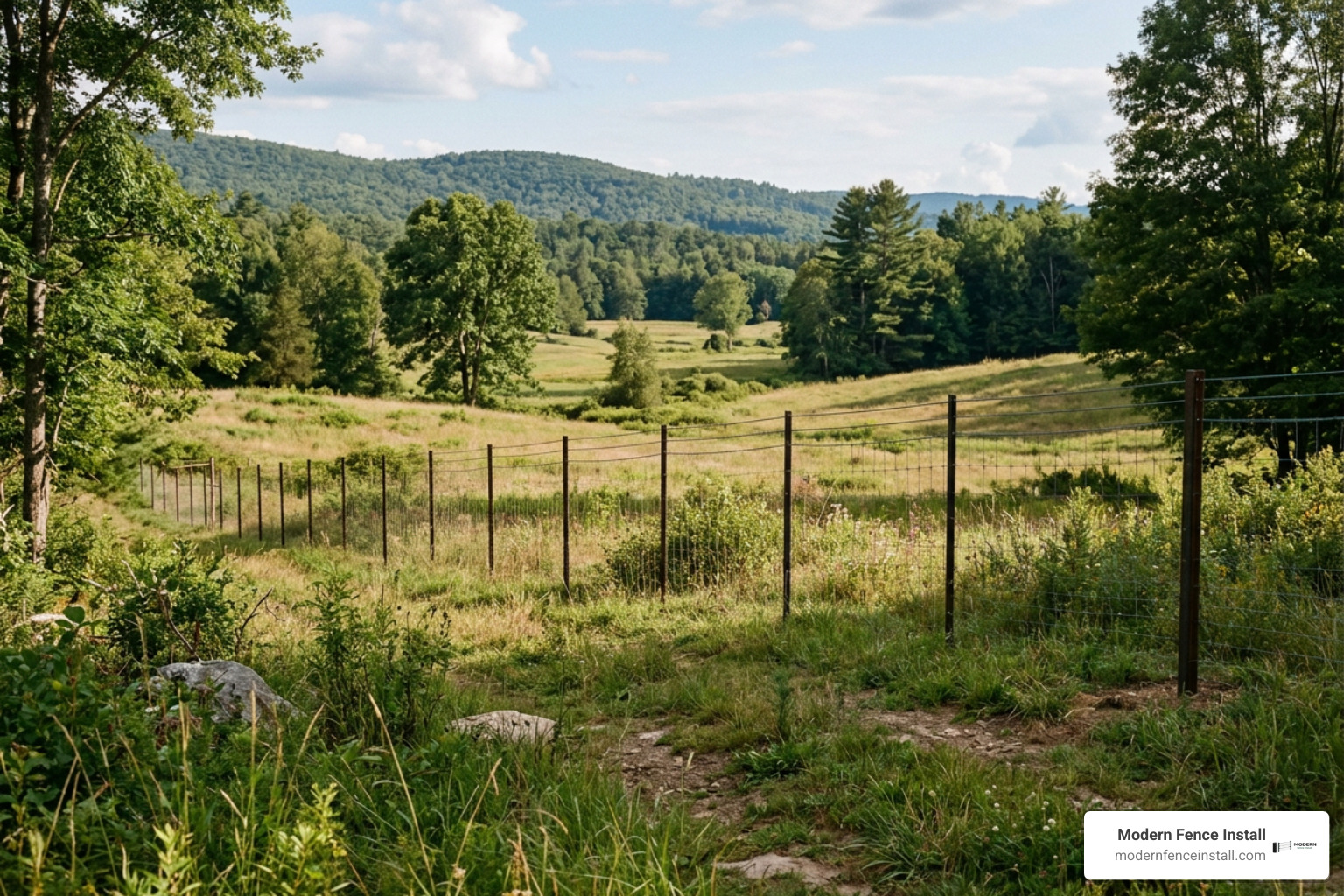
At Modern Fence Install, we utilize high-tensile top and bottom steel cables paired with black corrosion-resistant mesh. From a short distance, the fence blends almost entirely into surrounding woods and fields. This low-visibility approach is also foundational to our deer fence solutions, offering multi-species exclusion that preserves landscape aesthetics while resisting thousands of pounds of impact pressure.
Planning and Installation Considerations for Large Acreage
Fencing vast rural acreages requires systematic layout planning to eliminate installation failure points:
- Boundary Surveys and Right-of-Ways: Ensure exact property lines are marked before running long perimeter lines to prevent costly boundary disputes.
- Gate Security: Gates are the most common entry point for predators. Maintain tight tolerances with bottom clearances under 2 inches, install solid concrete or crushed-stone sills beneath the swing path, and fit tamper-proof latching mechanisms.
- Transition Zones: Avoid routing fence lines directly beneath large trees with low-hanging boughs that coyotes could use as natural jumping platforms.
Installing a Coyote Fence for Rural Areas with Slopes and Rocky Ground
Rural terrain is rarely flat. Installing predator fencing across rocky ledges, rolling hills, and washouts demands specific construction techniques:
- Contoured vs. Stepped Fencing: On rolling slopes, contoured installations follow the natural undulations of the soil, keeping the bottom wire flush to the grade. Stepped installations often create triangular gaps beneath bottom rails that invite digging.
- Rocky Ground Anchoring: When bedrock prevents digging standard 36-inch post holes, drill into the ledge using pneumatic rock drills and secure heavy steel posts with structural expanding grout.
- Drainage Swales and Culverts: To stop coyotes from slipping through seasonal washouts, install heavy-gauge swinging grates (culvert guards) that allow water flow but block animal entry.
Navigating Rural Zoning, Permitting, and Wildlife Regulations
Before breaking ground, consult local municipal bylaws:
- Height Restrictions: While suburban yards often cap fence heights at 6 feet, rural and agricultural zones frequently permit 8-foot wildlife barriers by right or through standard agricultural exemptions.
- Wildlife Corridors: State environmental agencies in Connecticut, Massachusetts, and New York may require designated setback buffers near protected wetlands or known migration corridors.
- Permit Submissions: Ensure drawings account for clear fence line setbacks from neighboring roadways and agricultural utility easements.
Long-Term Maintenance and Secondary Deterrents
Even the most robustly built fence requires ongoing seasonal inspection. If an older boundary begins to shift or lean, evaluating whether to repair or replace a fence will help determine if reinforcement or a complete layout replacement is the most cost-effective path forward.
Upkeep, Weather Resistance, and Harsh Climate Durability
Harsh northern winters test every component of a fence line:
- Snow Pack Pressure: Heavy drifts can build up against mesh, creating ramps that allow coyotes to step over standard-height perimeters. Clear perimeter snowbanks or install taller initial perimeters in high-snow belts.
- Ground Anchor Tension: Inspect ground pins every spring after frost-heave cycles to ensure aprons remain pressed tight against the earth.
- Vegetation Clearance: Keep brush, briars, and fallen limbs cleared from the fence perimeter. Heavy branches falling on tensioned lines can compromise top-cable integrity.
Supplemental Deterrents and Handling Trapped Predators
Layering non-lethal deterrents creates an active multi-tiered defense:
- Livestock Guardian Animals: Great Pyrenees, Anatolian Shepherds, or donkeys provide dedicated pasture patrolling within the fenced boundary.
- Motion Hazing: Ultrasonic alarms, intermittent flashing lights (such as Foxlights), and motion-activated sprinklers create an unpredictable environment that deters approaching canids.
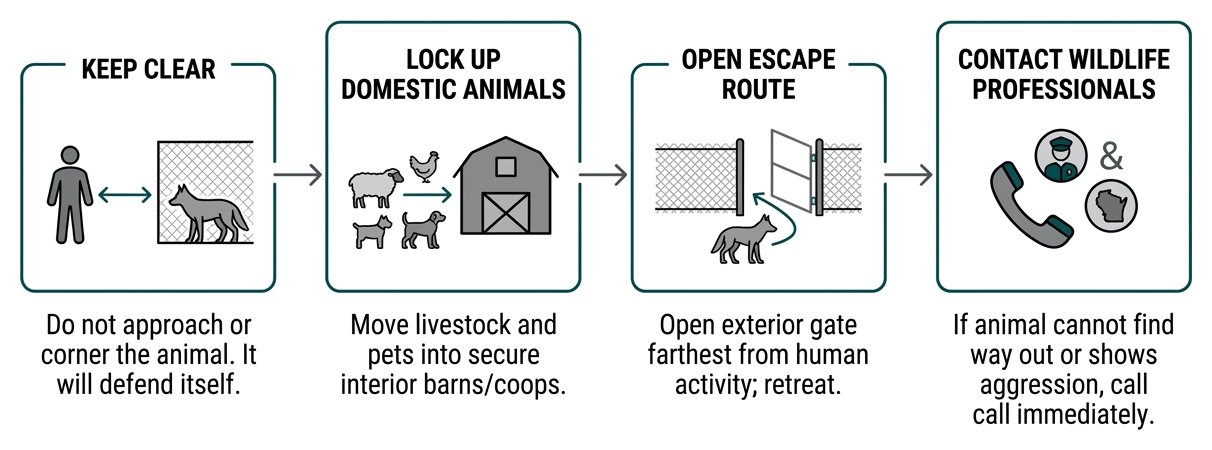
If a coyote becomes trapped inside your fenced pasture:
- Keep Clear: Never corner or approach the animal. An aggressive or cornered coyote will defend itself.
- Lock Up Domestic Animals: Move livestock and pets into secure interior barns or coops.
- Open an Exterior Escape Route: Open an exterior perimeter gate farthest from human activity and retreat.
- Contact Wildlife Professionals: If the animal cannot find its way out or exhibits unusual daytime aggression, contact your municipal animal control officer or state wildlife department immediately.
Frequently Asked Questions About Coyote Fencing
Can coyotes jump or climb a standard six-foot fence?
Yes. An adult coyote can jump over a 5- to 6-foot obstacle with a running start by catching the top with its front paws and scrambling over. If the fence has climbable openings (such as standard chain link), they can climb it easily. Installing top-mounted coyote rollers or an outward 45-degree overhang removes this climbing grip.
How deep should a coyote fence apron be buried?
A ground apron should extend 12 to 18 inches. It can be buried 6 to 12 inches deep in a trench or laid horizontally along the surface and staked flush with heavy earth pins. Surface-staked aprons quickly become bound by turf and roots, stopping digging attempts right at the surface.
What should you do if a coyote is trapped inside the perimeter?
Isolate your pets and livestock indoors, open an exterior pasture gate to create an unblocked exit path, and provide the animal with space and quiet so it can leave on its own. If it fails to exit or appears injured or rabid, contact local animal control or wildlife services.
Conclusion
Securing rural acreage against persistent predators requires a comprehensive perimeter defense designed for long-term structural integrity. By combining appropriate height, anti-climb top modifications, and ground-level wire aprons, you create a dependable barrier that protects livestock, pets, and gardens year-round.
At Modern Fence Install, we specialize in high-strength, non-electric steel-cable and low-profile mesh fences across Connecticut, New York, and Massachusetts. Our engineered systems install cleanly within 30 days without heavy land disruption, saving 30%+ compared to traditional solid board fencing while maintaining rural view sheds. For a detailed breakdown of how physical barriers compare to behavioral deterrents, explore our guide on understanding how fences stop coyotes or contact our team to plan your perimeter layout.