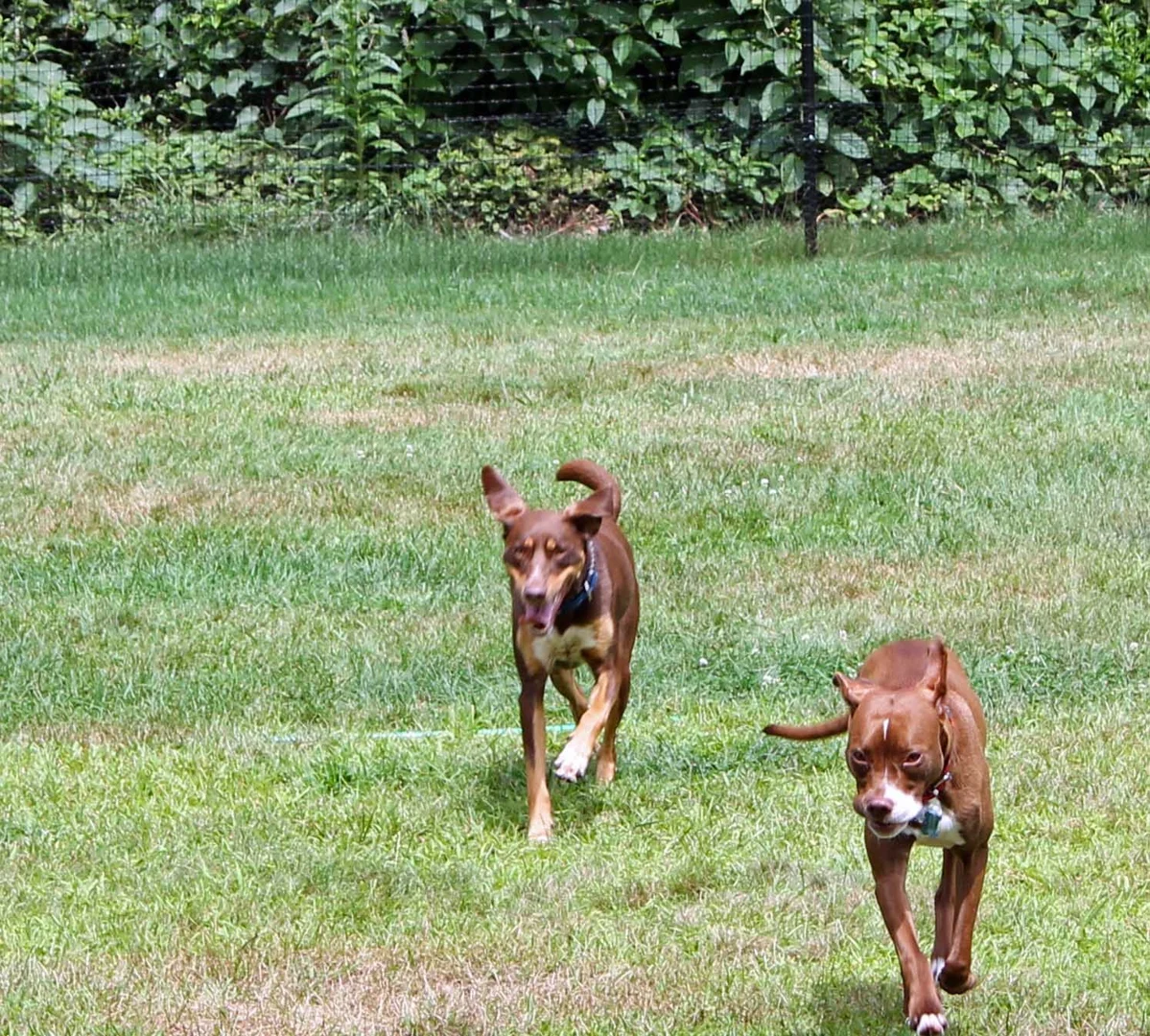
How to Choose a Dog Fence That Fits Your Yard
The best dog fence is one your dog cannot jump, dig under, or squeeze through. Start with your dog's size and escape habits, then compare a physical barrier with a wireless or underground boundary. If your dog needs a visible barrier but you want to keep the yard open-looking, low-profile mesh is another option.
Check local rules and HOA limits before you buy. Plan for secure gates and regular inspections, too: even a well-chosen fence can fail at a weak spot.
I'm Jason Levine, EMT-B, a senior consultant at Modern Fence Install. I help homeowners in CT, NY, and MA choose low-visibility dog fence systems, including non-electric steel-cable and mesh barriers.
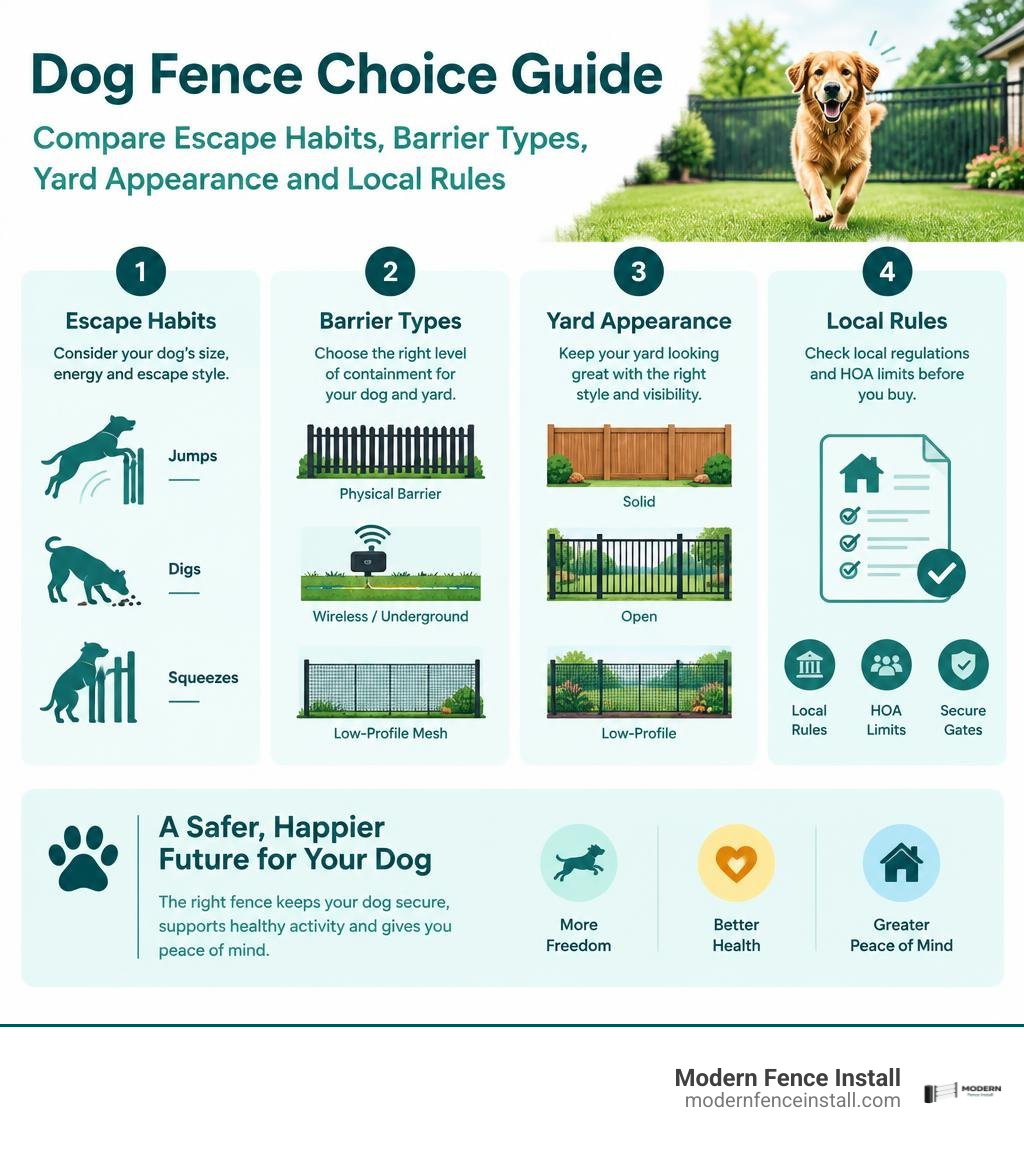
Every year across the United States, roughly 10 million pets go missing, and only about 15% of dogs without identification make it back home, according to the American Humane Association. Providing a secure perimeter gives your pet the freedom to exercise while giving you total peace of mind. Whether you manage an energetic puppy or an athletic working breed, finding the right dog fence balance between containment, aesthetics, and budget is essential.
Comparing the Most Popular Dog Fence Types and Systems
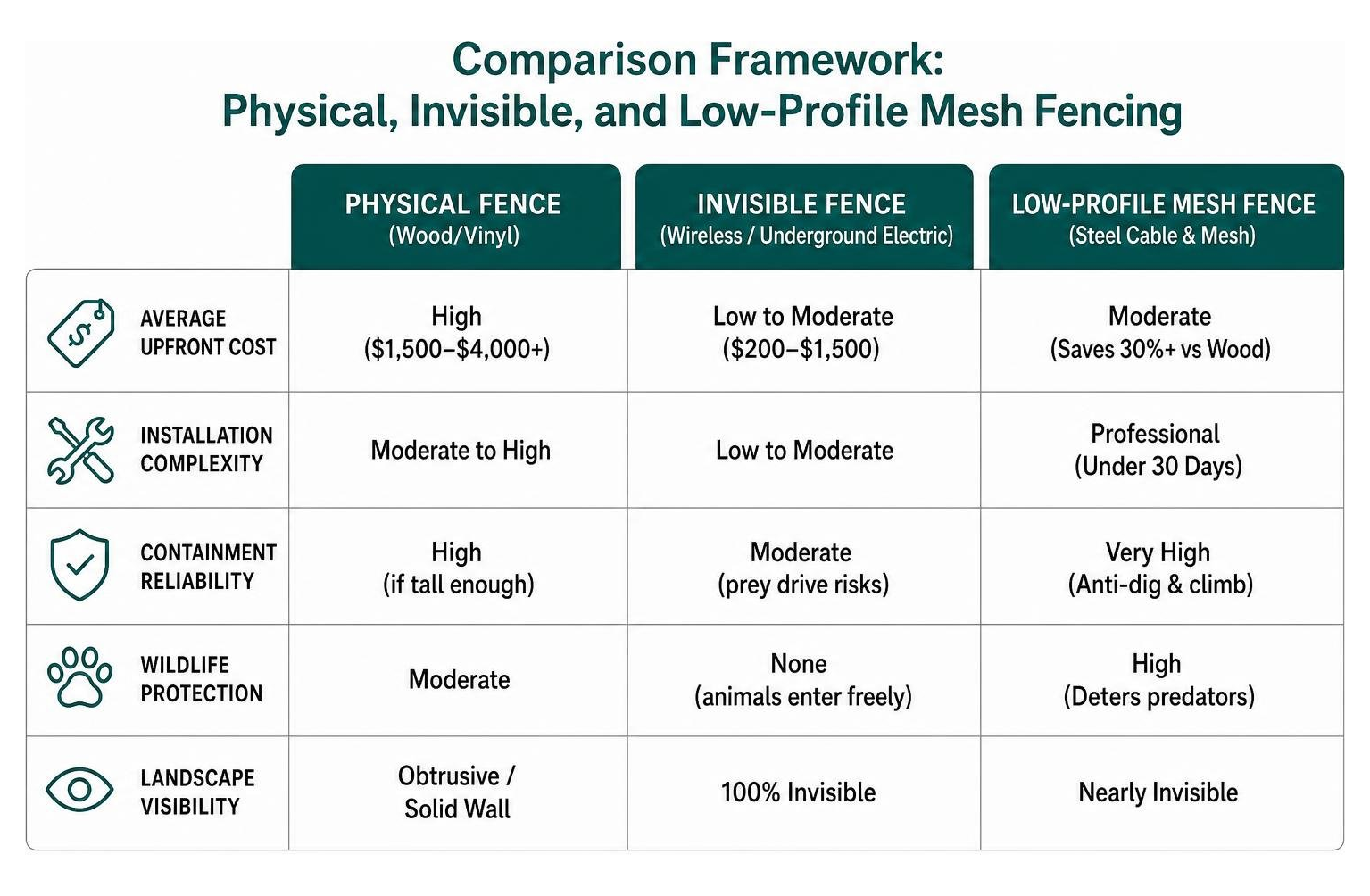
Choosing the right containment setup comes down to three main factors: physical reliability, visual impact on your landscape, and total project cost. Traditional solid privacy fences can cost between $1,500 and $4,000 for an average-sized suburban yard (and significantly more for acreage).
Cost alone does not tell the whole story, though. A study from the Journal of Applied Animal Welfare Science found that 33% of dogs enclosed by traditional fences still manage to escape at least once, often by tunneling underneath or clearing the top rail. Understanding exactly what level of physical security your pet genuinely requires helps clarify which containment option makes the most sense for your yard.
| Fence System | Average Upfront Cost | Installation Complexity | Containment Reliability | Wildlife Protection | Landscape Visibility |
|---|---|---|---|---|---|
| Traditional Wood/Vinyl | High ($1,500–$4,000+) | Moderate to High | High (if tall enough) | Moderate | Obtrusive / Solid Wall |
| Low-Profile Steel Cable & Mesh | Moderate (Saves 30%+ vs Wood) | Professional (Under 30 Days) | Very High (Anti-dig & climb) | High (Deters predators) | Nearly Invisible |
If you want a secure perimeter without obstructing scenic woodland views or dealing with complex trenching, exploring our dedicated dog fence services provides an engineered middle ground.
Evaluating Physical Dog Fence Materials and Heights
Physical barriers provide an unmistakable boundary for your dog. Standard materials include wood panels, vinyl, and high-strength polypropylene or steel mesh. Wood and vinyl provide visual privacy, which can reduce barking triggered by passing neighbors, but they can make smaller yards feel boxed in and require regular staining or washing.
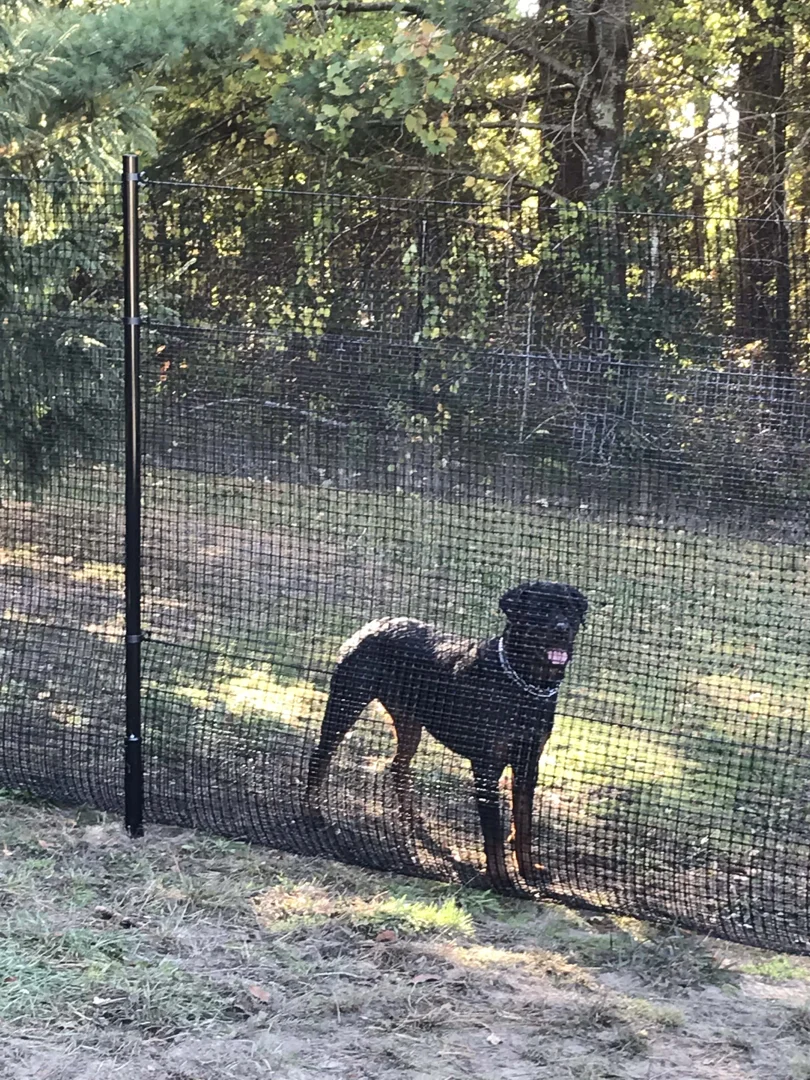
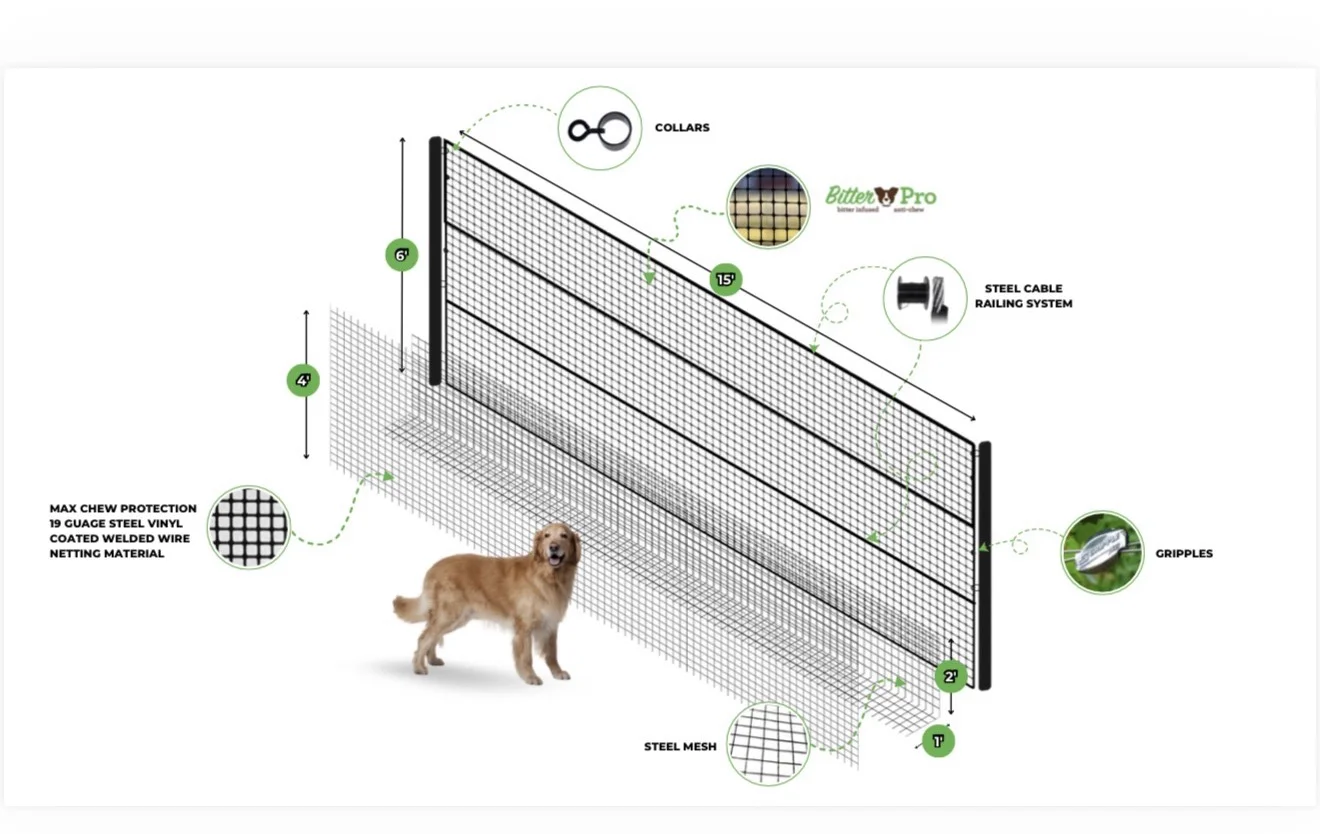
High-strength mesh paired with steel tension cables offers exceptional tensile strength while blending directly into surrounding foliage, avoiding the utilitarian look of more industrial fencing options.
Matching the height of the fence to your dog's athletic capability is crucial. While a 4-foot fence works well for small to medium breeds, determined jumpers like German Shepherds, Boxers, or Huskies require taller barriers. Selecting the best fence height for large dogs often means choosing a 5- or 6-foot setup to eliminate any chance of vaulting over the top rail.
Why a Physical Barrier Outperforms an Invisible Boundary
Some electronic boundary approaches rely on a receiver collar that emits a warning tone, followed by a mild static correction, when a dog nears the boundary line. While sometimes marketed as convenient, this kind of electronic correction has notable drawbacks that a physical, engineered fence avoids entirely:
- High Prey Drive: A dog chasing a deer or squirrel may ignore the correction and sprint through the boundary. Once outside, the fear of receiving another shock often prevents them from returning home.
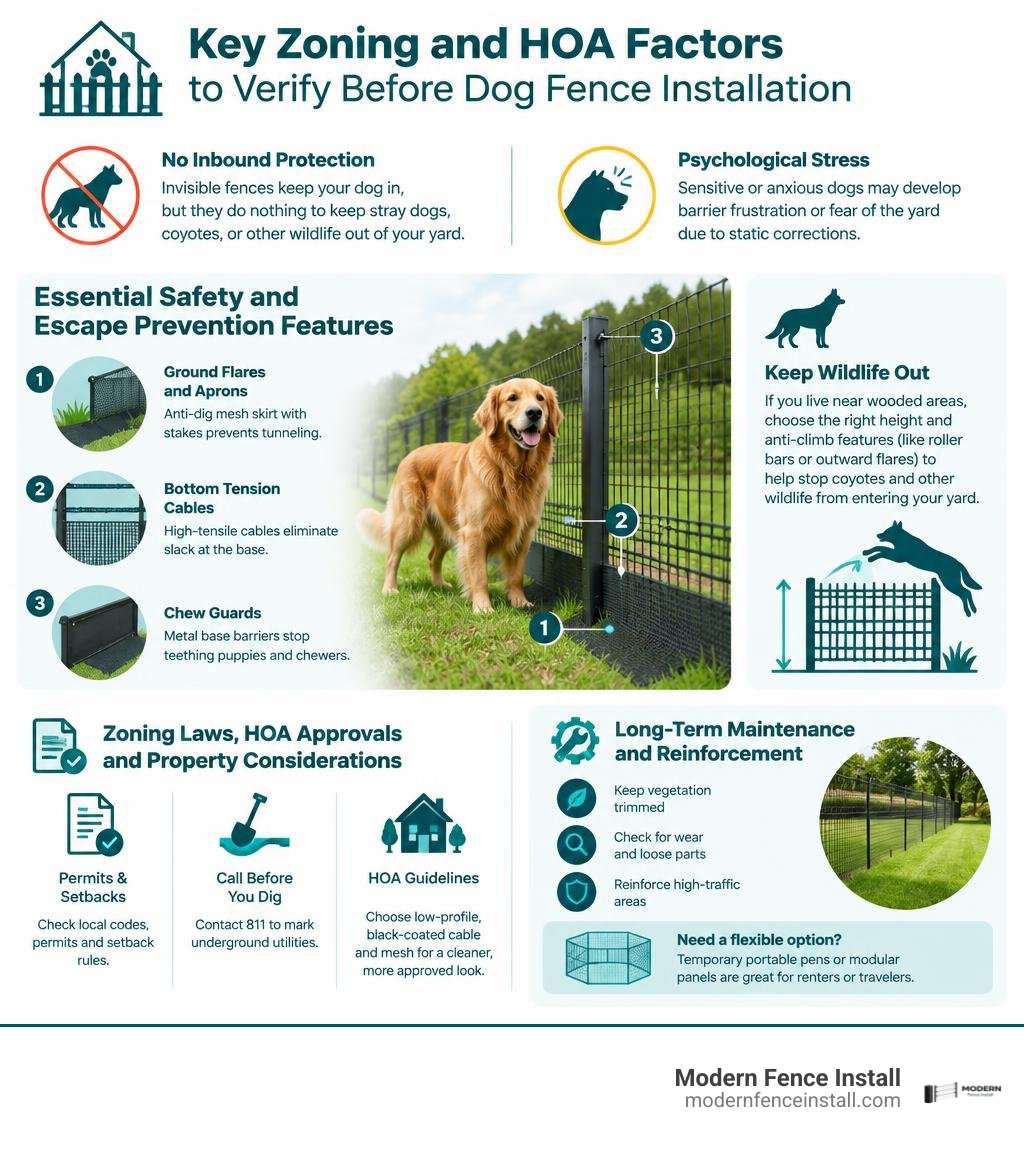
- No Inbound Protection: Electronic boundaries keep your dog in, but they do nothing to keep stray dogs, coyotes, or other wildlife out of your yard.
- Psychological Stress: Sensitive or anxious dogs may develop barrier frustration or fear of the yard due to static corrections.
For vast properties with difficult topography, a true physical, non-electric barrier remains the more reliable choice for complex perimeters, even where terrain makes installation more involved.
Essential Safety and Escape Prevention Features
A dependable enclosure accounts for what happens at ground level just as much as what happens at the top rail. Dogs love to dig, and natural ground settlement can create gaps beneath a fence line.
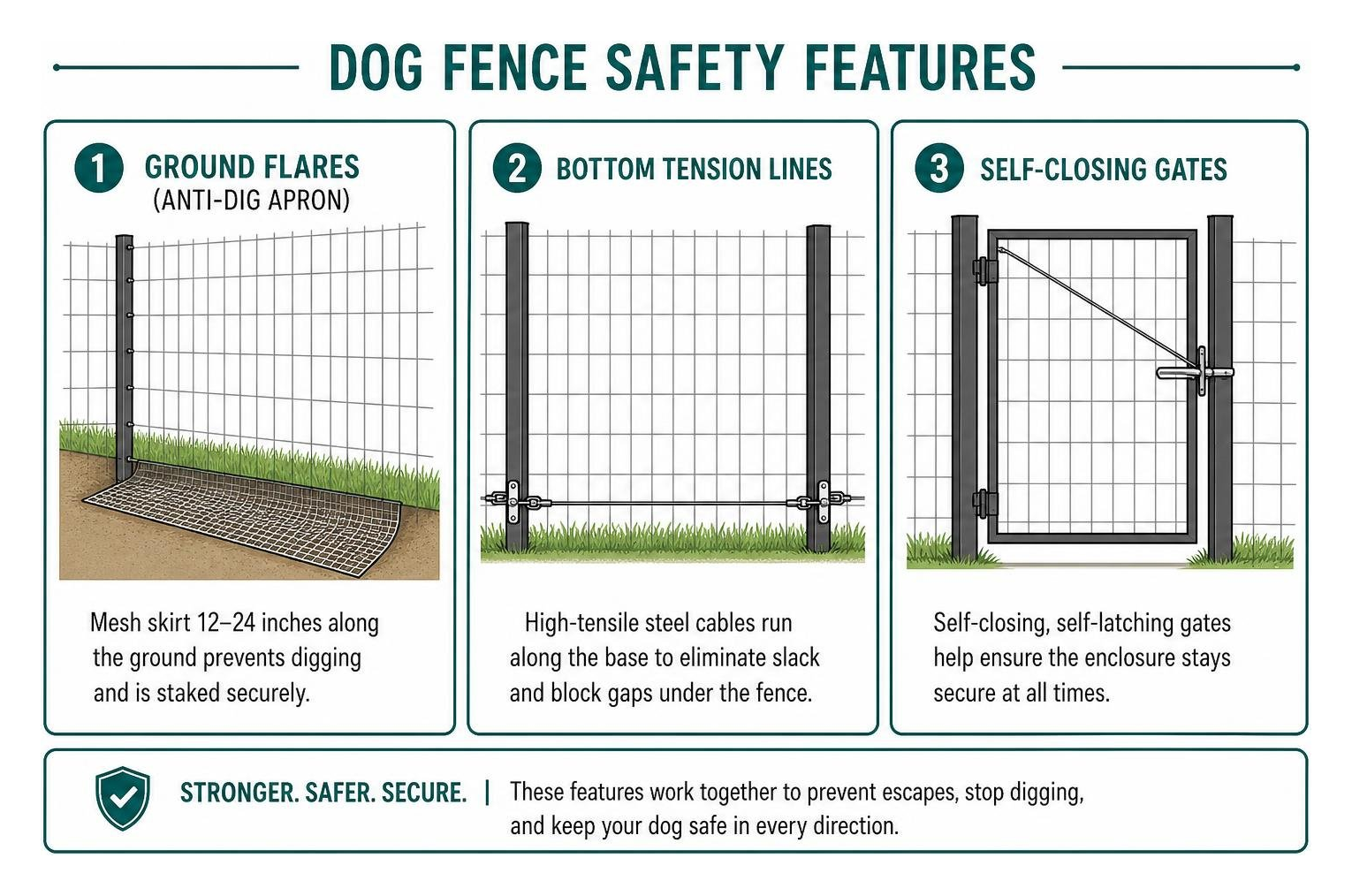
To prevent tunneling, consider implementing these reinforcement strategies:
- Ground Flares and Aprons: Laying an anti-dig mesh skirt 12 to 24 inches along the ground, secured with heavy-duty ground stakes, prevents digging. Grass quickly grows through the mesh, completely concealing it within weeks.
- Bottom Tension Cables: High-tensile steel cables run along the base of the mesh to eliminate slack, preventing dogs from nosing or pushing underneath.
- Chew Guards: Installing metal base barriers stops teething puppies and determined chewers from compromising lower mesh sections.
Physical barriers also provide a crucial shield against local wildlife. If you live near wooded corridors, you may wonder: will a fence stop coyotes? While standard farm fences might fail, an engineered barrier provides real security. Since these predators are capable leapers, understanding if a coyote can jump a 6-foot fence helps you select the right height and anti-climb features (such as roller bars or outward flares) to keep your pets safe.
Zoning Laws, HOA Approvals, and Property Considerations
Before digging post holes or finalizing an installation, always research local municipal codes and neighborhood covenants.
- Permits and Setbacks: Most towns require permits for fences over 6 feet tall and enforce setback rules regarding how close you can build to property lines, sidewalks, or utility easements.
- Call Before You Dig: Always contact 811 before driving posts into the ground to mark underground electrical, gas, and plumbing lines.
- HOA Guidelines: Homeowners associations frequently ban chain link or high privacy fencing to preserve uniform neighborhood aesthetics. Installing HOA-approved dog fences that use low-profile, black-coated steel cable and mesh often satisfies architectural review committees because the fence disappears into the background landscape.
For renters or frequent travelers, temporary portable exercise pens or modular freestanding panels offer flexible containment without violating lease agreements or municipal building codes.
Long-Term Maintenance and Reinforcement Strategies
A fence is an outdoor investment exposed to heavy snow, fallen branches, and shifting soil. Regular inspections keep your perimeter secure year-round:
- Inspect Line Tension: Walk your perimeter twice a year to ensure tension cables remain taut and ground stakes have not worked loose from winter freeze-thaw cycles.
- Clear Overhanging Limbs: Trim branches that could fall and crush the top rail or create a natural ladder for agile dogs.
- Maintain Gate Hardware: Lubricate self-closing hinges and check that latches drop securely into place every time the gate swings shut.
If you have an older barrier that is sagging or rotting, you will need to evaluate whether to repair vs replace the fence to ensure pet safety. If you decide on a new system, our streamlined 30-day fence install process delivers an engineered, low-visibility solution quickly and efficiently without digging up your yard.
Frequently Asked Questions About Dog Fencing
How do I stop my dog from digging under the fence?
The most effective way to stop digging is to install an anti-dig ground apron. Extending high-strength steel mesh 12 to 24 inches outward along the turf and pinning it with heavy ground stakes prevents dogs from gaining purchase near the fence line. You can also bury smooth river stones or install a bottom tension cable to eliminate ground-level slack.
How long does it take to train a dog on boundary fencing?
Boundary training typically takes between 10 and 14 days. Whether using physical markers or electronic systems, begin with your dog on a leash, using visual boundary flags and positive reinforcement (high-value treats) whenever they step back from the perimeter line. Consistency and short, daily training sessions ensure lasting habits.
What is the most cost-effective fence for large properties?
For large acreage, traditional wood or vinyl privacy fencing is often cost-prohibitive. Purpose-built, low-profile steel-cable and high-strength mesh systems save 30% or more compared to solid fencing while offering true physical containment and predator deterrence without disrupting sweeping natural views.
Conclusion
Keeping your canine companion safe requires a fence designed around their specific size, athletic ability, and instincts. While traditional wooden fences provide visual privacy and electronic fences offer open sightlines, low-profile non-electric steel-cable and mesh systems deliver the ultimate blend of durable physical containment, predator protection, and landscape aesthetics.
Ready to give your dog safe, unrestricted yard freedom? Browse our completed projects in our gallery, explore our regional service locations across CT, NY, and MA, or contact us to book a consultation today.