Comparing Mesh Fence Materials and Construction Types
Selecting the ideal barrier begins with understanding how core materials and manufacturing methods perform in the field. From lightweight polymer exclusion barriers to industrial-grade rigid steel panels, each construction method delivers distinct advantages in tensile strength, structural rigidity, and visual impact.
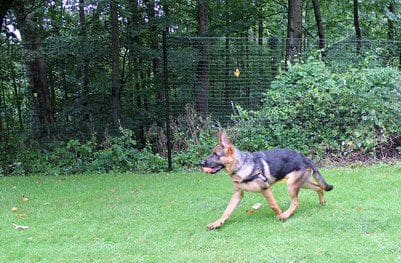
| Mesh Type | Typical Material | Wire Diameter / Gauge | Standard Aperture Size | Tensile Strength | Primary Best-Fit Application |
|---|---|---|---|---|---|
| Welded Wire Panels | Low-carbon steel (Galvanized / PVC) | 3.0 mm – 5.0 mm (6–11 ga) | 50 mm × 100 mm to 50 mm × 200 mm | 450 – 700 N/mm² | Perimeter boundaries, dog runs, landscape containment |
| Twin Wire Panels | Double horizontal & single vertical steel | Double 8.0 mm horiz. / 6.0 mm vert. | 50 mm × 200 mm | 550 – 700 N/mm² | High-impact containment, sports facilities, commercial zones |
| 358 Anti-Climb Mesh | High-tensile carbon steel (Galvanized/Polymer) | 4.0 mm (8 ga) | 12.7 mm × 76.2 mm (0.5" × 3") | 500 – 650 N/mm² | High-security infrastructure, correctional facilities, anti-cut perimeters |
| Extruded Polymer Netting | UV-stabilized Polypropylene / HDPE | 0.8 mm – 2.0 mm (filament) | 0.75" × 0.75" to 2" × 2" | 78 – 685 lb/ft (break load) | Garden pest control, deer exclusion, temporary visual barriers |
| Vinyl-Coated Roll Mesh | Galvanized steel with PVC jacketing | 1.6 mm – 2.0 mm (14–16 ga) | 1" × 1" to 1.5" × 4" | 350 – 500 N/mm² | Pool enclosures, garden borders, small pet containment |
Welded Wire and Woven Steel Configurations
Welded wire configurations are built by arranging longitudinal and transverse high-tensile carbon steel wires, fusing them at every cross point via high-precision electrical resistance welding. This solid intersection prevents the mesh from unraveling if a single strand is severed—a significant functional upgrade over traditional woven wire.
Many contemporary systems integrate pressed horizontal "V" profiles. These V-mesh profiles act as built-in stiffening ribs, dramatically increasing lateral rigidity and resisting wind or physical deflection without requiring heavy intermediate horizontal rails. When extra strength is required, double-wire panels—such as systems utilizing twin 8.0 mm horizontal wires sandwiching 6.0 mm vertical wires—provide exceptional rigidity against heavy impacts while preserving open sightlines across the property.
High-Security 358 Anti-Climb Mesh Fence Systems
The term "358" originates from the system's core Imperial specifications: 3 inches wide by 0.5 inches high aperture, constructed with 8-gauge wire (measuring 76.2 mm × 12.7 mm × 4.0 mm). Engineered originally for critical infrastructure, prisons, and utilities, this narrow aperture configuration eliminates finger- and toe-holds, making scaling physically impossible without specialized climbing gear.
Beyond anti-climb properties, the tight 12.7 mm vertical spacing prevents standard bolt cutters or manual cutting tools from inserting their jaws between wires. High-security welded wire barriers feature weld shear strengths between 540 and 690 N/mm². When project specifications require extreme perimeter delay, commercial installations deploy specialized correctional-grade systems or 2.4m high 358 D mesh security fencing. These panels can be vertically stacked to reach heights up to 20 feet (6.3 meters), creating impenetrable security perimeters that remain compatible with electronic intrusion detection systems.
Polymer, Polypropylene, and Vinyl-Coated Netting
For non-structural exclusion and boundary definition, high-density polyethylene (HDPE) and polypropylene netting offer corrosion-free, lightweight alternatives. Extruded and bi-oriented polypropylene netting stretches polymer chains in both machine and transverse directions, optimizing tensile break strengths up to 685 lb/ft while keeping overall weight manageable.
Treated with carbon-black UV stabilizers, these synthetic nets withstand prolonged sun exposure without brittle breakdown. Polymer meshes provide an effective, non-rusting physical barrier for agricultural pest control, pond protection, and seasonal snow drifting, blending effortlessly into natural woodlands where rigid steel panels might prove overly industrial.
Material Durability, Coatings, and Industry Performance Standards
A fence's lifespan depends on its protective barrier system. Environmental exposure, salt air, and ground moisture will quickly degrade untreated steel, making coating chemistry a critical selection factor.
Corrosion Resistance: GAW, GBW, and Duplex Coatings
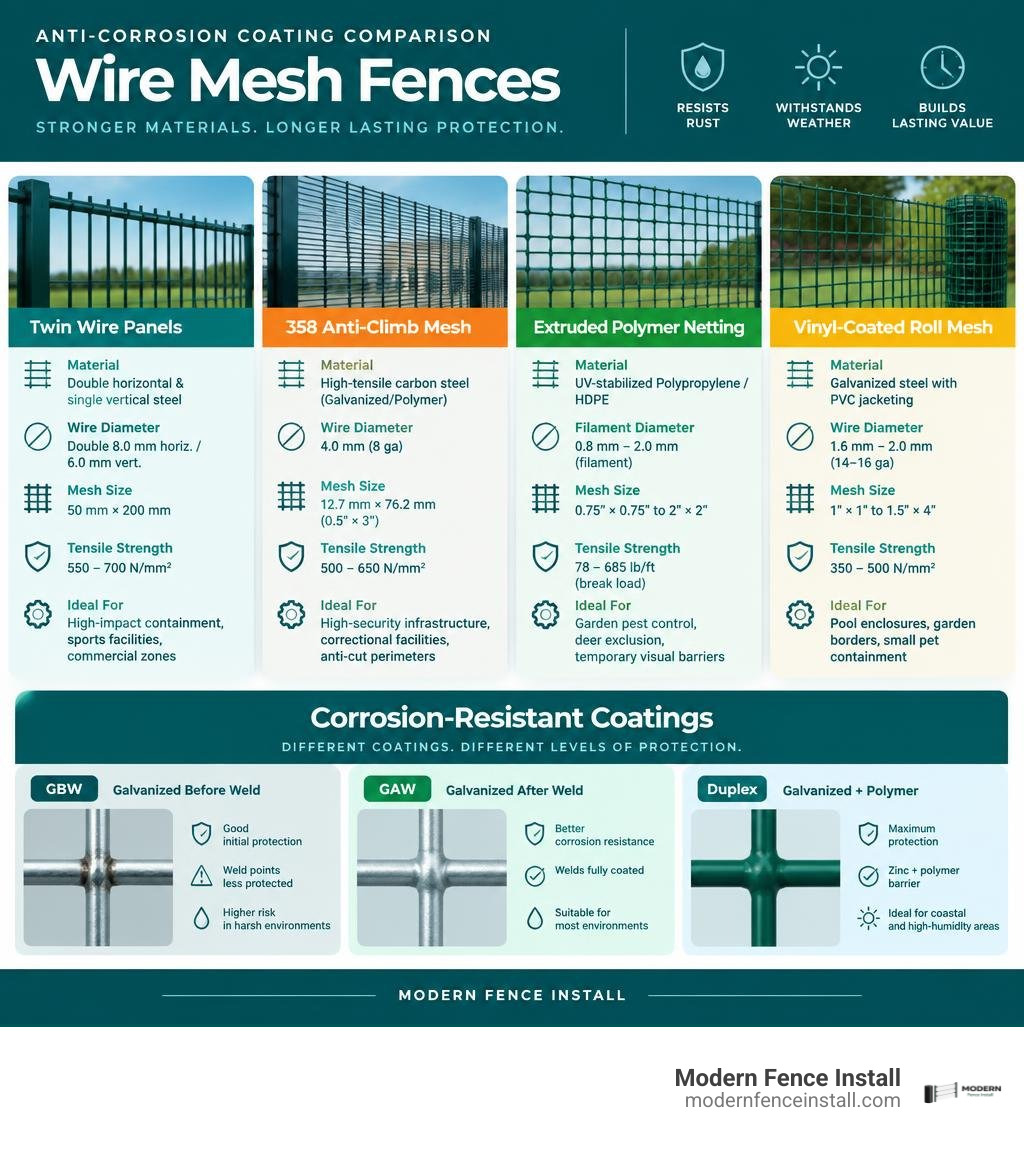
The manufacturing sequence determines how effectively a welded wire system resists oxidation:
- Galvanized Before Weld (GBW): Steel wires receive a zinc bath before being welded into a grid. While economical, the intense heat of the resistance welding process burns away the protective zinc layer at each intersection weld point. This leaves unprotected bare steel exposed to moisture, making GBW vulnerable to premature joint corrosion in humid or coastal environments.
- Galvanized After Weld (GAW): The entire raw steel grid is welded first and subsequently submerged into a bath of molten zinc. This process completely encapsulates every joint, raw edge, and weld point in a continuous, heavy zinc layer (often exceeding 275 g/m²). GAW prevents pinpoint corrosion and dramatically increases service life.
- Duplex & Thermoplastic Coatings: High-performance systems apply a dual-barrier protection layer. After hot-dip galvanization, panels receive an architectural-grade polyester powder coat (minimum 60–100 microns) or a heavy thermoplastic coating (up to 200 microns). This duplex approach creates a chemical barrier against acid rain, pool chlorines, and salt spray, allowing systems to deliver 15- to 20-year lifespans with minimal maintenance.
Structural Load, Wind Resistance, and Residential Performance
Unlike solid wood or vinyl privacy fencing—which acts as a sail during severe coastal storms—open mesh systems let high-velocity winds pass through with minimal resistance. Engineered heavy-gauge panels are rated to withstand extreme wind loads up to 180 mph (High Velocity Hurricane Zone standards), distributing horizontal forces across robust terminal posts without panel blowouts.
When tested against structural impact standards such as ASTM F2781 (forced entry resistance) and ASTM F2656 (anti-ram barrier ratings up to M30/M50), welded steel mesh maintains rigid structural integrity across wide spans. This makes it an exceptionally sturdy choice for residential boundaries exposed to falling tree limbs, heavy snow loads, or energetic pets.
Privacy Screens, Shade Factors, and Airflow Dynamics
When existing chain link or wire mesh requires visual screening, breathable privacy screens made of UV-stabilized HDPE provide targeted sightline blockage:
- 87% to 90% Blockage: Provides effective visual separation for sports complexes, commercial yards, and residential side yards while maintaining moderate airflow to limit post stress.
- 92% to 100% Blockage: Delivers maximum visual seclusion and dust suppression for construction boundaries and private pool perimeters, though it increases wind drag during severe weather.
Because these modular woven fabrics utilize reinforced hems with brass grommets every 12 to 24 inches, they mount directly to mesh panels with weather-resistant zip ties, allowing homeowners to customize privacy without replacing underlying fence infrastructure.
Residential and Landscape Applications
While industrial facilities rely on welded mesh for anti-intrusion security, residential applications prioritize clear sightlines, reliable pet containment, and discrete wildlife determent that preserves surrounding landscaping.
Protecting Landscapes with Garden Fencing and Deer Exclusion Systems
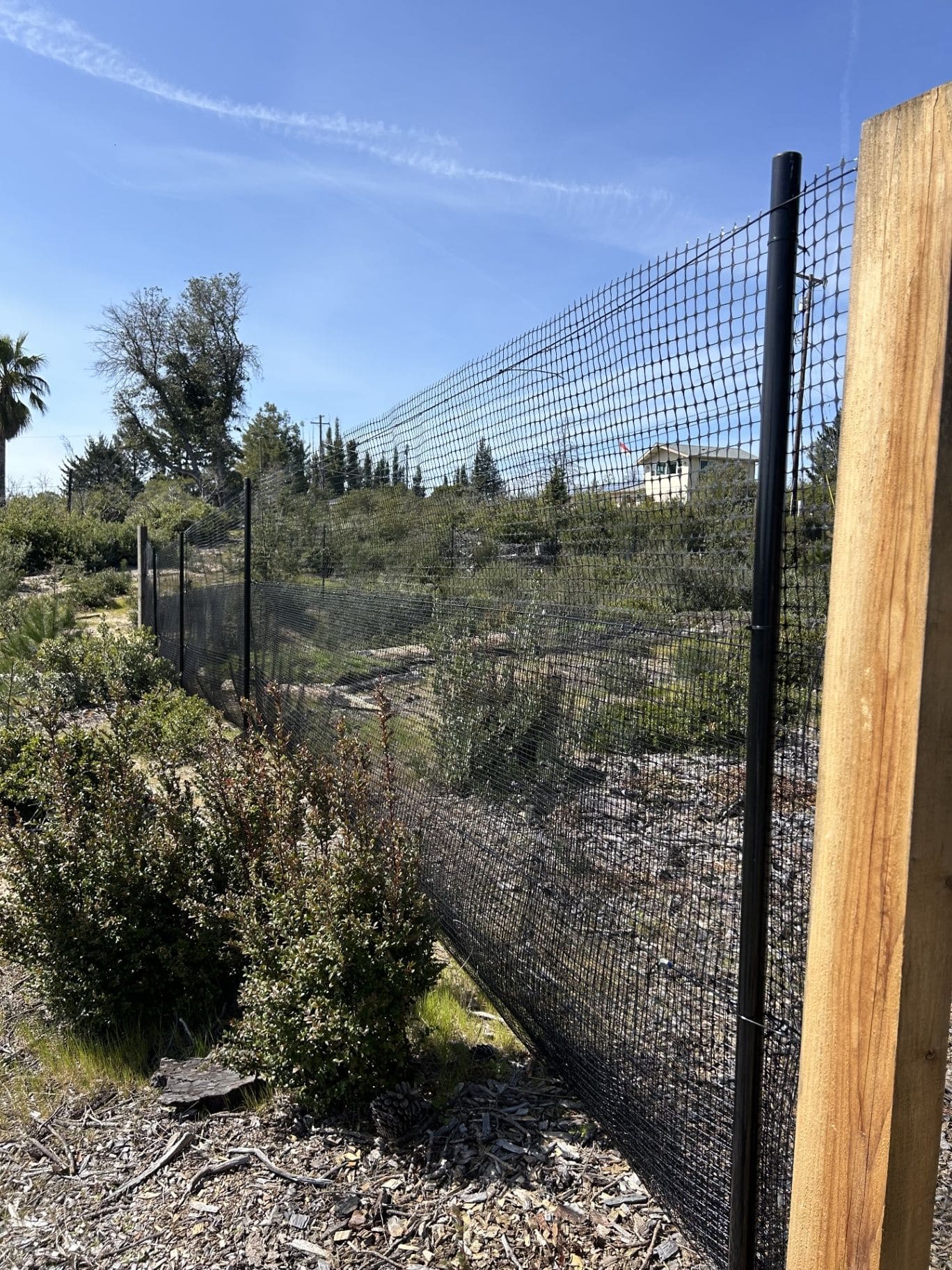
Unprotected vegetable gardens, ornamental shrubs, and orchards face constant pressure from white-tailed deer, rabbits, and burrowing pests. Standard decorative borders often fail to deter agile wildlife, making purpose-built dedicated garden fence solutions essential for long-term landscape preservation.
To keep deer from clearing property perimeters, physical barriers must provide sufficient vertical clearance. Installing high-tensile deer fence barriers reaching 7 to 8 feet in height creates a dependable physical obstacle. When paired with a bottom rodent barrier—featuring a 1-inch galvanized wire grid flared along the ground surface—the system prevents deer from jumping over and stops burrowing pests like groundhogs and rabbits from digging beneath.
Pet Containment and Boundary Security
Keeping dogs secure in the yard is one of the most common reasons homeowners explore mesh fencing. While underground radio boundaries are sometimes considered, many families prefer the physical security of a real fence. Homeowners often weigh their options when evaluating invisible fence vs physical dog fence performance, recognizing that underground electric wires cannot keep out stray animals, predators, or neighborhood wildlife.
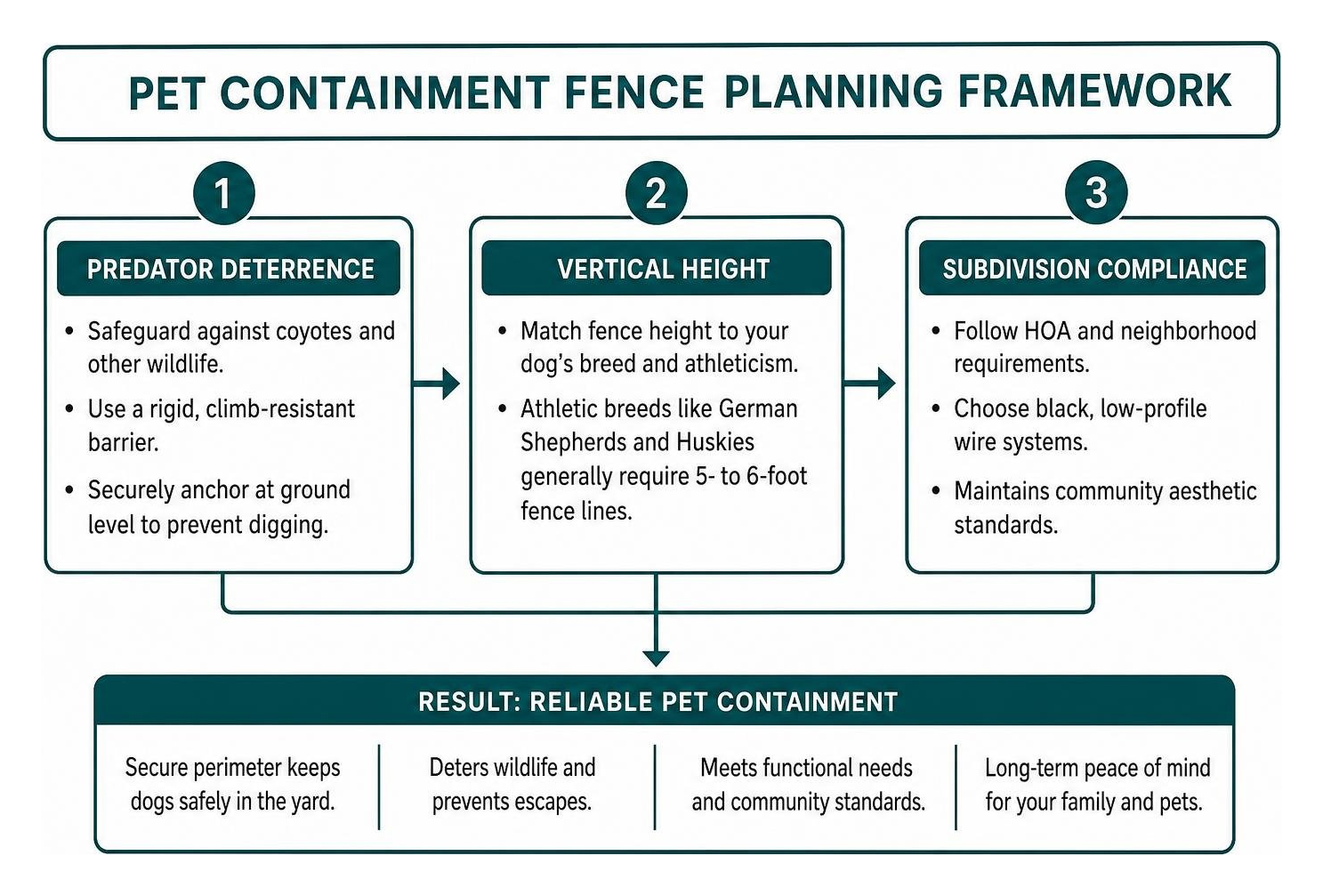
Installing a purpose-built physical dog fence provides reliable, non-electric perimeter containment. Crucial planning factors include:
- Predator Deterrence: In suburban and wooded areas, safeguarding properties against coyotes requires a rigid, climb-resistant barrier securely anchored at ground level to prevent digging.
- Vertical Height: Determining the optimal fence height for large dogs depends on the breed; athletic dogs like German Shepherds and Huskies generally require 5- to 6-foot fence lines to prevent jumping.
- Subdivision Compliance: In master-planned neighborhoods, navigating HOA-approved dog fence styles is straightforward with black, low-profile wire systems, which maintain community aesthetic standards much better than bulky stockade or commercial chain link.
Residential Property Boundaries and Access Points
Modern residential mesh fencing establishes clean property boundaries without closing off the surrounding landscape. The slender, dark profiles of vinyl-coated welded wire disappear against trees and lawn foliage, giving homeowners security and open sightlines. Integrated pedestrian and driveway gates built with reinforced steel frames and anti-sag diagonal bracing provide smooth everyday access while keeping the containment perimeter secure.
Installation Planning, Hardware, and Maintenance Best Practices
A long-lasting mesh fence depends on proper site preparation, solid post foundations, and the right fastening hardware.
Selecting the Right Mesh Fence for Property Boundaries
Before breaking ground, conduct a thorough site evaluation:
- Boundary Verification: Review property surveys to ensure fence posts remain strictly within legal boundary lines.
- Topography Assessment: For rolling hills or sharp elevation drops, decide between stepped panel installation (using rigid welded sections) or racked roll mesh that follows the natural ground contour.
- Subsurface Identification: Always contact local utility marking services before driving posts or boring foundation holes.
Post Installation, Tensioning, and System Fastening
Achieving a taut, professional fence line requires systematic assembly:
- Post Anchoring: Terminal and corner posts absorb the primary tension loads and should be set deeply into the ground or securely base-plated onto concrete pads. Intermediate line posts are spaced evenly (typically 8 to 10 feet on center) to resist lateral wind loads.
- Panel Fastening: Welded panels are secured to tubular or H-profile posts using heavy-duty clamp bars, spider clips, and tamper-resistant M8 stainless steel bolts. Tightening hardware to exact manufacturer torque specs prevents panel rattling during strong winds.
- Roll Tensioning: When unrolling continuous vinyl-coated wire, attach a mechanical fence puller to a tensioning bar to stretch the mesh evenly before securing it to line posts with heavy-gauge clips.
At Modern Fence Install, our refined approach eliminates extensive yard excavation and high-voltage wiring, completing our streamlined 30-day fence install process to deliver rapid, dependable perimeter protection.
Routine Maintenance, Long-Term Care, and Component Repairs
Welded steel and polymer mesh systems require remarkably little ongoing care compared to wood fencing, which demands frequent staining and board replacement. Keep your fence in top condition with simple, routine maintenance:
- Bi-Annual Inspections: Walk the fence line every spring and autumn to check hardware tightness, verify gate latch alignment, and ensure falling tree limbs haven't damaged the top rail or mesh.
- Vegetation Management: Trim back heavy overgrowth, invasive vines, and weed saplings that exert continuous outward pressure on fence panels.
- Coating Care: If heavy impact chips the protective PVC or powder coating, clean the area and apply a zinc-rich cold galvanizing primer followed by a color-matched exterior enamel to prevent localized rust. For aging systems, professional fence restoration and recoating can refresh the appearance and extend service life.
- Assessing Structural Damage: When severe weather strikes, evaluating whether to repair vs replace a fence helps you decide if splicing in a single modular panel makes sense or if post foundation shifts warrant a broader system upgrade.
Frequently Asked Questions About Mesh Fencing
How does 358 anti-climb mesh prevent intruders from scaling or cutting the barrier?
The 358 security mesh profile uses an extremely tight 76.2 mm × 12.7 mm (3" × 0.5") opening pattern that prevents individuals from gaining finger or toe holds. The narrow vertical spacing also prevents standard hand tools and bolt cutters from getting enough clearance or mechanical leverage to cut through the heavy 4.0 mm (8-gauge) high-tensile steel wire.
What is the primary performance difference between GAW and GBW welded wire mesh?
Galvanized Before Weld (GBW) wire is coated with zinc before being welded into a mesh grid, which burns away the protective zinc at every weld intersection and leaves raw steel vulnerable to early joint rusting. Galvanized After Weld (GAW) submerge the completely welded panel into a molten zinc bath, fully sealing every joint and edge in a thick protective layer for superior rust resistance.
How does a low-visibility mesh fence compare to traditional chain-link or solid wood fencing?
A low-visibility black welded mesh fence offers several practical advantages over traditional alternatives:
- Aesthetic Integration: The slender dark wire profile naturally blends into surrounding landscape greenery, avoiding the bulky, closed-in look of solid wood stockades.
- Climb Resistance: Welded mesh panels lack the flexible, diamond-weave footholds of traditional chain link, providing better security against climbing.
- Structural Durability: Welded steel will not rot, warp, splinter, or require periodic painting like wood fencing, and its open profile allows severe storm winds to pass through without blowing over.
- Cost Efficiency: Purpose-built, low-profile mesh installations typically save 30%+ compared to high-maintenance solid privacy fences while keeping your view open.
Conclusion
Choosing the right perimeter barrier comes down to balancing structural strength, local weather conditions, and landscape aesthetics. While heavy 358 anti-climb panels protect critical infrastructure and polymer netting deters small garden pests, low-profile welded steel wire mesh delivers an ideal balance for residential properties—providing secure pet containment, reliable deer exclusion, and crisp property borders without obstructing views.
Modern Fence Install specializes in purpose-built, non-electric steel-cable and low-profile mesh fences for dogs, deer, and gardens. Our engineered designs save 30%+ compared to bulky solid fences and install seamlessly within 30 days—without digging up your lawn or relying on shock collars. Explore our regional installation service locations to connect with our local team and protect your property with a clean, discreet fence built to last.